Published On:
13 Italian Farmhouse Living Room Ideas You’ll Wish You Saw Earlier
Share:


You want a living room that feels warm, timeless, and effortlessly lived-in. This article shows how to bring classic Italian farmhouse elements into your space so it looks inviting and balanced, whether you prefer soft linens, terracotta floors, or exposed wooden beams.
You will learn simple, practical ways to mix rustic materials, natural light, and vintage touches to create an Italian farmhouse living room that suits your home and style.
1) Exposed wooden ceiling beams for rustic charm
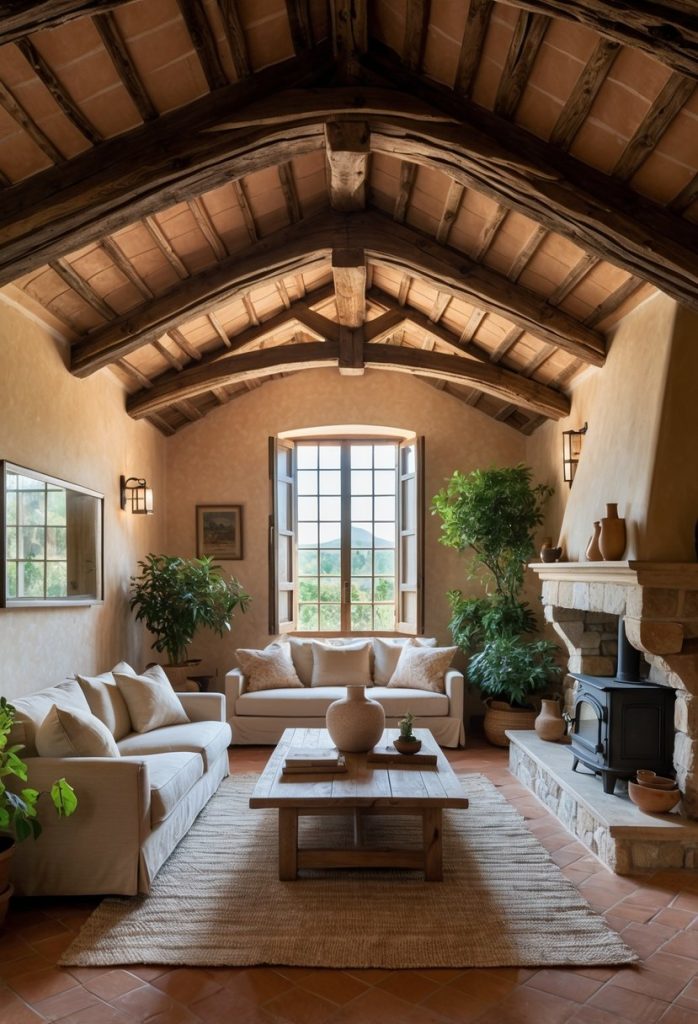
Exposed wooden beams add instant character to your Italian farmhouse living room. They draw the eye upward and give the space a warm, lived-in feeling.
You can leave beams raw, stain them darker, or paint them to match your palette. Dark beams contrast well with light plaster walls and create a classic Tuscan look.
Beams work with both original structure and faux installations if you need the look without structural work. Pair them with simple furnishings and natural textiles to keep the room feeling authentic and balanced.
2) Textured stone fireplace mantel
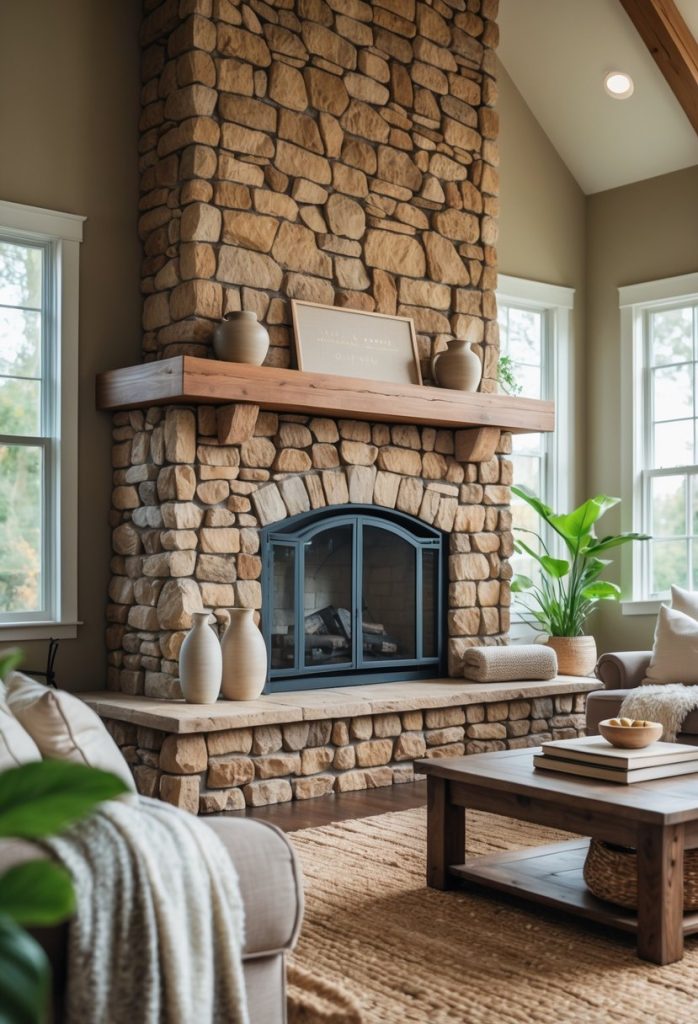
Choose a textured stone mantel to anchor your Italian farmhouse living room. The rough surface adds age and character while keeping the room grounded.
Pair the mantel with simple furnishings and warm textiles so the stone remains the focal point. You can use a chunky wood shelf or a carved limestone surround for a classic look.
Keep decor minimal on the mantel—one large mirror or a few ceramic pieces work best. This lets the stone’s texture and natural color stand out without clutter.
3) Soft, deep linen sofas in natural tones
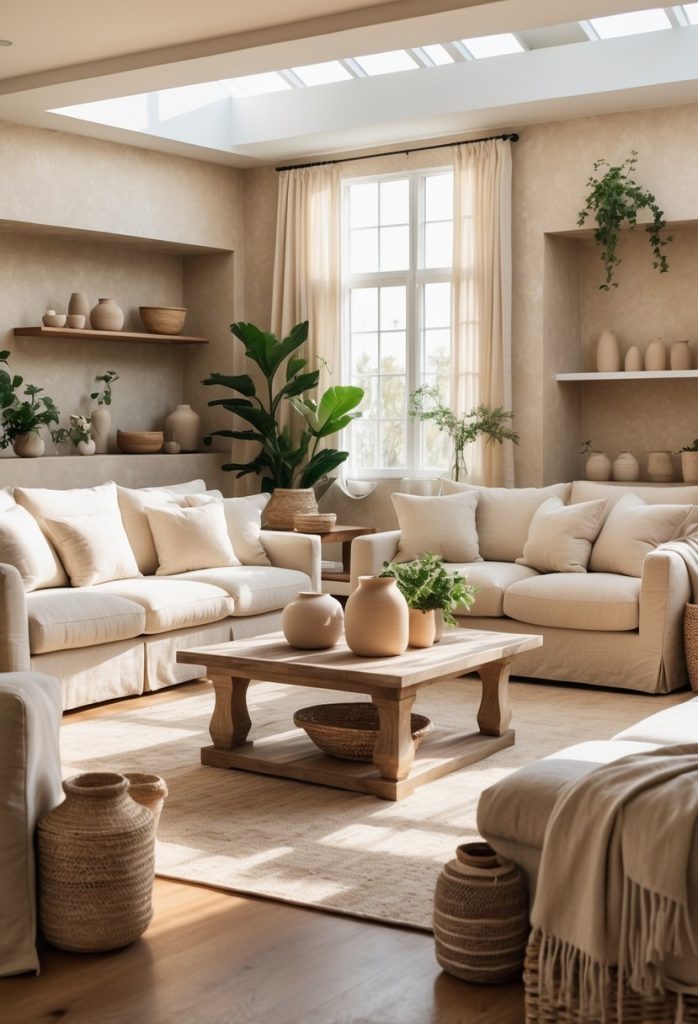
Choose a linen sofa in beige, soft gray, or warm ivory to anchor your Italian farmhouse living room. The fabric feels relaxed and breathes well, which suits both sunny and cool interiors.
Pick a deep seat and plush cushions so you can sink in comfortably after a long day. Reversible or removable cushion covers help with cleaning and extend the sofa’s life.
Place the sofa near a window or stone fireplace to highlight natural light and texture. Add a few textured throws and linen pillows in muted colors to keep the look layered but calm.
4) Arched doorways with stone detailing
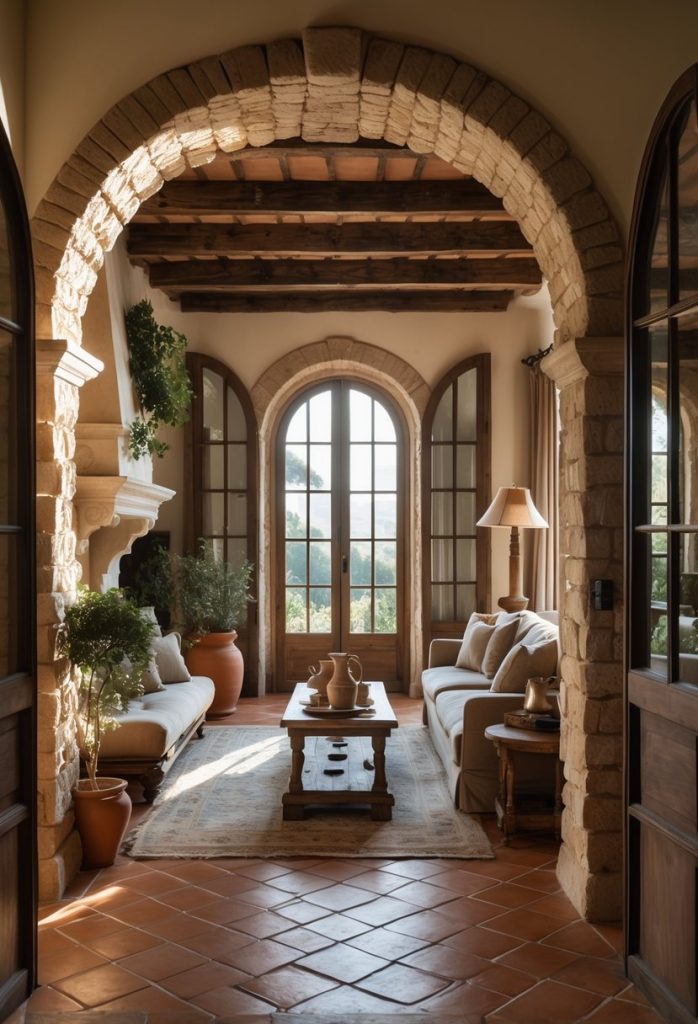
You can add arched doorways to bring soft, classic lines into your farmhouse living room. Stone detailing around the arch gives texture and a sense of age without feeling ornate.
Choose rough-hewn or cut stone to match the room’s mood; rough stone reads rustic, while smoother stone feels more refined. Position an arch between the living and dining areas to create flow and frame sightlines.
Stone around an arch also works as a subtle focal point near a fireplace or built-in shelving. Keep finishes muted and warm to maintain the Italian farmhouse look.
5) Terracotta-tiled flooring
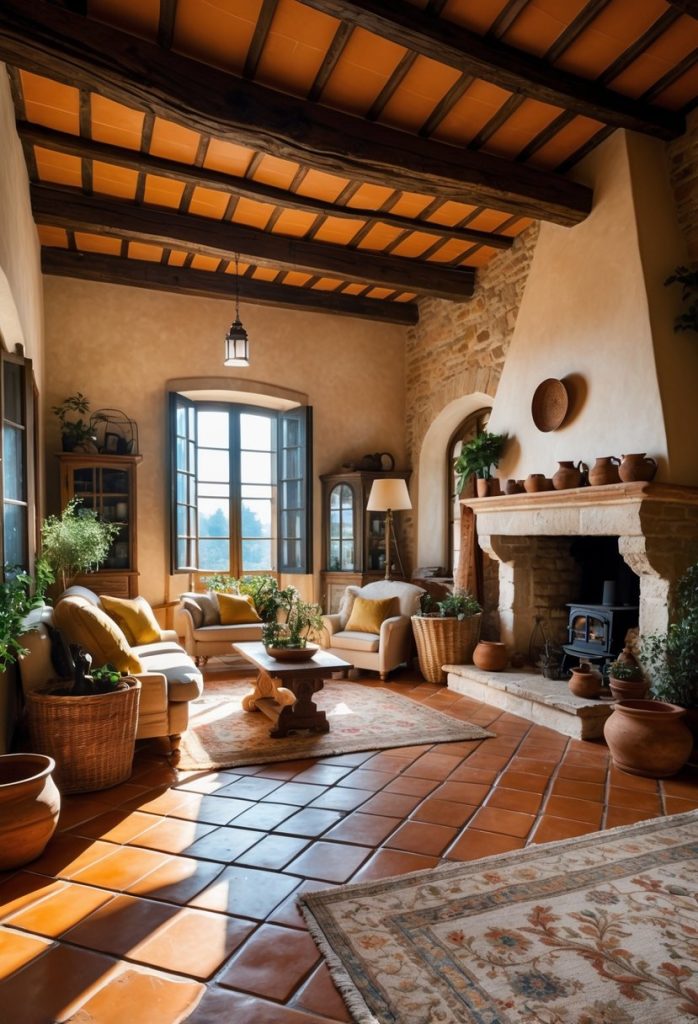
Terracotta tiles bring warm, earthy color to your farmhouse living room. You get a natural, lived-in look that pairs well with wood beams and plaster walls.
Choose matte or slightly antiqued tiles to hide wear and create an authentic feel. Larger tiles make small rooms feel more open, while smaller or patterned tiles add texture and charm.
Terracotta works well indoors and on covered patios, but note it can be porous. Seal the tiles and grout to protect against stains and moisture, and follow manufacturer care instructions.
6) Antique wooden coffee tables
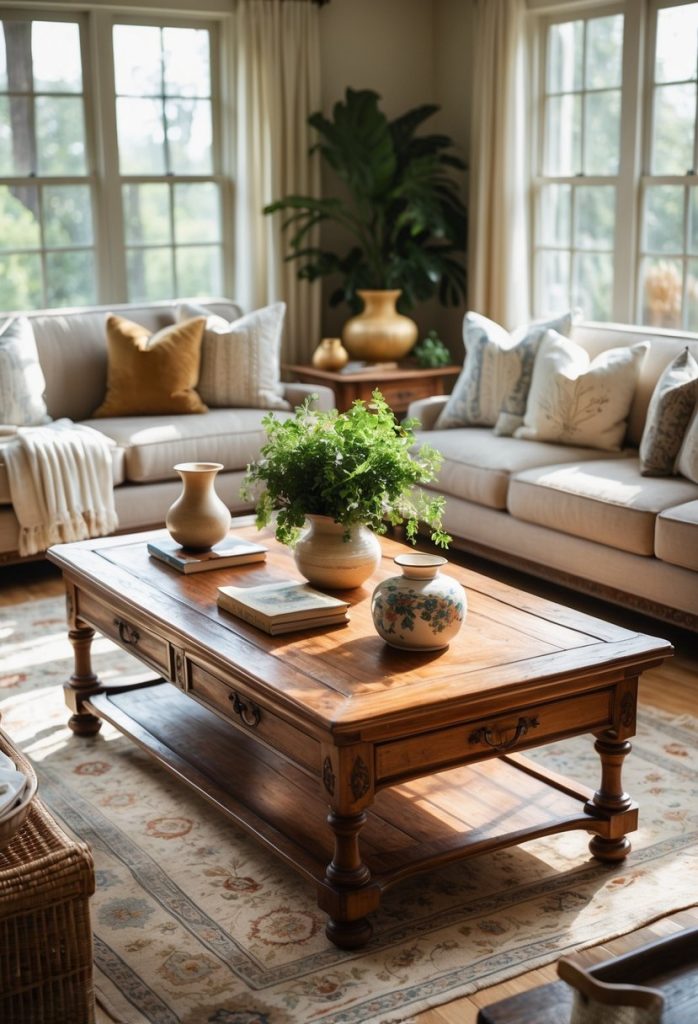
You can anchor your farmhouse living room with an antique wooden coffee table. Its worn patina and sturdy lines bring warmth and a lived-in feel that matches rustic beams and soft linens.
Choose pieces with simple turned legs or a trestle base for authentic Italian farmhouse style. Look for solid wood like pine or walnut; they age well and can be refinished without losing character.
An antique table also adds practical storage. Drawers or lower shelves hide remotes and magazines, keeping your space tidy while showing off classic craftsmanship.
7) Neutral pale wall colors to reflect natural light
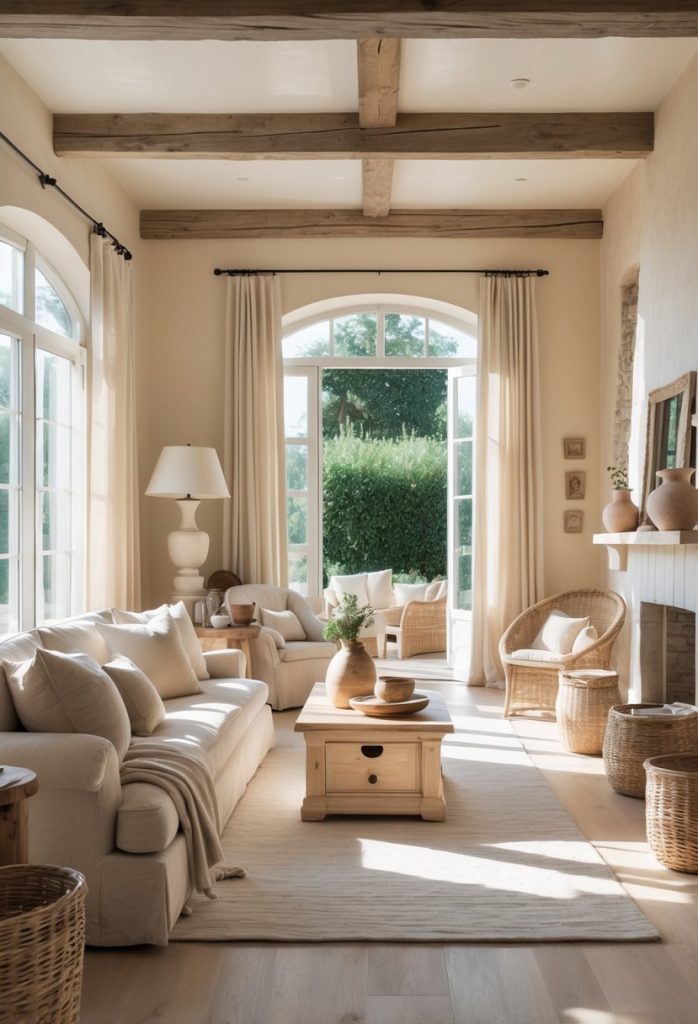
Choose pale neutrals like warm cream, soft beige, or very light gray to brighten your Italian farmhouse living room. These tones reflect natural light and make the space feel open without looking stark.
Match the tint to your light source: cooler grays work in south-facing rooms, while creamy tones suit north-facing spaces. Test paint samples on different walls to see shifts in morning and evening light.
Keep contrast low by pairing walls with natural wood trim and linen textiles. This preserves the calming farmhouse look while letting furniture and textures stand out.
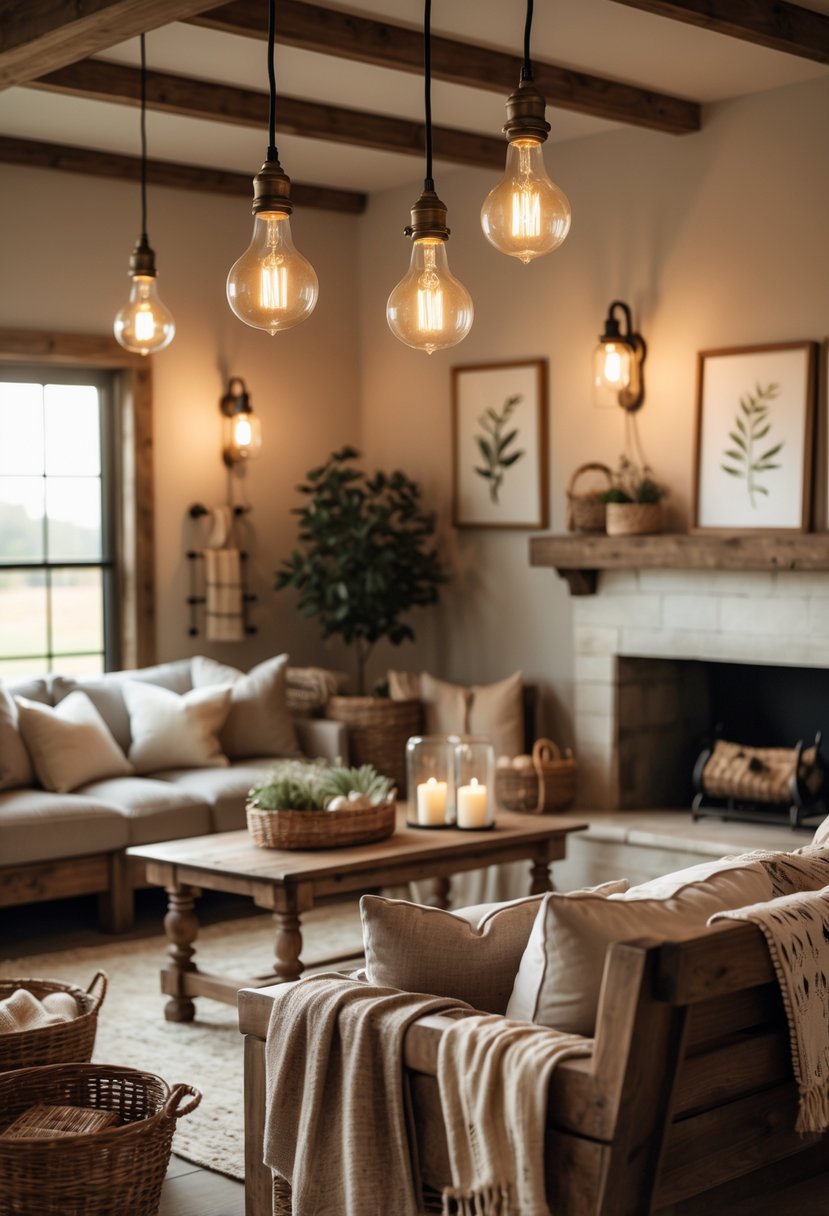
8) Wrought iron light fixtures and chandeliers
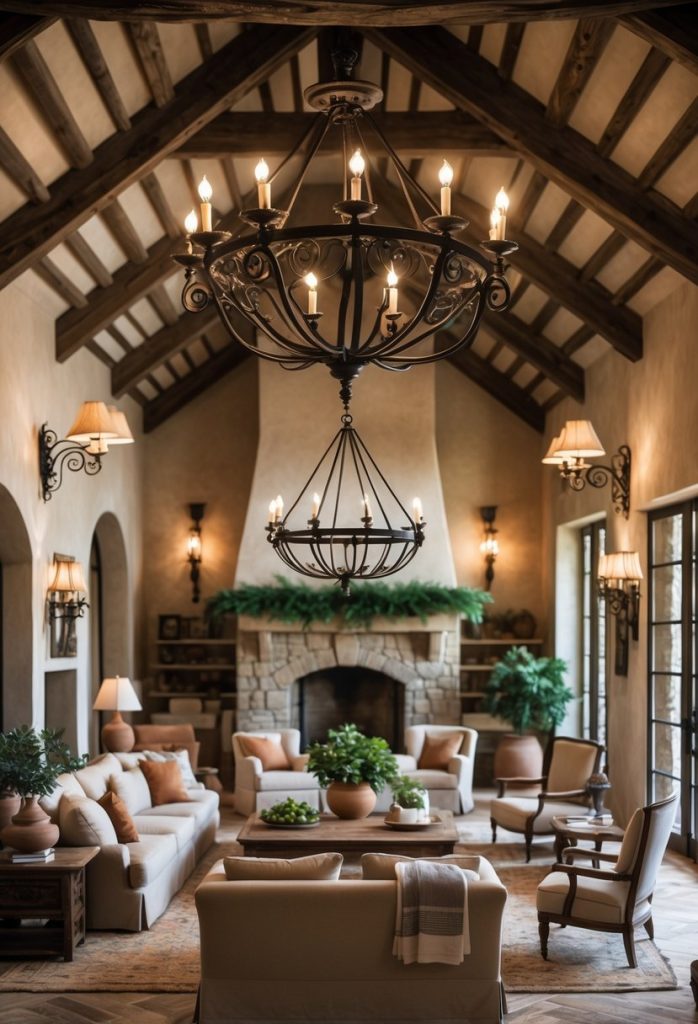
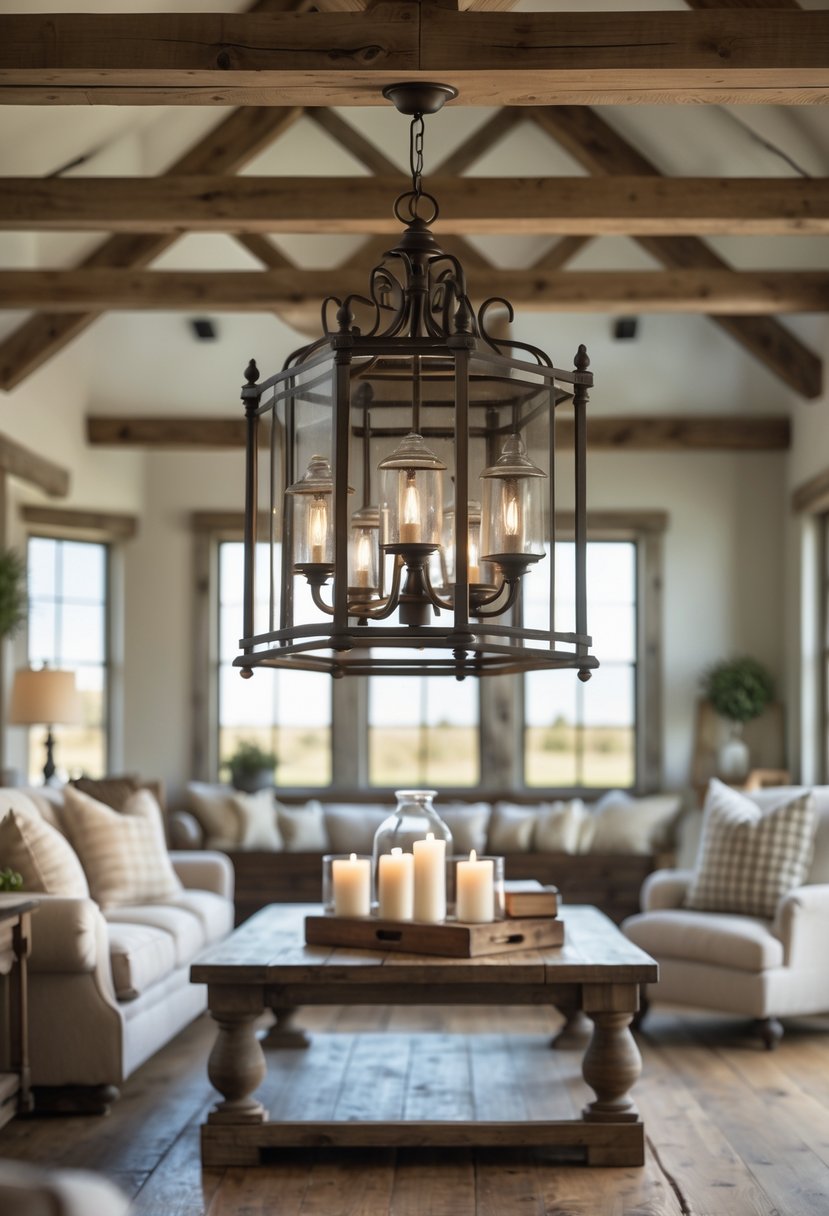
Choose wrought iron chandeliers to add sturdy, old-world character to your living room. You can pair a large iron chandelier over the seating area or use smaller pendants above side tables to balance the space.
Iron fixtures work with rustic, Tuscan, and farmhouse styles because they mix simple shapes with hand-forged detail. Look for matte black, dark bronze, or aged finishes that patina well over time.
Keep scale in mind: a heavy chandelier needs a strong ceiling box and proper mounting. You can also mix iron with glass or crystal accents for a softer, more refined look.
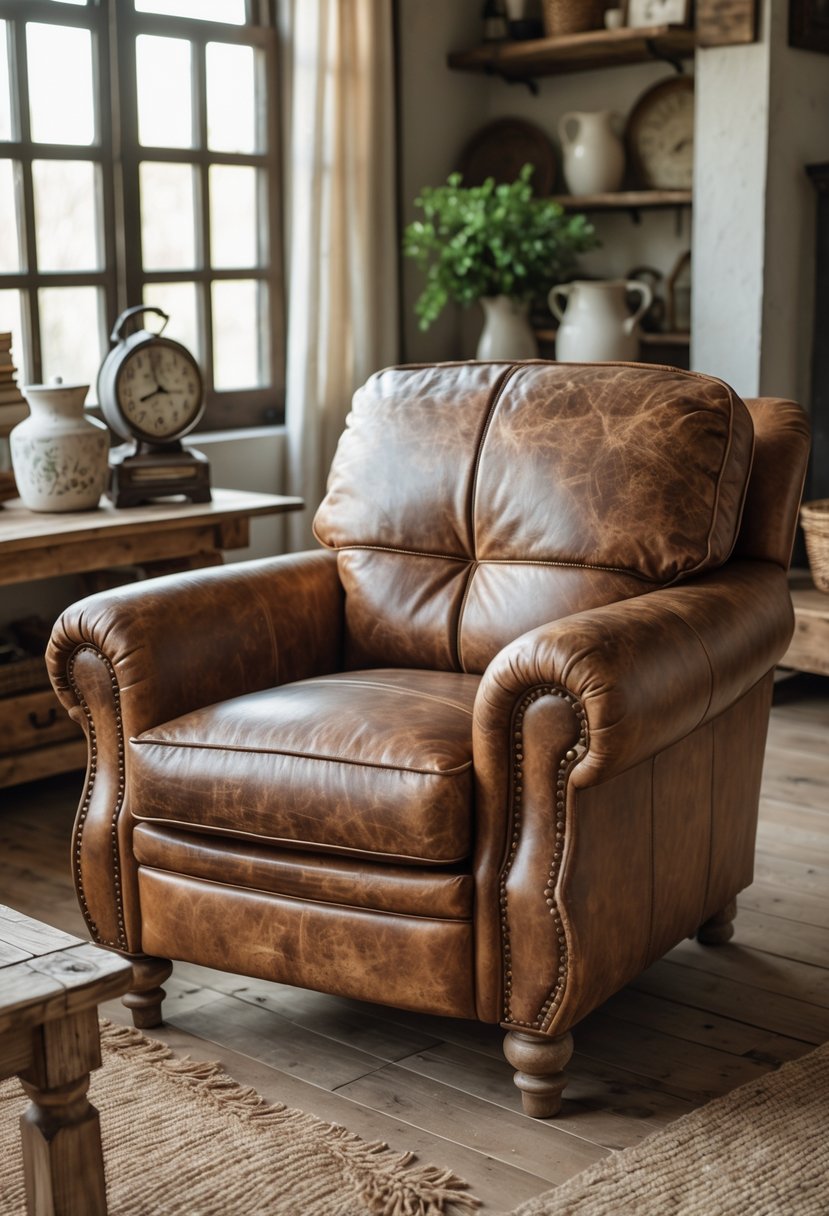
9) Vintage leather armchairs
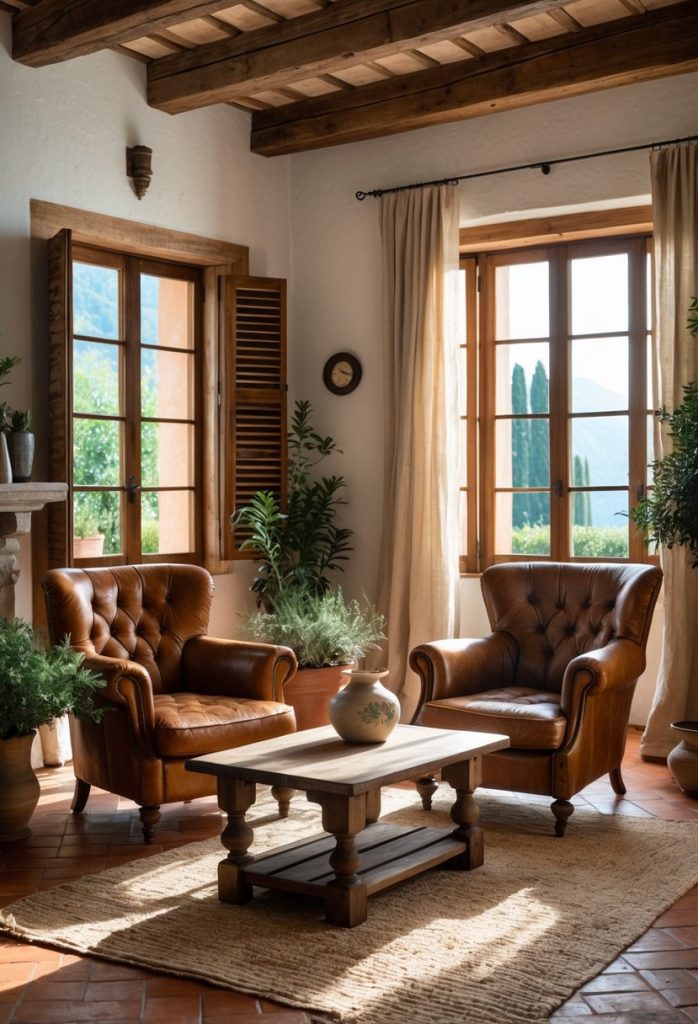
You can add a vintage leather armchair to bring warmth and character to your farmhouse living room. Choose worn patina and simple lines for an authentic, lived-in look that pairs well with exposed wood and muted colors.
Place one near a window or beside a bookshelf to create a cozy reading spot. A pair of matching chairs works well across from a sofa for balanced seating and easy conversation.
Look for sturdy frames and quality leather that will age gracefully. Minor scuffs and creases add charm, but check cushions and springs so the chair stays comfortable for years.
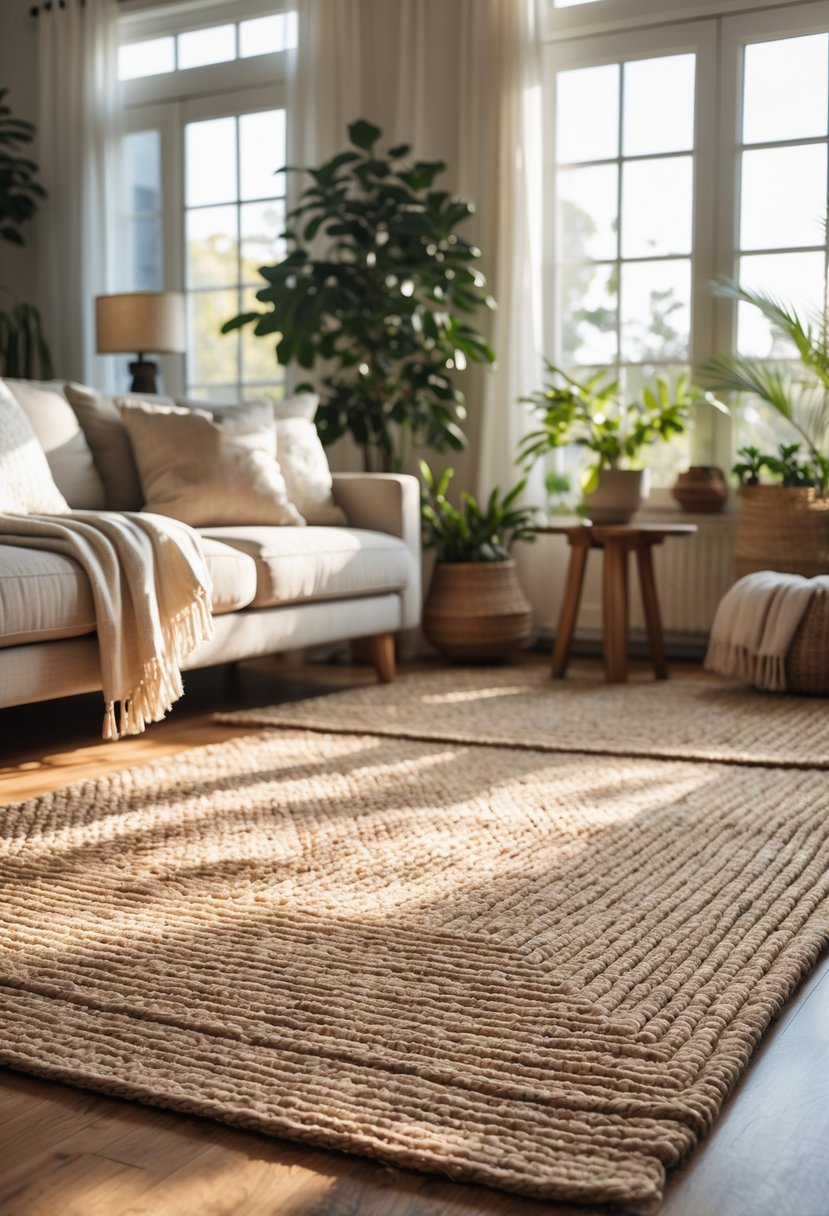
10) Natural fiber rugs like jute or sisal
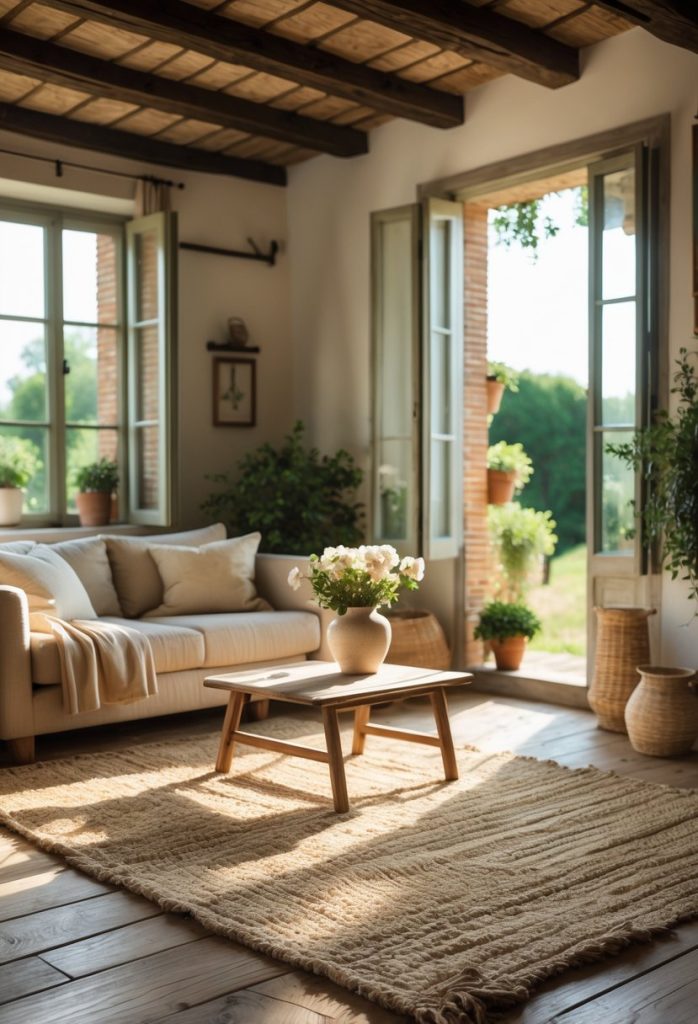
You can ground your Italian farmhouse living room with a natural fiber rug made of jute or sisal. These rugs add warm texture and a neutral base that pairs well with wood beams, plaster walls, and terracotta tones.
Jute feels softer underfoot and suits lower-traffic areas like seating nooks. Sisal is tougher and works well in entryways or spaces that see more use.
Choose a low pile for easy cleaning and to keep the look casual and authentic. Natural colors blend with patterned upholstery, while simple borders or subtle stripes add quiet interest without overwhelming your decor.
11) Hand-painted ceramic vases
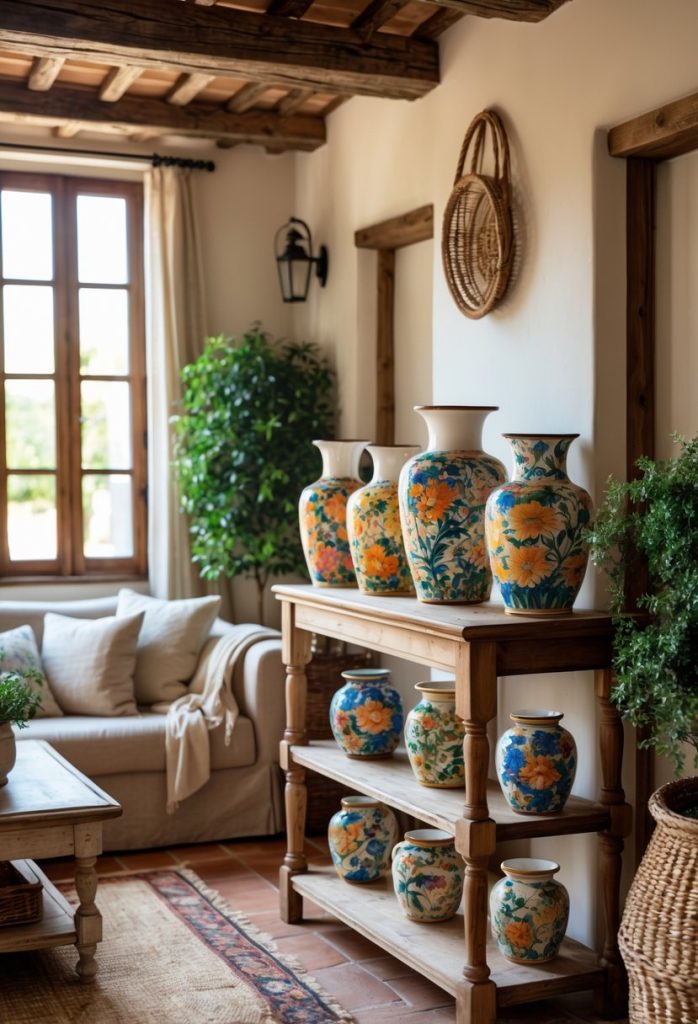
You can add hand-painted ceramic vases to bring color and craft into a farmhouse living room. They often show traditional Italian motifs and fine brushwork that feel warm and personal.
Place a single large vase on the floor or group smaller ones on a mantel or console. Mix glazed pieces with matte finishes for contrast without clutter.
Choose vases with soft, earthy tones or classic blue-and-white patterns to match rustic wood and linen. These pieces hold fresh flowers or stand alone as art, giving your space a lived-in, curated look.
12) Built-in shelving with open storage
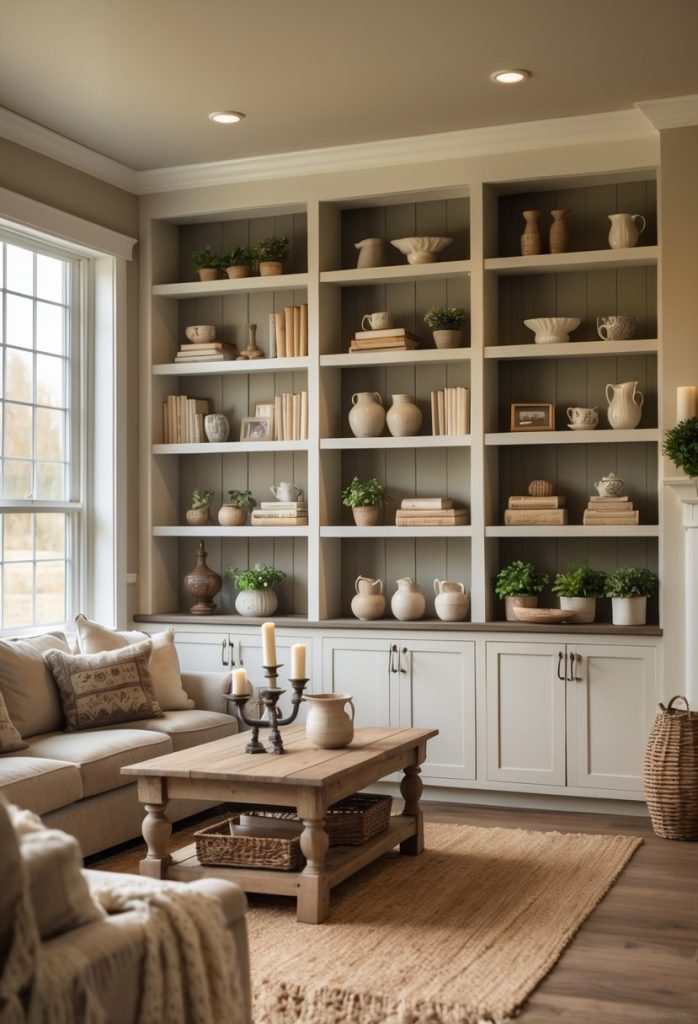
Built-in shelving adds depth and calm to your Italian farmhouse living room. You get a seamless look that fits the room’s architecture.
Mix open shelves with closed cabinets to hide clutter and display pottery, books, and heirlooms. Use warm wood tones or soft plaster finishes to match rustic beams and stone accents.
Keep styling simple: group items in odds, leave breathing space, and add a few plants for life. Lighting on shelves helps highlight textures and keeps the space inviting in the evening.
Plan shelving around your fireplace or TV for a balanced focal wall. This creates storage that feels custom and always in scale with your room.
13) Large windows to enhance indoor-outdoor flow
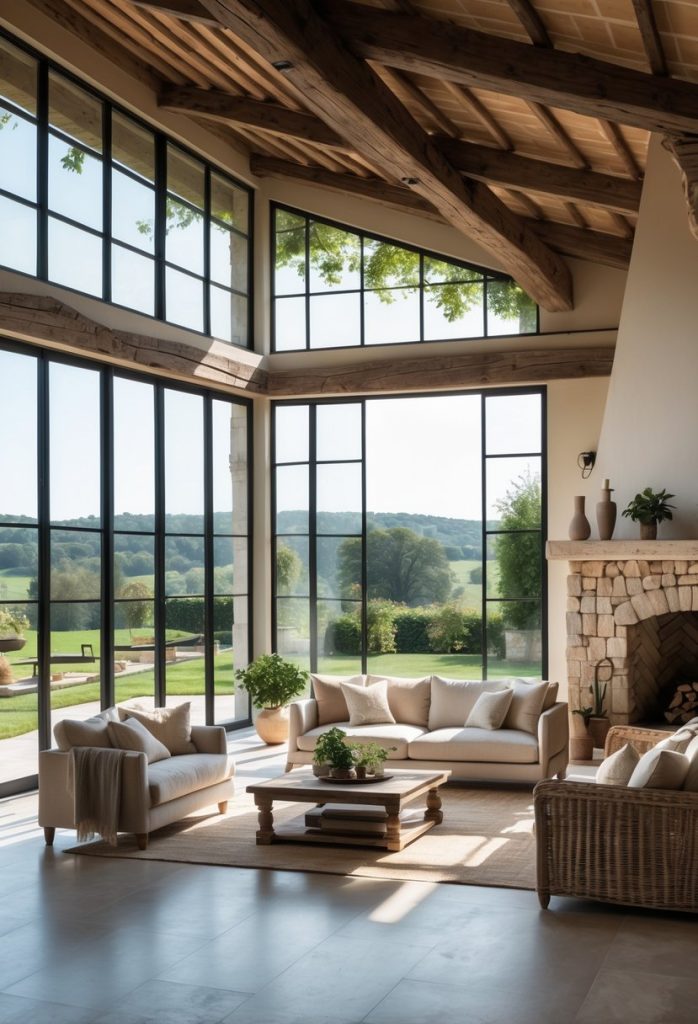
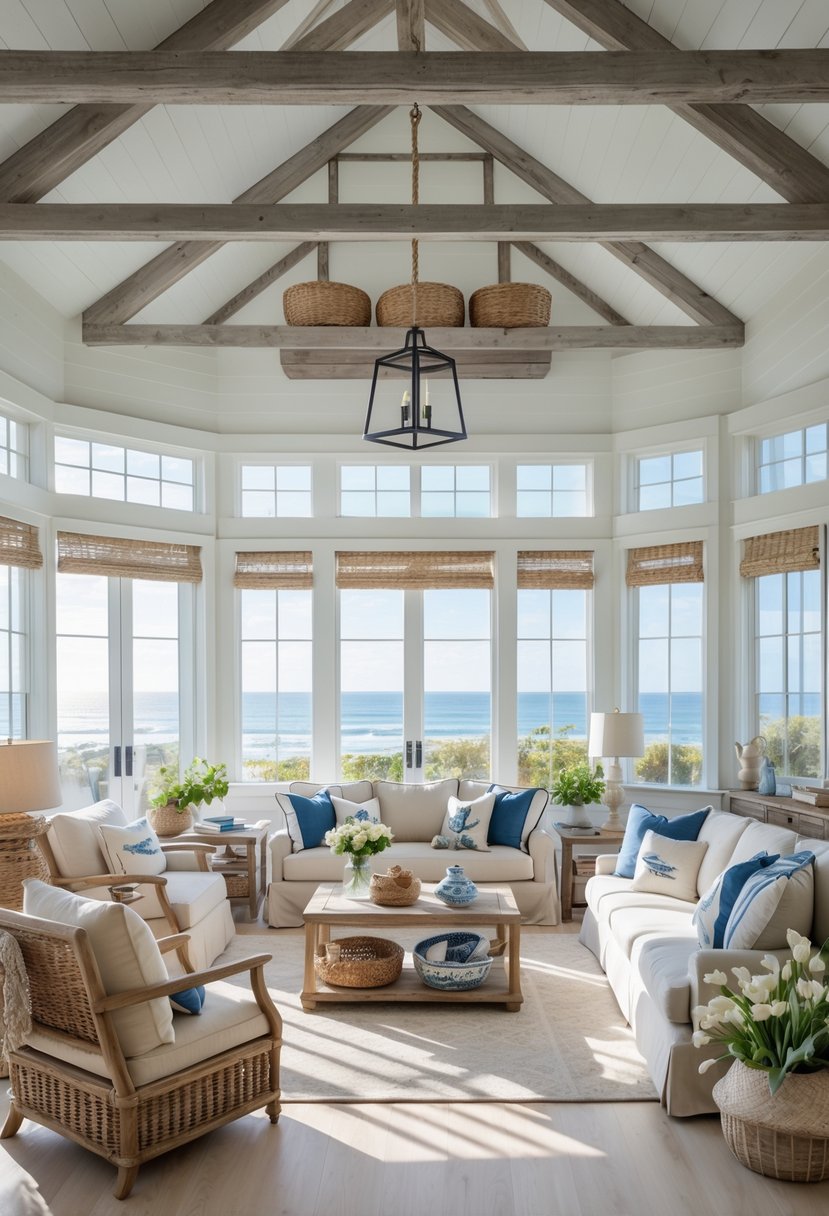
You can use large windows to blur the line between your living room and the garden. They bring in daylight and give you views that make the space feel bigger.
Choose windows that open wide or slide to one side so air moves freely when you want it to. Wood or black metal frames suit an Italian farmhouse while keeping a simple, elegant look.
Position seating to face the views and add low-profile furnishings so sightlines stay clear. Use light, natural fabrics for curtains that soften the light without blocking it.
FAQs
What are the defining elements of Italian farmhouse decor for living rooms?
Italian farmhouse living rooms use natural, timeworn materials and classic shapes. Expect exposed wooden ceiling beams, a textured stone fireplace mantel, arched doorways, and terracotta floors.
You should favor simple, sturdy furniture with soft lines and linen or leather upholstery. Decorative touches include wrought iron light fixtures, hand-thrown ceramics, and woven textiles.
Which color palette is most appropriate for an Italian farmhouse living room?
Choose warm neutrals and earthy tones. Use soft whites, warm beiges, muted ochres, and terracotta reds to match stone and tile.
Add deep greens or faded blues as accents. Keep contrasts low so the room feels calm and sunlit.
How can one incorporate natural materials into an Italian farmhouse living room design?
Start with structural elements like exposed wooden beams and stone mantels. Let terracotta tile or reclaimed wood flooring set the base.
Bring in natural textiles: linen sofas, wool throws, and jute rugs. Use live or dried greenery in clay pots to add organic texture.
What is the ideal furniture arrangement for a living room in an Italian farmhouse style?
Anchor seating around the fireplace or a large central rug. Place a deep linen sofa facing the mantel with armchairs angled for conversation.
Leave clear paths to arched doorways and windows. Keep furniture low and grounded to echo traditional country homes.
What types of lighting should be used to accentuate an Italian farmhouse living room?
Combine layered lighting: a central wrought-iron chandelier, wall sconces near the mantel, and table or floor lamps for task light. Choose warm bulbs to mimic late-afternoon sunlight.
Highlight architectural features with uplights on beams or subtle spotlights on stonework. Use dimmers so you can soften the mood in the evening.
How can vintage or antique pieces be incorporated into an Italian farmhouse living room?
Mix a few well-chosen antiques with newer pieces to add history without clutter. A weathered wood coffee table, an aged trunk, or an old mirror above the mantel works well.
Look for pieces with patina and simple lines. Let one item serve as the focal antique, then complement it with smaller vintage ceramics or framed botanical prints.