Published On:
20 Kitchen Ideas for Small Spaces and Tight Layouts
Share:


Designing a small kitchen is not about adding more decor. It is about smart planning. When the layout is wrong, the kitchen feels tight and hard to use. But when the layout is planned carefully, even a very small kitchen can feel open and comfortable.
In this guide, you will learn 20 real layout ideas that help you design your kitchen step by step. These ideas focus on cabinet placement, appliance arrangement, and space planning. If you follow these ideas, you can design a kitchen that feels bigger without making it bigger.
1. Start by Choosing the Right Kitchen Layout Shape
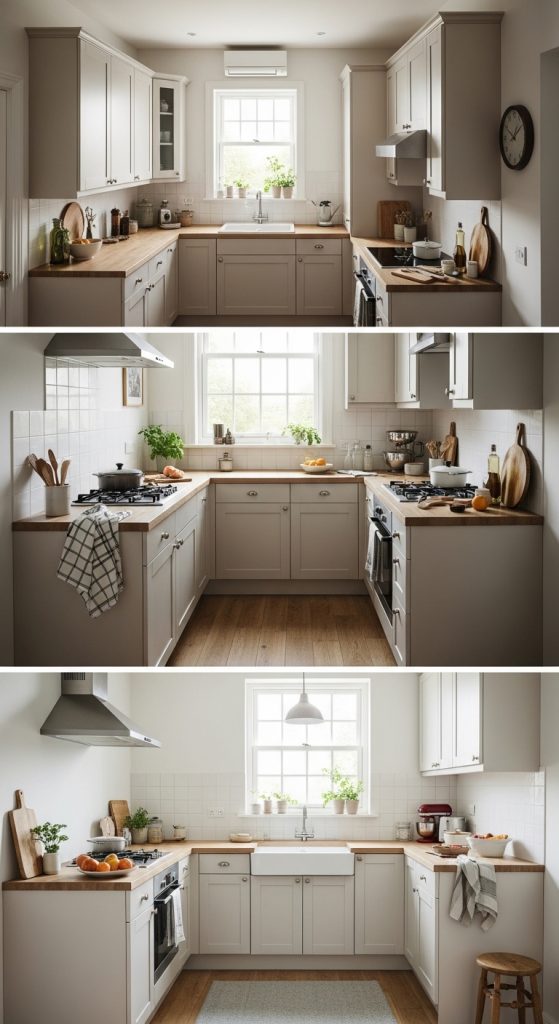
The first step in designing a small kitchen is choosing the correct layout shape. Small kitchens usually work best with a galley, L-shaped, or single-wall layout. Each shape uses space differently. A galley layout works well in narrow rooms. An L-shape works well when you have one open corner. A single-wall layout works best in studio apartments.
Look at your room carefully before deciding. Notice where doors and windows are placed. Choose a layout that keeps the center of the kitchen open and does not block movement. Starting with the right shape prevents future problems.
2. Keep the Work Triangle Compact and Balanced
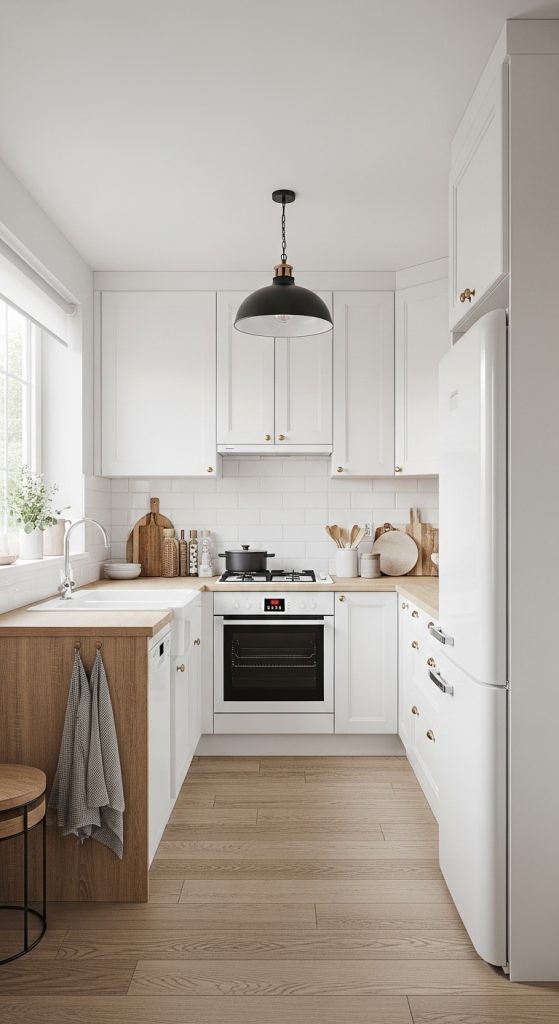
The work triangle connects your sink, stove, and refrigerator. In a small kitchen, this triangle should be short and easy to move around. If these three areas are too far apart, cooking becomes tiring. If they are too close together, the space feels cramped.
Place your sink in a central position if possible. Keep the fridge and stove within a few steps. Always leave some counter space between them for safe food prep. A balanced work triangle helps the kitchen feel organized and easy to use every day.
3. Use an L-Shaped Layout to Keep the Center Open
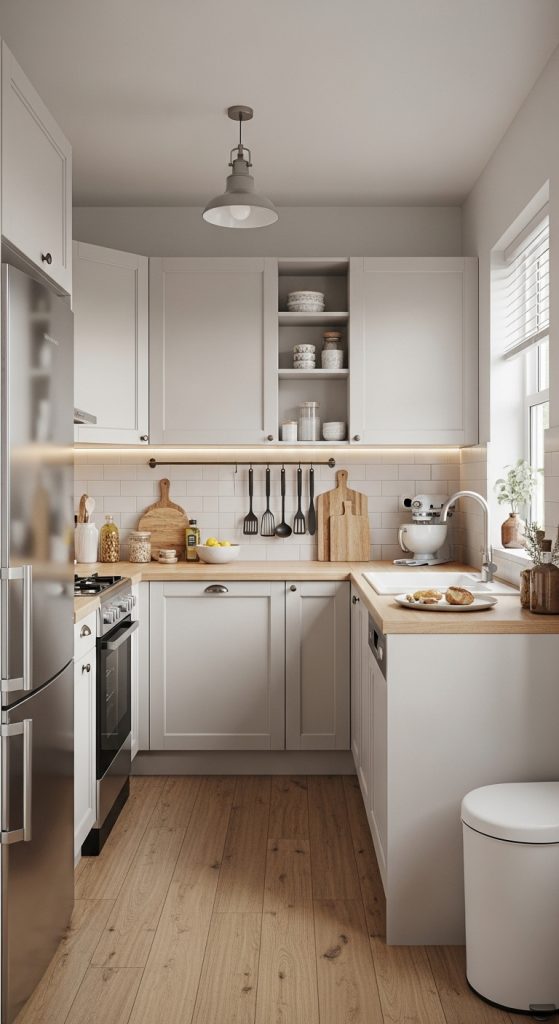
An L-shaped layout uses two walls that meet in a corner. This design is very helpful in small kitchens because it keeps the center area open. Open center space makes the room feel larger and easier to move around in.
Place your sink on one wall and your stove on the other. Keep the fridge near one end of the layout. This creates a natural flow while cooking. The open center space also allows you to add a small table or keep the area clear for walking.
4. Choose a Galley Layout for Long and Narrow Kitchens
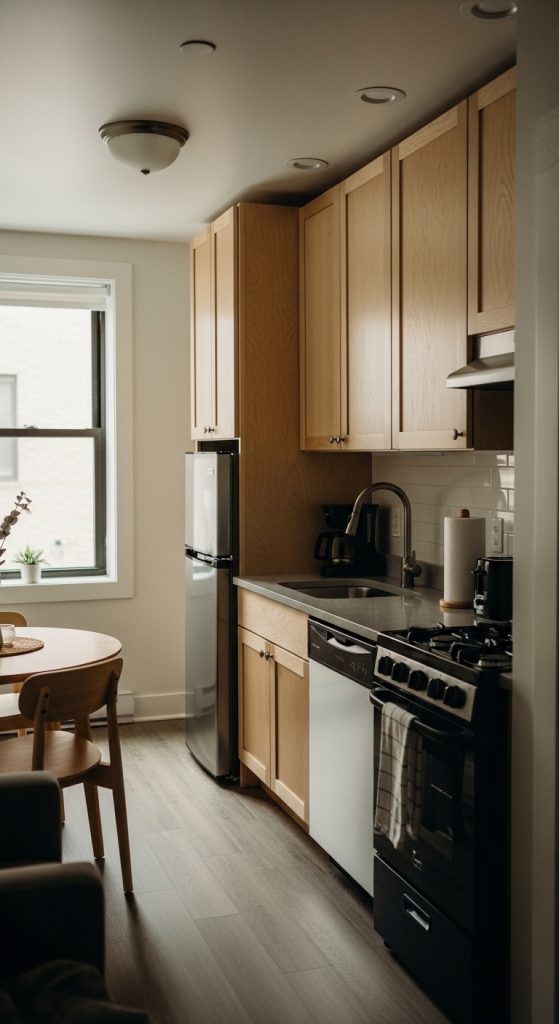
If your kitchen is shaped like a hallway, a galley layout is often the best solution. In this layout, cabinets and counters are placed on two opposite walls. The center stays open for walking.
When designing a galley kitchen, make sure there is enough walking space between both sides. Avoid adding an island because it can block movement. Keep appliances on one side and prep space on the other for better balance. This layout may look simple, but it is very efficient for small spaces.
5. Try a Single-Wall Layout in Very Tight Spaces
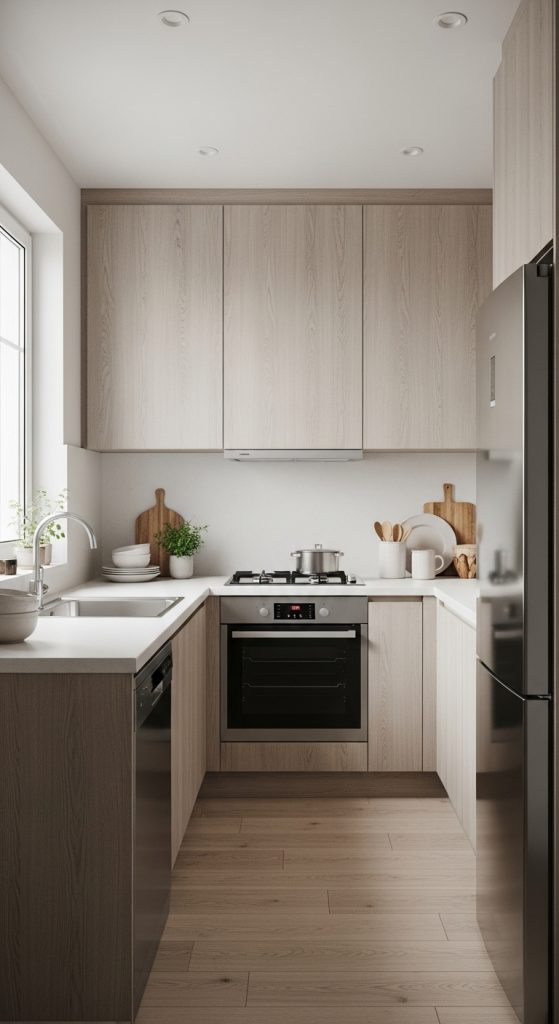
A single-wall layout places everything along one wall. This works very well in studio apartments or very small homes. It keeps the rest of the room open and flexible.
Place the fridge on one end, then counter space, then sink, then stove. This keeps a smooth working order. Use tall cabinets above to add storage without using floor space. This layout is simple but very smart when space is limited.
6. Extend Cabinets All the Way to the Ceiling
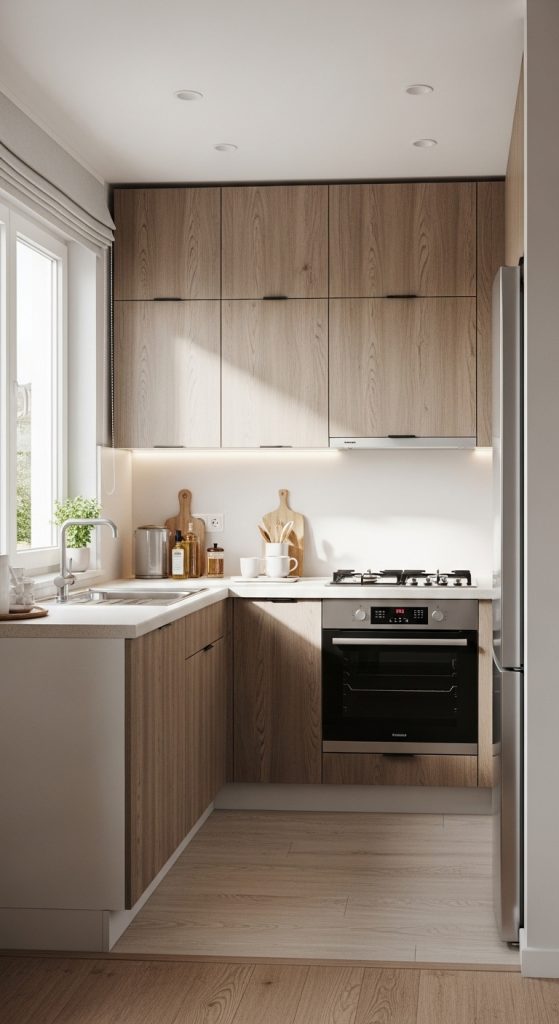
In small kitchens, vertical space is extremely important. Many people leave empty space above cabinets, but this wastes storage. Extending cabinets to the ceiling adds extra storage without taking more floor space.
Store items you do not use daily in the top cabinets. This keeps counters clear and organized. Cabinets that reach the ceiling also make the kitchen look taller, which helps the space feel bigger.
7. Use Slim or Shallow Cabinets in Tight Walkways
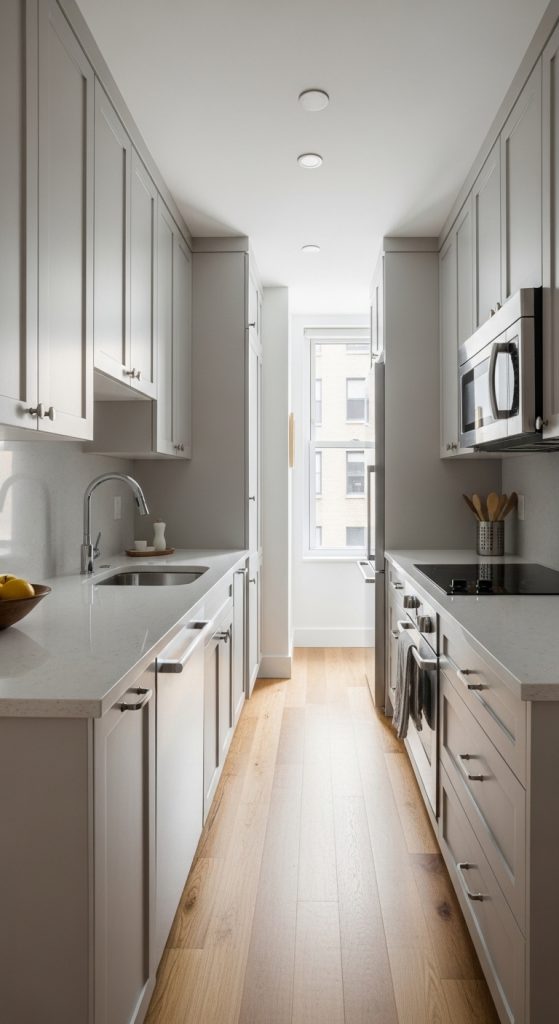
If your kitchen feels very tight, consider using slightly shallower cabinets. Standard cabinets may stick out too far and reduce walking space.
Even saving a few inches can make movement easier. This is especially helpful in galley kitchens where both sides have cabinets. Slim cabinets help prevent the space from feeling boxed in.
8. Replace a Full Island with a Slim Peninsula
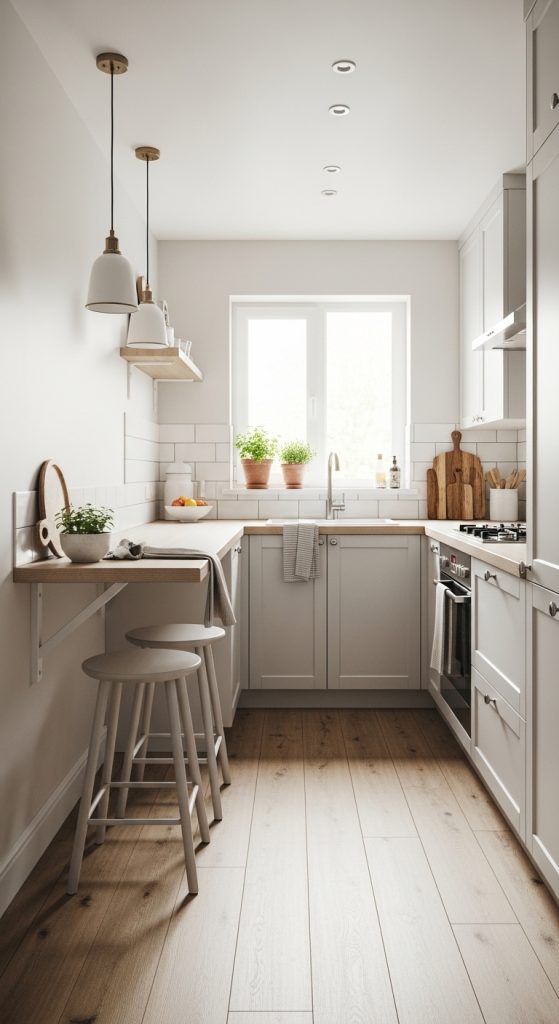
Many people want an island, but in small kitchens it can block flow. Instead, add a slim peninsula attached to one wall. This gives extra counter space without taking too much room.
A peninsula can also act as a small dining area. Make sure there is enough walking space around it before installing. This solution gives you function without overcrowding the kitchen.
9. Place the Refrigerator at the End of the Layout
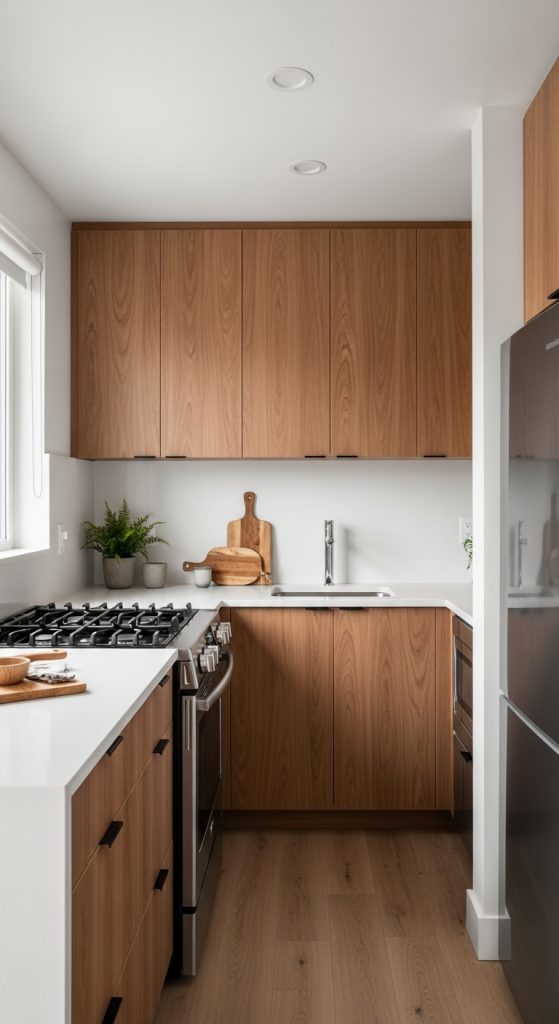
The fridge should not sit in the middle of your counter run. When placed in the center, it breaks up prep space and interrupts flow.
Keep it at one end so you can have one long continuous counter. Also check that the fridge door can open fully without blocking the walkway. Smart fridge placement improves both flow and function.
10. Leave Prep Space Between the Sink and Stove
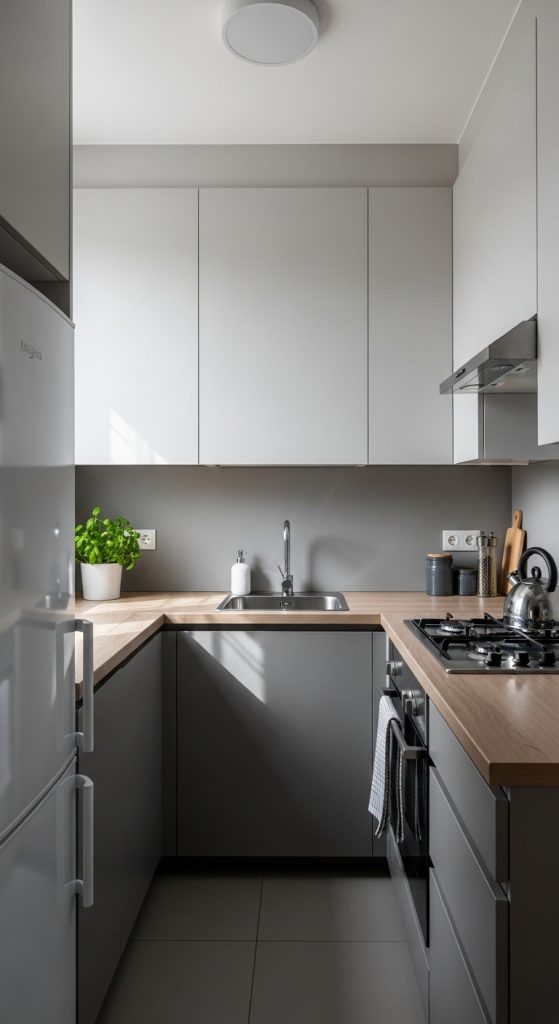
One common mistake is placing the sink and stove directly next to each other. Always leave counter space between them. This space is where you prepare food.
Without prep space, cooking becomes uncomfortable. Even a small section of counter between these areas improves safety and function. Good spacing makes the layout feel thoughtful and practical.
11. Design Corner Cabinets So No Space Is Wasted
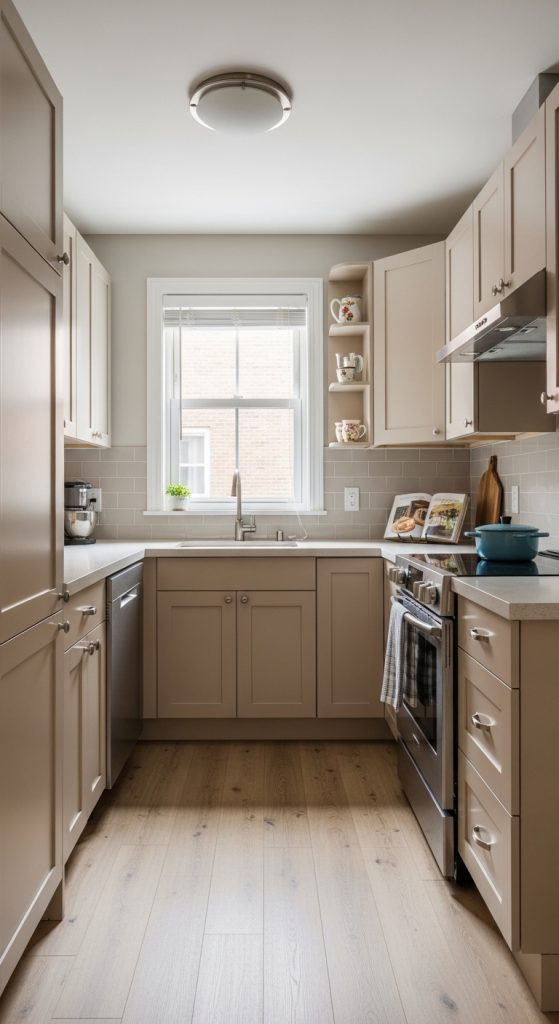
In small kitchens, corners are often wasted because they are hard to reach. Many people place regular cabinets in corners and then struggle to use the back space. Instead of letting this area become dead space, design corner cabinets with smart solutions. You can install rotating shelves, pull-out corner drawers, or angled cabinets that open fully.
When planning your layout, think about what you will store in the corner. Heavy pots and pans work well on rotating shelves. Dry goods can go in pull-out systems. Designing corners properly allows you to use every inch without adding more cabinets, which keeps your kitchen functional and balanced.
12. Keep Walkways Wide Enough for Easy Movement
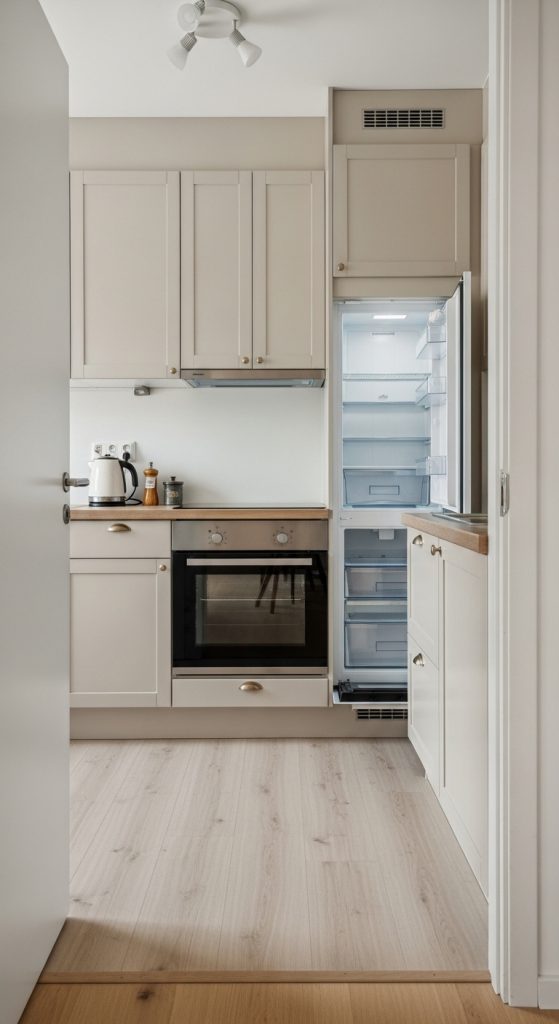
In a small kitchen, movement matters more than size. If your walkway is too tight, the kitchen will feel uncomfortable. When designing your layout, make sure there is enough space for you to walk freely and open cabinet doors without bumping into anything.
Check that your oven door, fridge door, and dishwasher can open fully without blocking the path. If two people cook together, there should be enough space for both to move without feeling stuck. Clear and comfortable walkways make a small kitchen feel open and practical, even if the room itself is not large.
13. Use Tall Pantry Cabinets Instead of Wide Storage Units
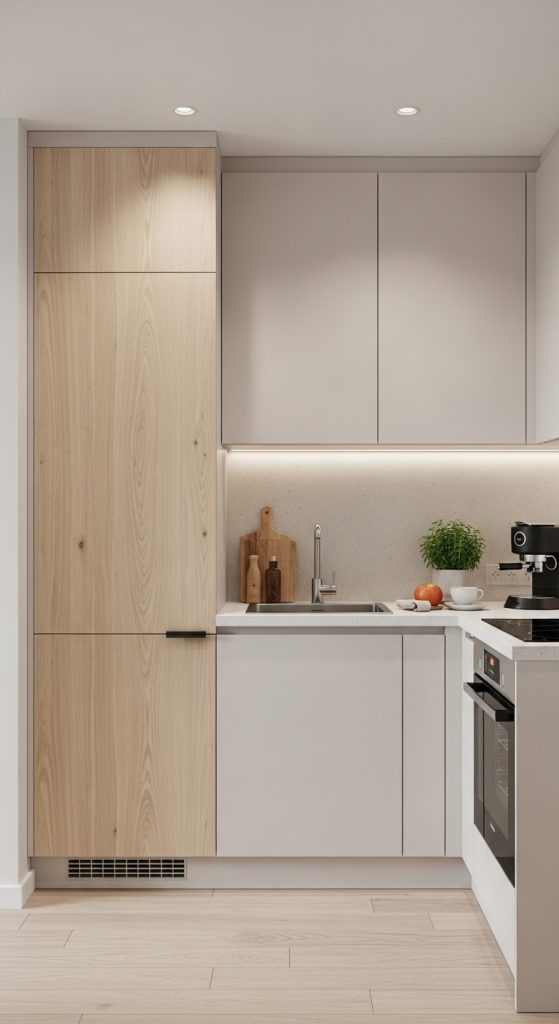
Wide cabinets take up valuable floor space in small kitchens. Instead of spreading storage across the room, go upward. Tall pantry cabinets use vertical space and keep the floor area more open. This makes the kitchen feel less crowded while still giving you plenty of storage.
Place tall pantry cabinets at the end of your layout so they do not break up your counter space. Inside, use adjustable shelves so you can store items of different sizes. This layout choice helps you stay organized without making the kitchen feel tight or heavy.
14. Combine Prep and Dining Areas to Save Space
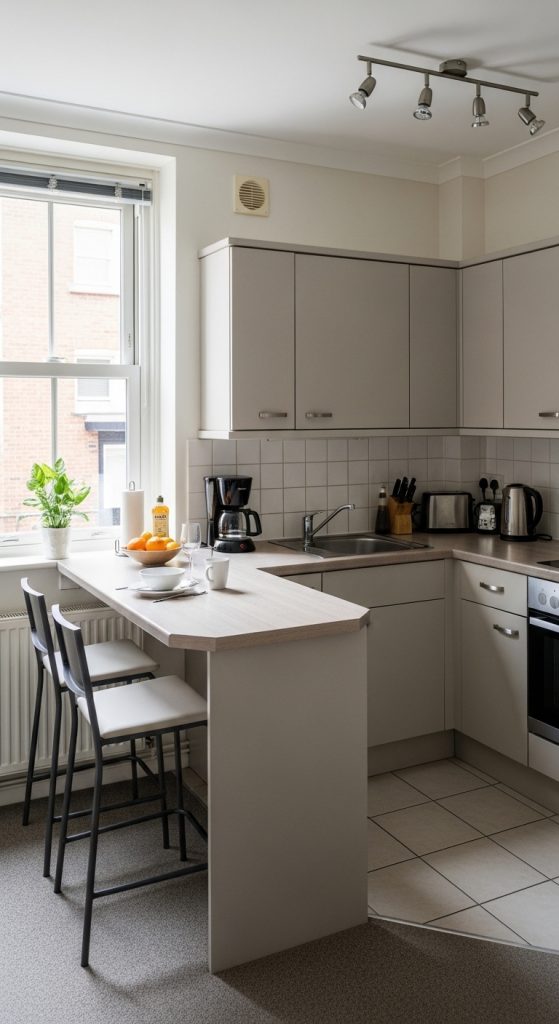
In very small kitchens, it may not be possible to have a separate dining table. Instead of forcing one into the space, combine your prep area and dining area. A peninsula or extended countertop can work for both cooking and eating.
When designing this layout, make sure there is enough legroom underneath for stools. Choose stools that can slide under the counter when not in use. This keeps the walkway clear. By combining functions into one area, you reduce clutter and keep the kitchen simple and efficient.
15. Choose Appliances That Match the Size of Your Kitchen
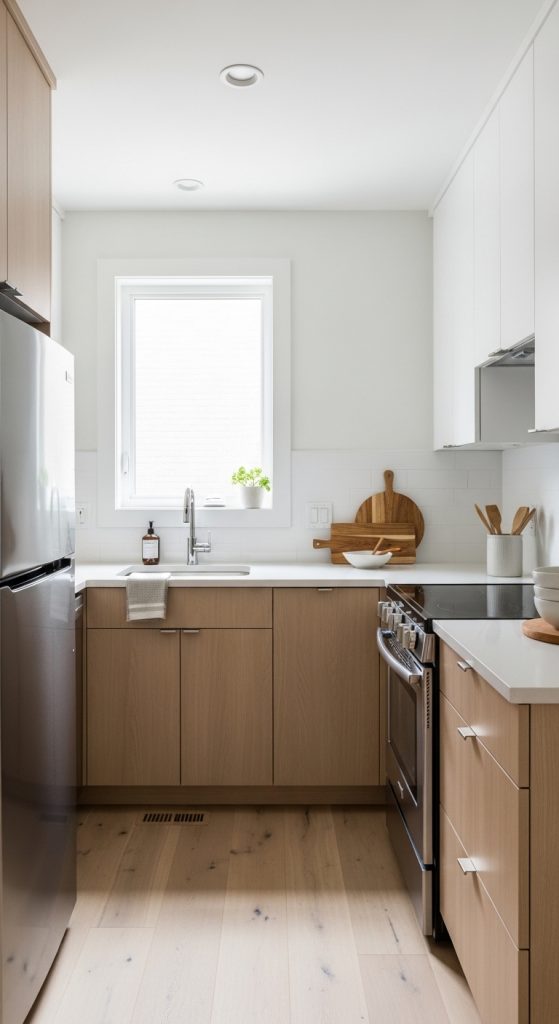
Large appliances can overpower a small kitchen and reduce valuable counter space. When planning your layout, choose appliances that match the scale of your room. A compact stove, slim refrigerator, and smaller dishwasher can free up extra space for prep work.
Before buying appliances, measure carefully. Think about how much cooking you actually do and how many people live in your home. You may not need a professional-sized range. Balanced appliance size helps the kitchen feel well-designed instead of cramped.
16. Install Built-In Appliances for a Cleaner Layout
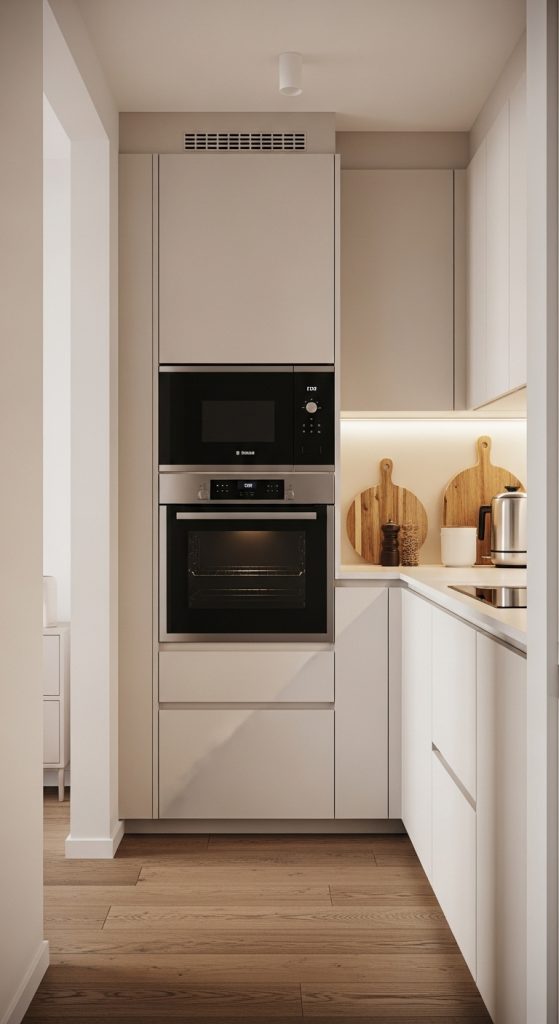
Built-in appliances help small kitchens feel less cluttered. Instead of placing microwaves and ovens on the counter, design them inside cabinets. This keeps surfaces open and makes the layout look smoother.
Built-in designs also create straight cabinet lines, which help the kitchen feel organized. When appliances blend into the cabinetry, the space feels larger because there are fewer visual breaks. This layout approach keeps everything functional while maintaining a clean and simple design.
17. Balance Upper and Lower Cabinets for Visual Comfort
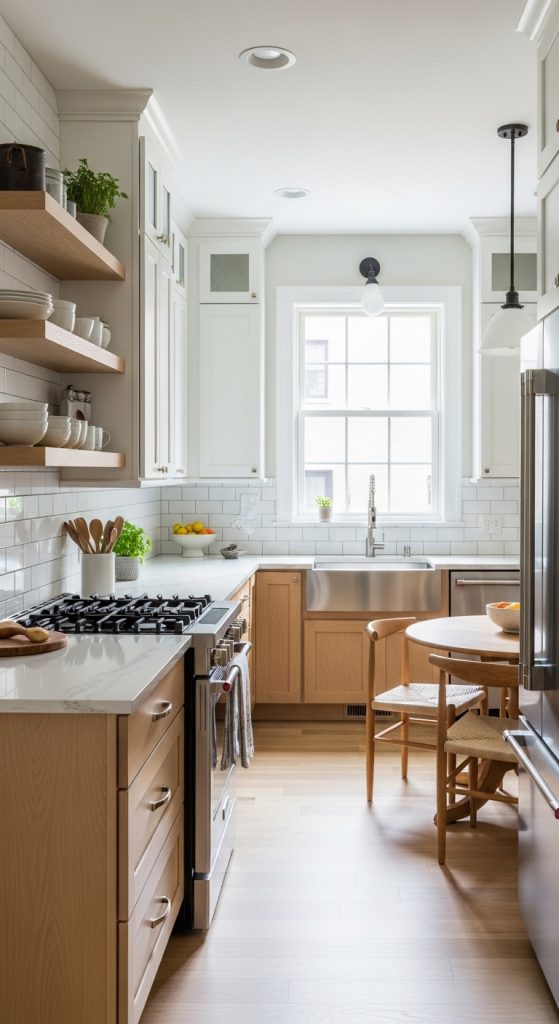
In small kitchens, too many upper cabinets can make the room feel heavy and closed in. When planning your layout, try to balance upper and lower cabinets evenly. If one wall feels too crowded, consider removing some upper cabinets and keeping that area more open.
You can also mix full cabinets with shorter sections to create breathing space. Balanced cabinet placement keeps the kitchen from feeling top-heavy. When the design feels visually balanced, the entire kitchen feels calmer and more spacious.
18. Plan Trash and Recycling Storage Inside Cabinets
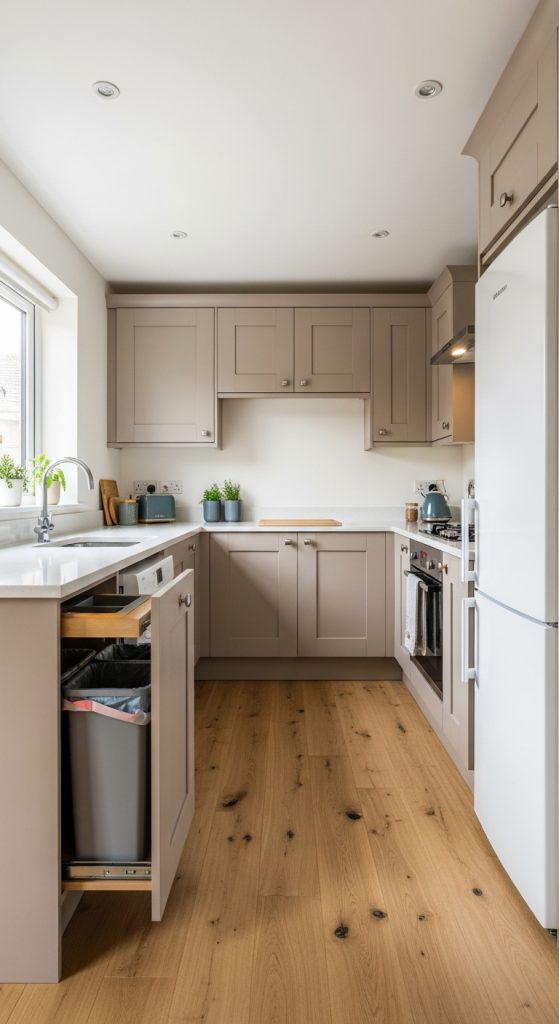
In a small kitchen, floor space is very important. A trash bin sitting in the open can make the kitchen feel crowded and messy. Instead of placing trash and recycling bins on the floor, plan for them inside your lower cabinets. A pull-out trash system works very well because it hides the bins while keeping them easy to reach.
When designing your layout, choose a cabinet near the sink for trash storage. This makes it easy to throw away food scraps while cooking. Make sure there is enough room inside the cabinet for both trash and recycling if needed. Hidden storage keeps the kitchen looking clean, organized, and more spacious.
19. Keep the Entry to the Kitchen Clear
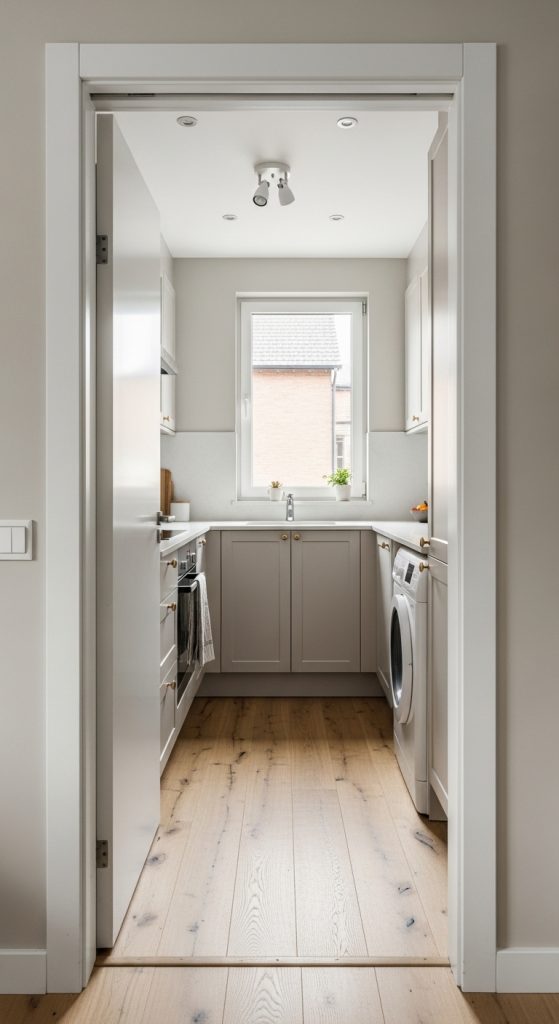
The entrance to your kitchen should always feel open and welcoming. In small kitchens, placing large cabinets or furniture near the doorway can block movement and make the space feel tight. When planning your layout, keep the entry area clear so people can walk in and out easily.
Make sure appliance doors, like the fridge or oven, do not swing into the doorway space. If possible, leave some open wall space near the entrance instead of filling it with tall cabinets. A clear entry creates better flow and makes the kitchen feel larger right away. Good movement at the entrance improves the overall comfort of the space.
20. Always Measure Before Finalizing the Layout
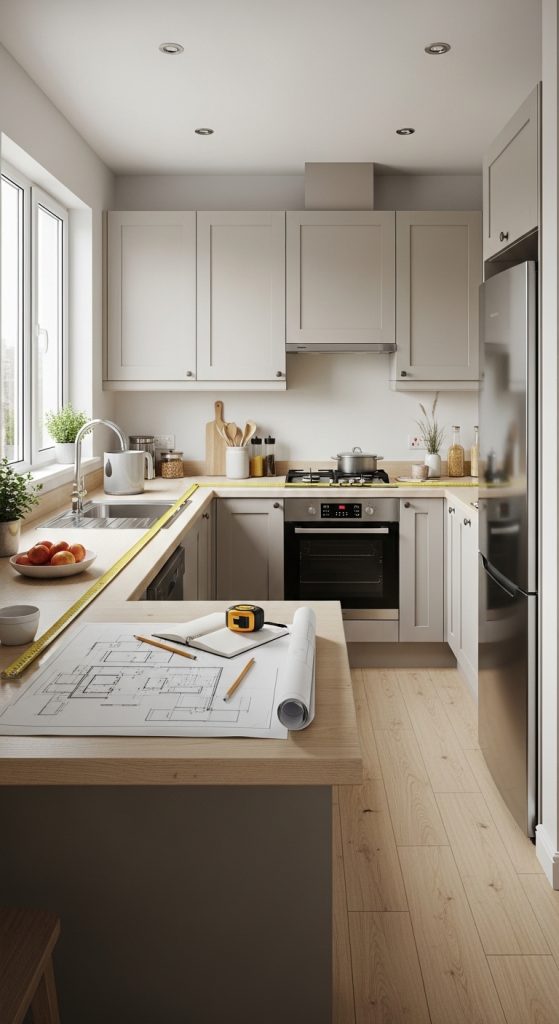
Accurate measurements are one of the most important parts of designing a small kitchen. Even a small mistake can cause big layout problems later. Before ordering cabinets, appliances, or countertops, measure every wall carefully. Check the height, width, and depth of the space.
Also measure doors, windows, and ceiling height. Make sure you know how much space appliances need when their doors are open. Write everything down and double-check your numbers. In tight kitchens, even one or two inches can change the whole layout. Careful measuring helps you avoid expensive mistakes and ensures everything fits perfectly.
Frequently Asked Questions
1. What is the best layout for a very small kitchen?
The best layout depends on the shape of your space. If your kitchen is long and narrow, a galley layout usually works best because it uses both walls and keeps the middle clear. If your kitchen is open to a living room, a single-wall layout may be better. If you have one corner available, an L-shaped layout is often the most flexible and comfortable. The key is to choose a layout that keeps movement easy and does not block walkways.
2. How much space do I need between kitchen cabinets?
For small kitchens, you should leave enough space so doors and drawers can open fully without hitting each other. In a galley kitchen, the walking space between two cabinet rows should feel comfortable for one person to move easily. If two people cook together, it should allow both to pass without feeling stuck. Planning this space carefully makes your kitchen feel less crowded.
3. Can I add an island in a small kitchen?
You can add an island only if there is enough room to walk around it easily. In many small kitchens, a full island is too big and blocks movement. Instead, a slim peninsula or a narrow rolling cart may work better. Always measure your space before adding an island. If the island makes the kitchen feel tight, it is better to skip it.
4. Where should I place the fridge in a small kitchen?
In most small kitchen layouts, the fridge works best at the end of a cabinet run. Placing it in the middle can break up counter space and make the layout feel crowded. When the fridge is at the end, you can create one long prep area. Make sure the fridge door can open fully without blocking a walkway or doorway.
5. How can I make my small kitchen feel bigger without knocking down walls?
You can make a small kitchen feel bigger by choosing the right layout and reducing visual clutter. Keep the center area open and avoid overfilling the space with furniture. Use cabinets that go up to the ceiling to reduce empty gaps. Choose a simple and balanced cabinet design. When the layout flows well and movement is easy, the kitchen naturally feels larger.
6. What is the biggest mistake people make when designing a small kitchen?
The biggest mistake is not planning the layout before buying cabinets and appliances. Many people focus on style first instead of function. This can lead to blocked walkways, not enough counter space, or appliances placed too close together. In small kitchens, every inch matters. Always measure carefully and plan your work triangle before making final decisions.