Published On:
17 Kids Closet Storage Ideas to Maximize Space and Organization
Share:


Organizing kids’ closets can be a challenge for many families. With clothes, toys, and other items all in one place, it’s easy for clutter to build up quickly. Finding solutions that keep everything tidy and easy to access is important for both parents and children.
17 kids closet storage ideas offer practical ways to create a more organized and functional space that works for the whole family. These ideas help make the closet easier to use and keep clean, saving time and stress in daily routines.
1) Install adjustable shelving for growing storage needs
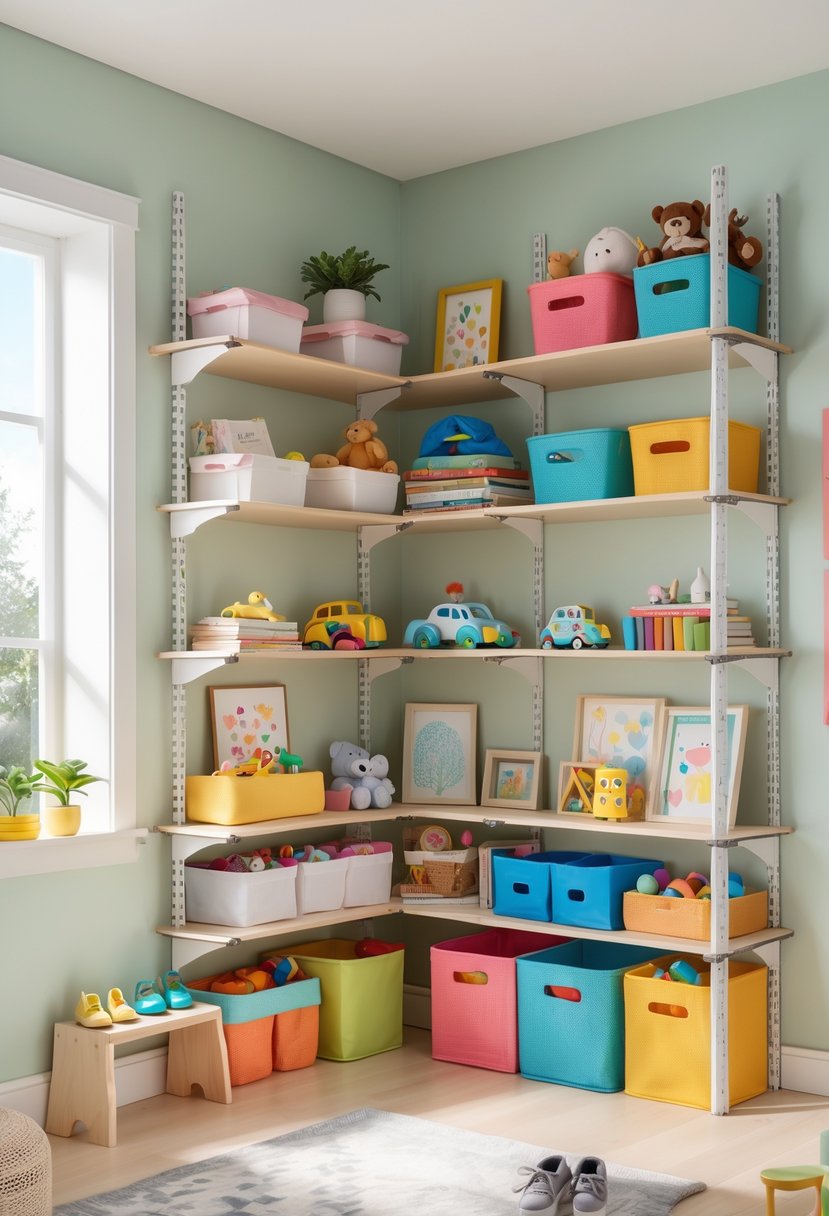
Adjustable shelving allows a closet to change as a child grows. Shelves can be moved higher or lower to fit bigger clothes, toys, or school supplies. This flexibility helps keep the closet organized over time.
Parents can create custom spaces for different items by changing shelf heights. It makes finding and reaching things easier for kids. This type of shelving also maximizes space in small or large closets.
2) Use color-coded bins for easy toy and clothing sorting
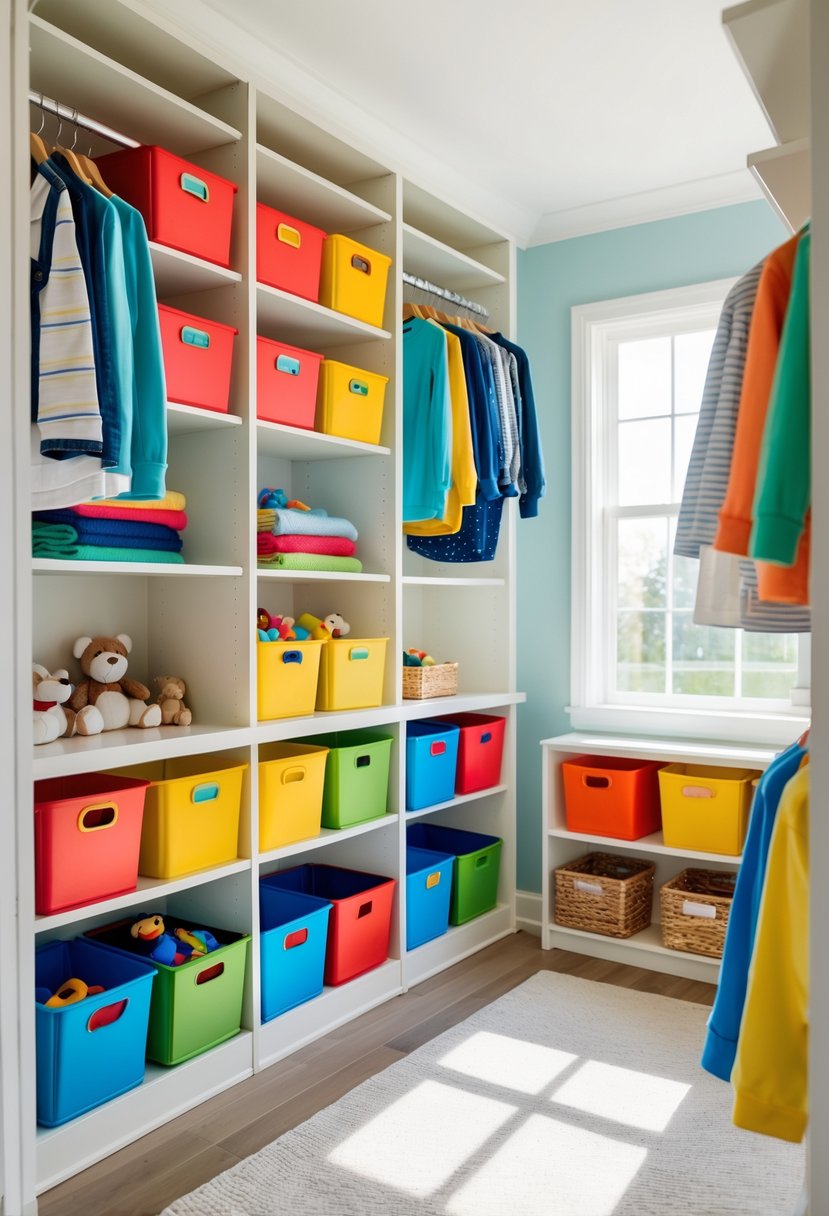
Color-coded bins help keep toys and clothes organized by category. Each color can represent a type of item, like toys, clothes, or art supplies. This makes it simple for kids to find what they need and put things away.
Using different colors also helps children learn to sort and clean up on their own. It reduces clutter and keeps the closet tidy. Parents can quickly spot missing or misplaced items at a glance.
3) Add low hanging rods for kid-friendly access
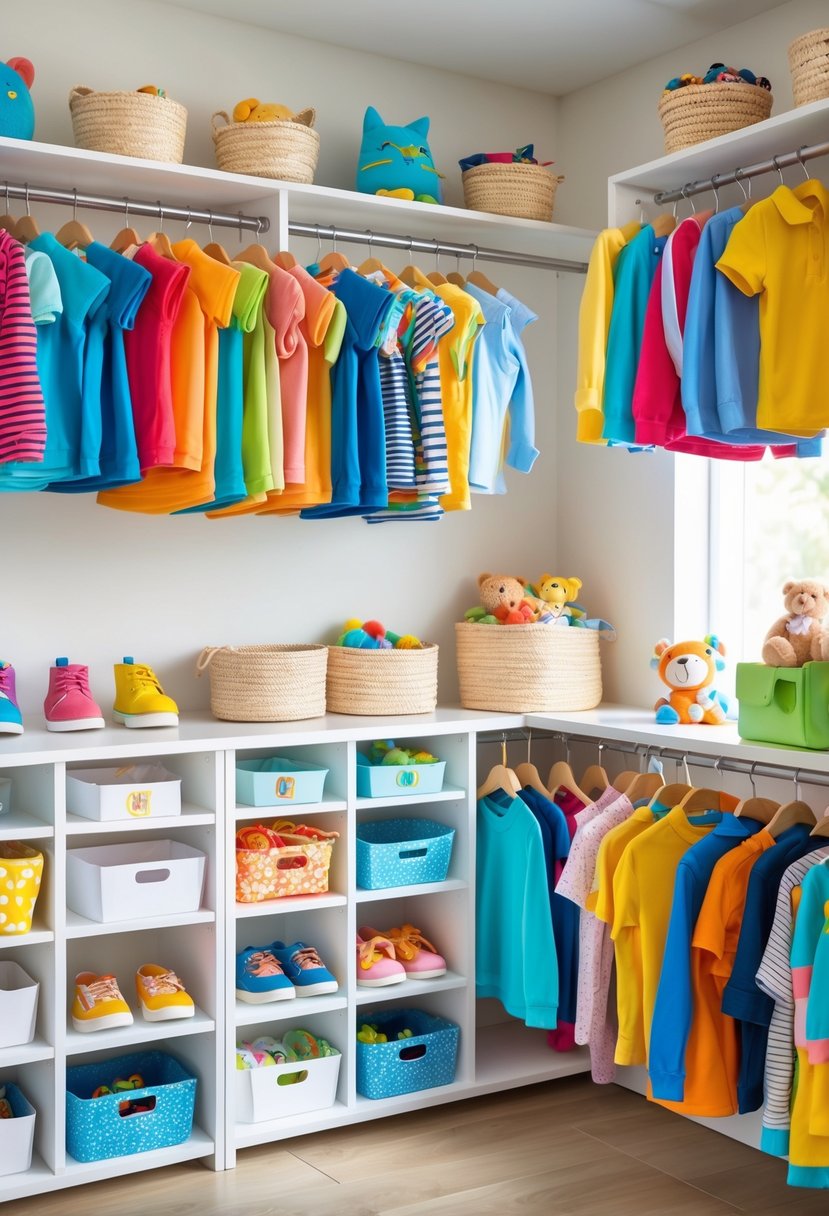
Low hanging rods help kids reach their clothes easily. Installing a rod about 30 inches from the floor puts shirts and jackets within their reach. This reduces the need for climbing or asking for help.
Adding a second rod below the main one doubles hanging space. It makes organizing tops and bottoms simple. Kids learn to put away clothes more independently with this setup.
Choosing sturdy rods is important for safety. Metal or wood rods with secure brackets work well. This small change improves closet use and keeps clothes tidy.
4) Incorporate wall-mounted hooks to maximize vertical space
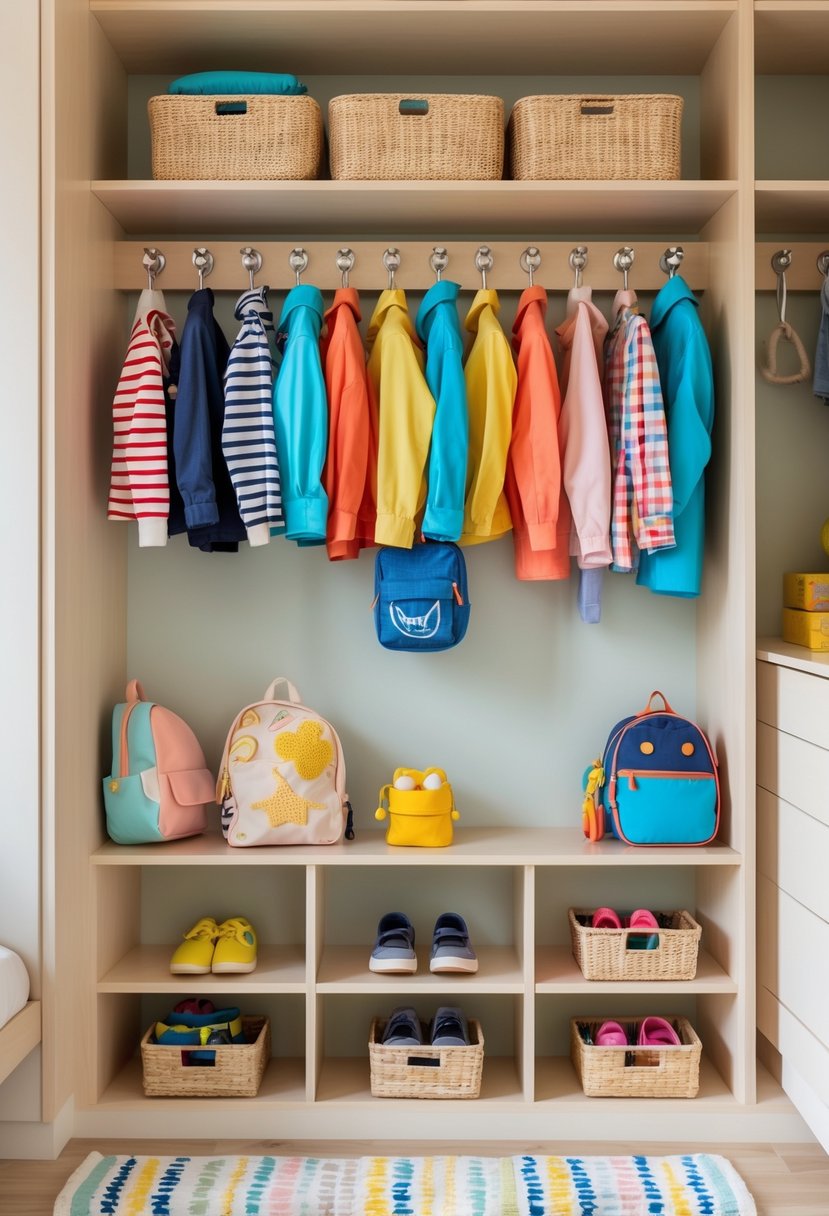
Wall-mounted hooks offer a simple way to use vertical space in kids’ closets. They keep items like bags, hats, and jackets off the floor and within easy reach.
Choosing sturdy, heavy-duty hooks ensures they hold up to daily use. Installing them at different heights can make the space more accessible for children of various ages.
This method also frees up shelf and drawer space. It helps maintain order without crowding the closet, making it easier to keep things tidy.
5) Use clear plastic storage boxes for visibility
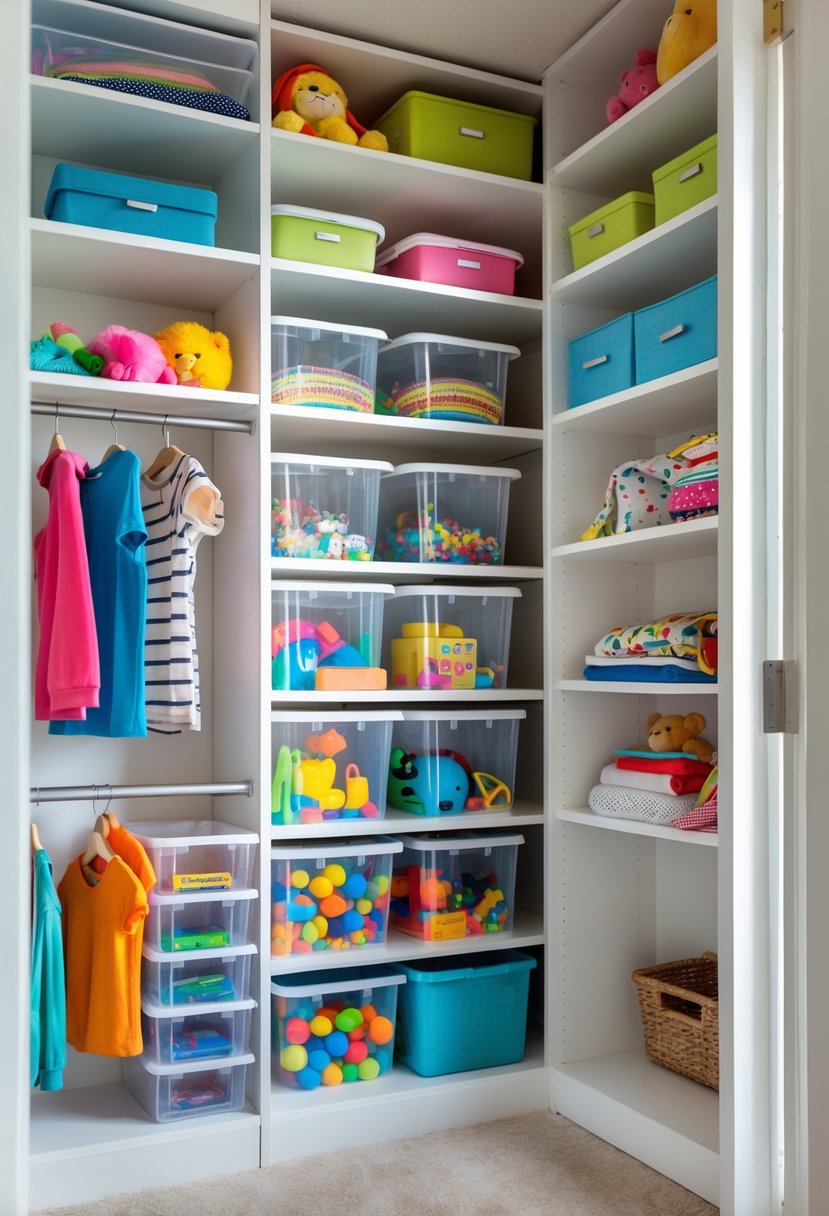
Clear plastic storage boxes help kids see what is inside without opening them. This makes it easier to find clothes, toys, or school supplies quickly.
Labeling each box adds another layer of organization. It helps children know exactly where to put things back after use.
Stackable clear bins save space and keep closets neat. They also protect items from dust while keeping everything visible at a glance.
6) Label bins and drawers for quick identification
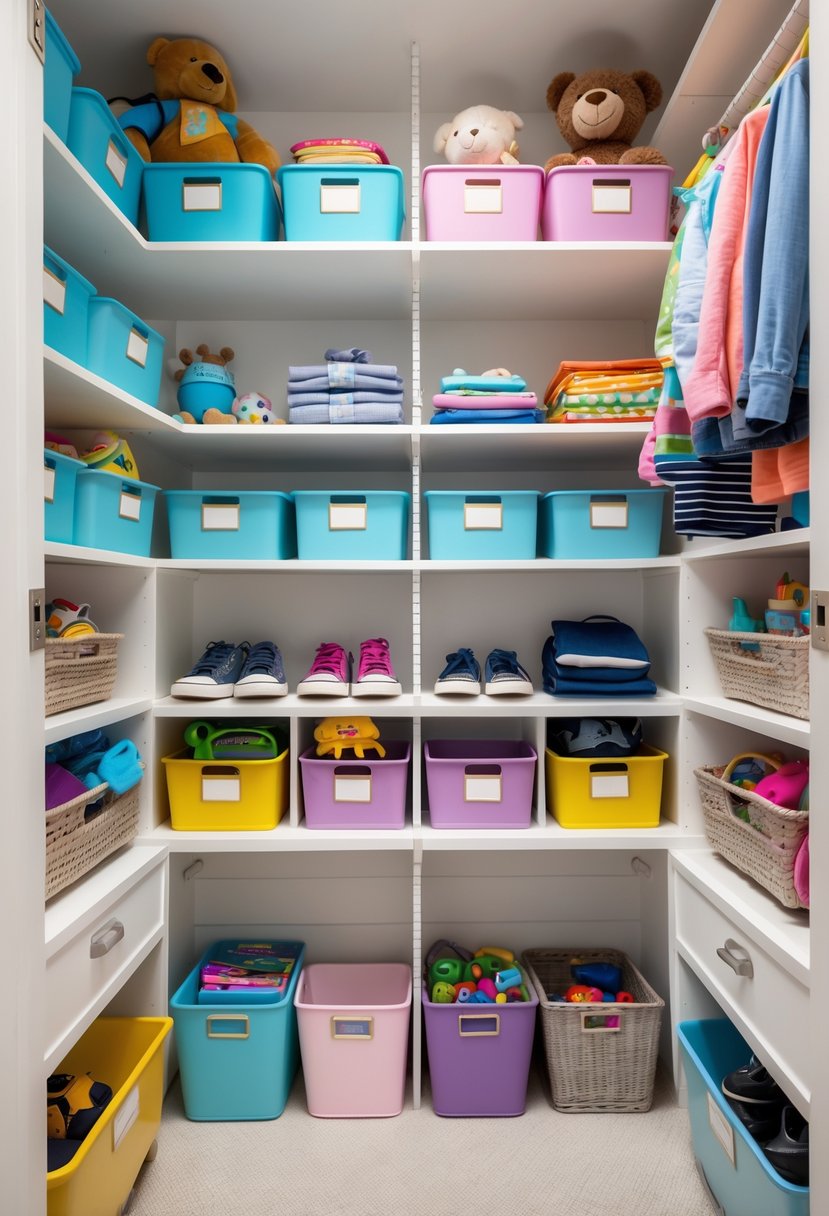
Labeling bins and drawers helps kids find their clothes and toys faster. Clear labels avoid confusion and save time during busy mornings.
Using both words and pictures on labels works well for younger children who cannot read yet. It also encourages them to put items back in the right place.
Customizable labels can fit different storage types. They make the closet look neat and organized. This simple step supports independence and keeps the space tidy.
7) Implement pull-out baskets for small items
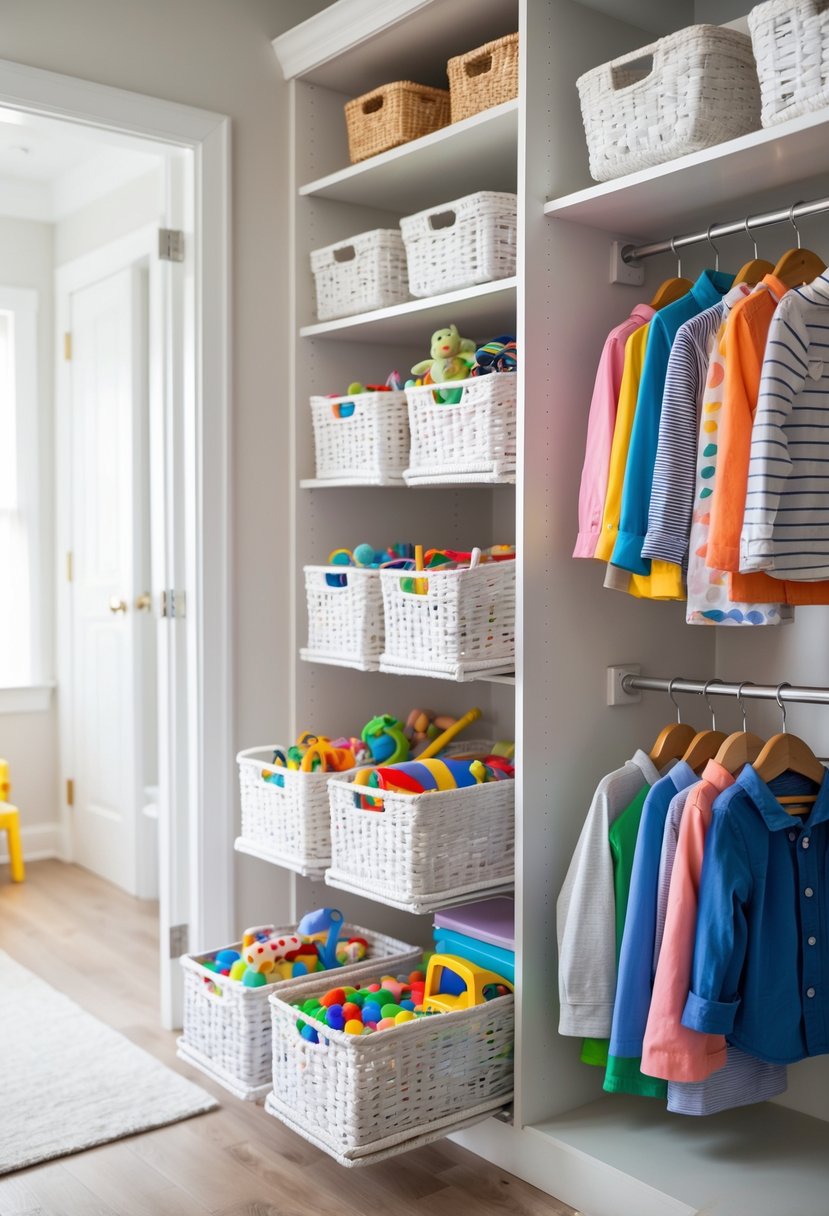
Pull-out baskets help keep small items organized and easy to reach. They work well for things like hats, gloves, or toys that often get lost in clutter.
These baskets make good use of lower shelf space. Kids can pull them out without needing help, which builds their independence.
Using pull-out baskets also keeps the closet neat. Items stay contained, and the closet looks tidy with less effort.
8) Add pegboards to organize accessories and hats
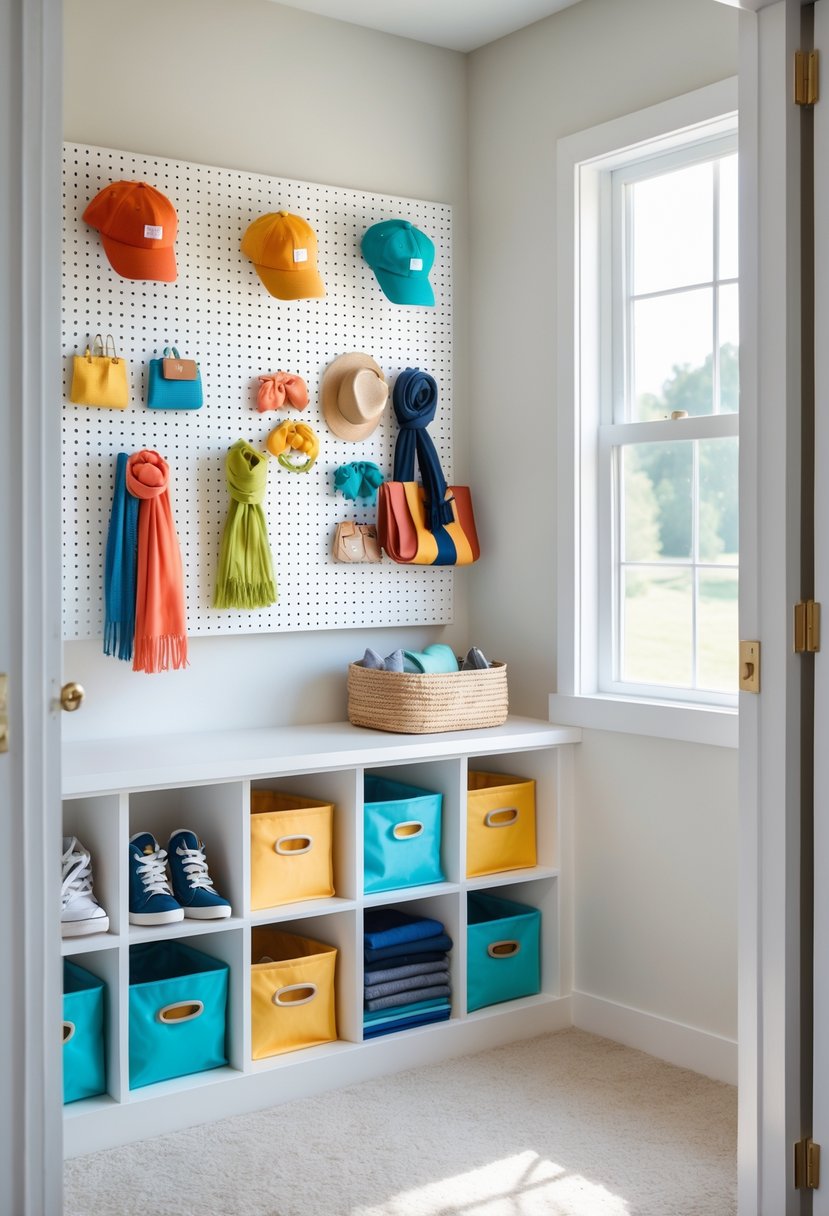
Pegboards provide a simple way to keep accessories and hats neat and easy to find. They can be mounted on closet walls or doors, using hooks to hang items like hats, scarves, and small bags.
This keeps things off the floor and within reach. It also helps children quickly grab what they need and put things away.
Using pegboards can save space and add a visual order to the closet. It works well for keeping frequently used items organized and visible.
9) Use drawer dividers to separate socks and underwear
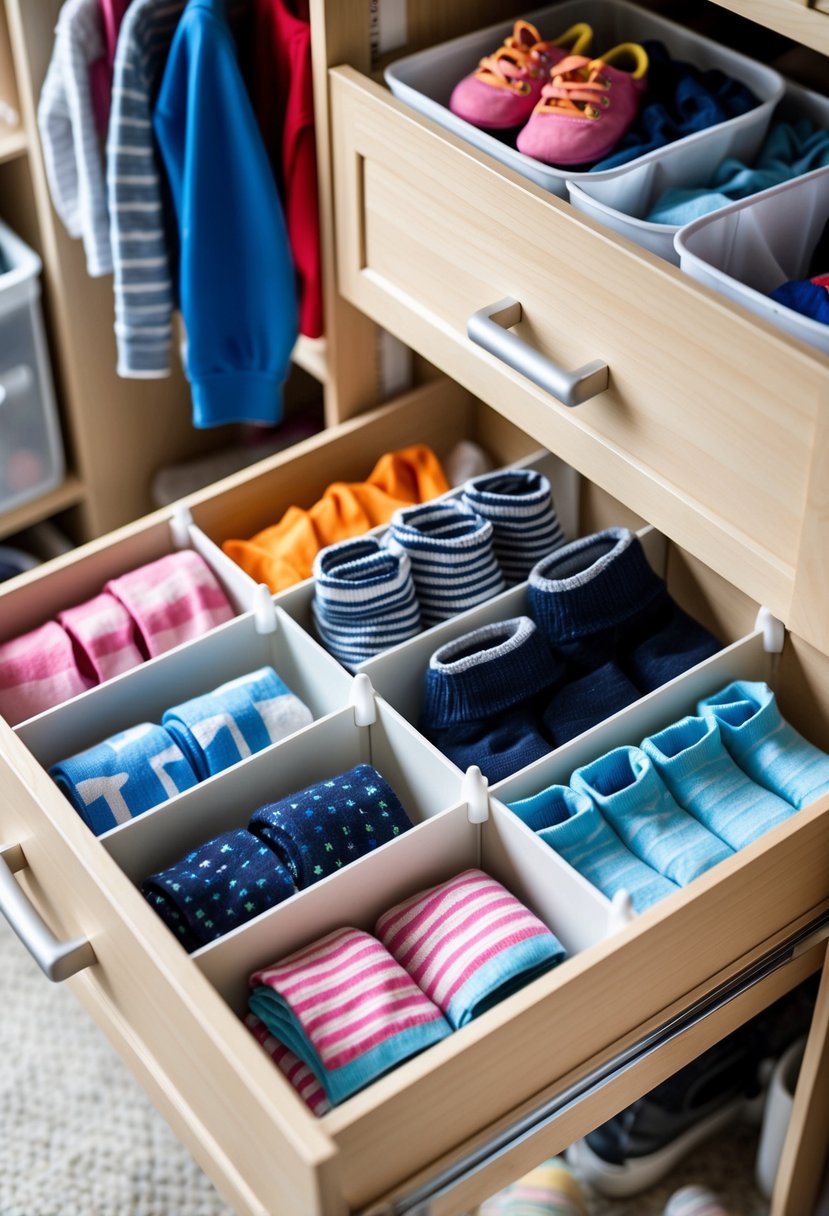
Drawer dividers help keep socks and underwear neat and easy to find. They fit inside drawers and create separate compartments. This stops items from mixing and saves time when getting dressed.
Dividers come in different materials like fabric, plastic, or wood. Some are adjustable, fitting various drawer sizes. They can also be used for other small items like ties or accessories.
Using dividers makes it simple for kids to keep their drawers organized. It encourages good habits by making storage clear and accessible.
10) Create a shoe rack at child’s height
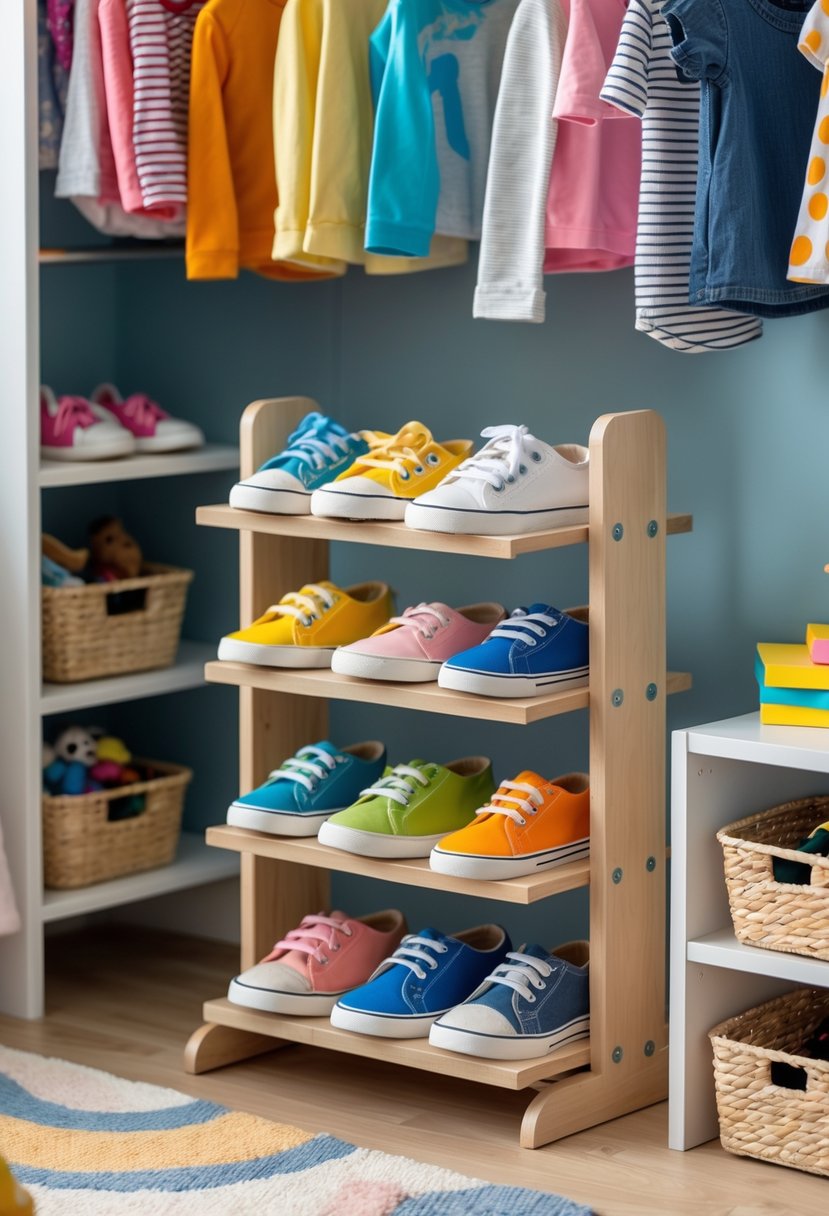
A shoe rack placed at a child’s height helps them reach their shoes easily. This encourages independence and keeps the floor clear.
The rack can be simple, using wood or plastic shelves spaced for small shoes. It should be sturdy but light enough for kids to use safely.
Placing the rack in a child’s bedroom or near the door makes daily routines smoother. Kids learn to put away shoes on their own, reducing clutter and making the space more organized.
11) Incorporate rotating closet organizers for efficient use
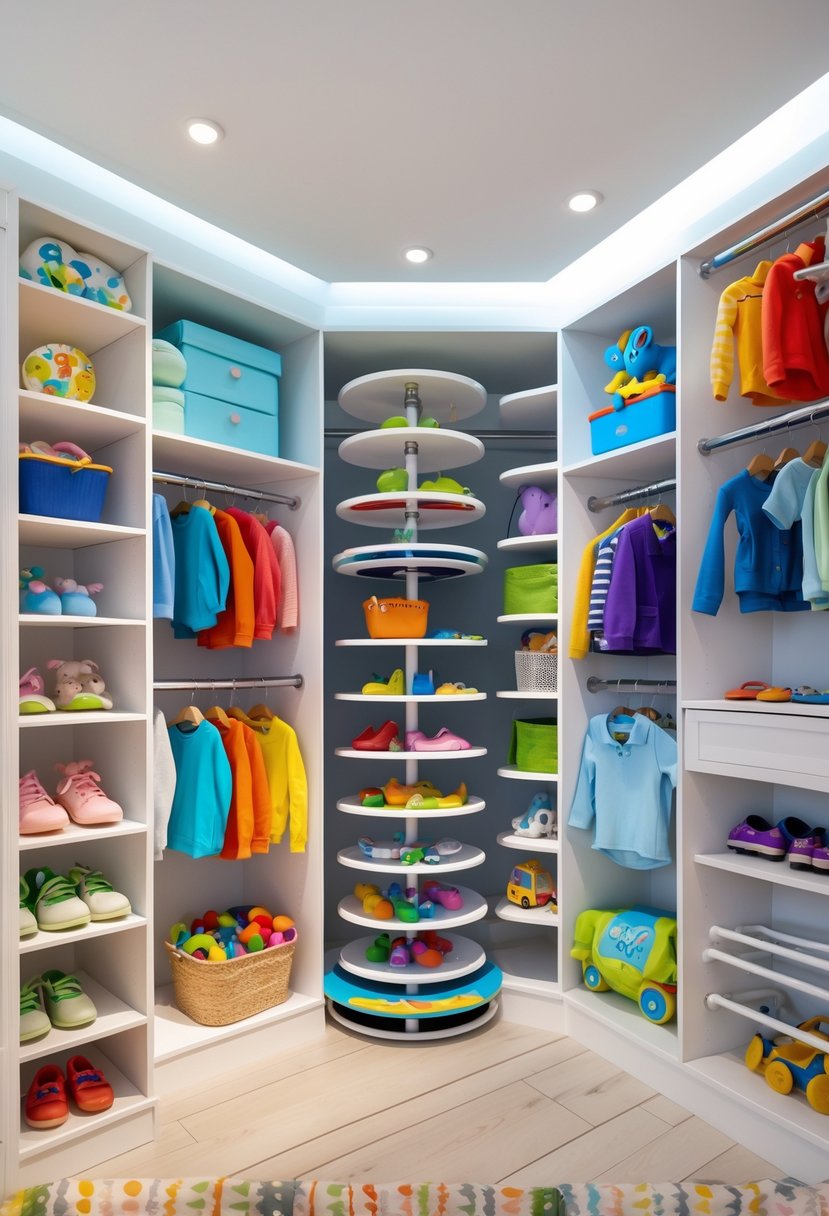
Rotating closet organizers help maximize space by using vertical storage. They can hold multiple items like accessories or underwear on hooks or small shelves.
These organizers spin, making it easy for kids to reach everything without digging through piles. They fit well in small or crowded closets.
This system can reduce clutter and keep items visible. It works well for both toddlers and older children who benefit from easy access.
12) Add shelves above rods for seasonal items
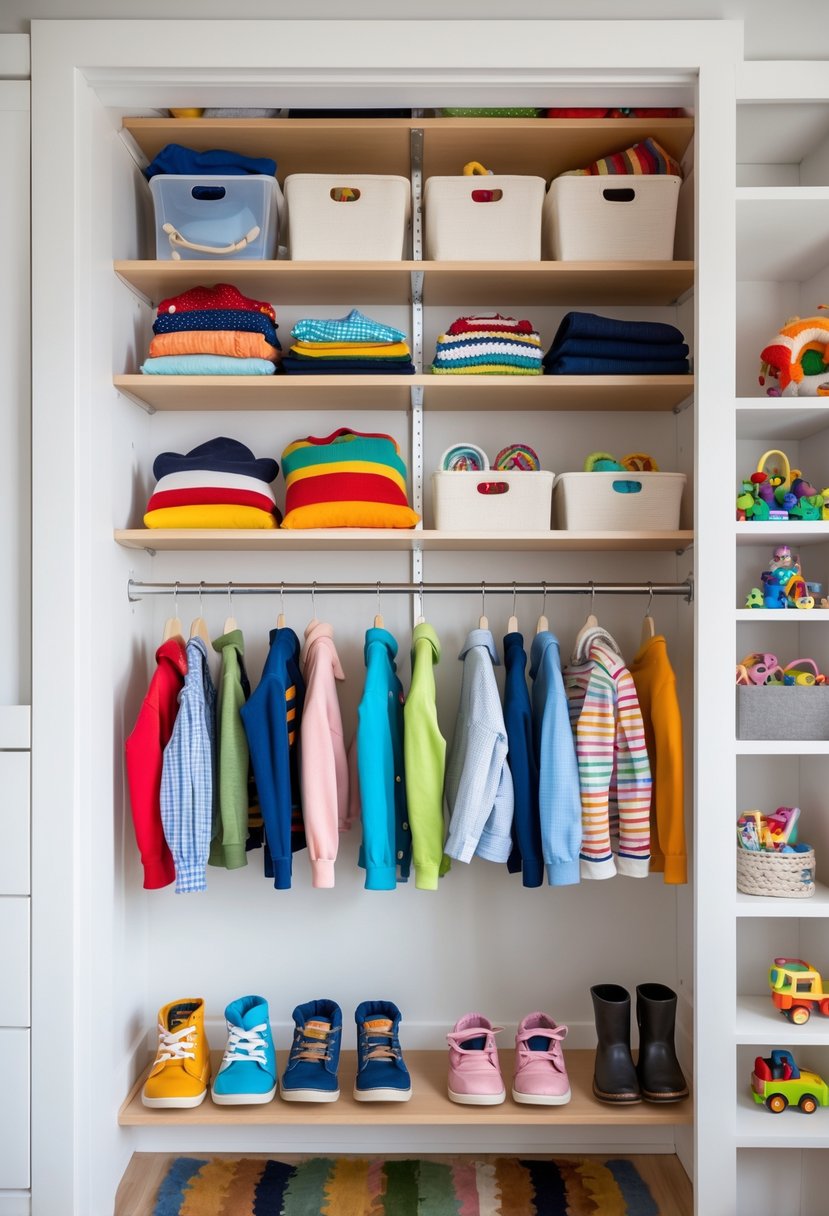
Adding shelves above closet rods is a smart way to use vertical space. These shelves are ideal for storing seasonal clothes, hats, and bags that are not used daily.
This setup keeps bulky items out of the way but still easy to access when needed. It also helps keep the closet tidy.
By using this space wisely, the rest of the closet can focus on everyday clothing and shoes. This simple change can greatly improve organization.
13) Use over-the-door organizers for extra storage
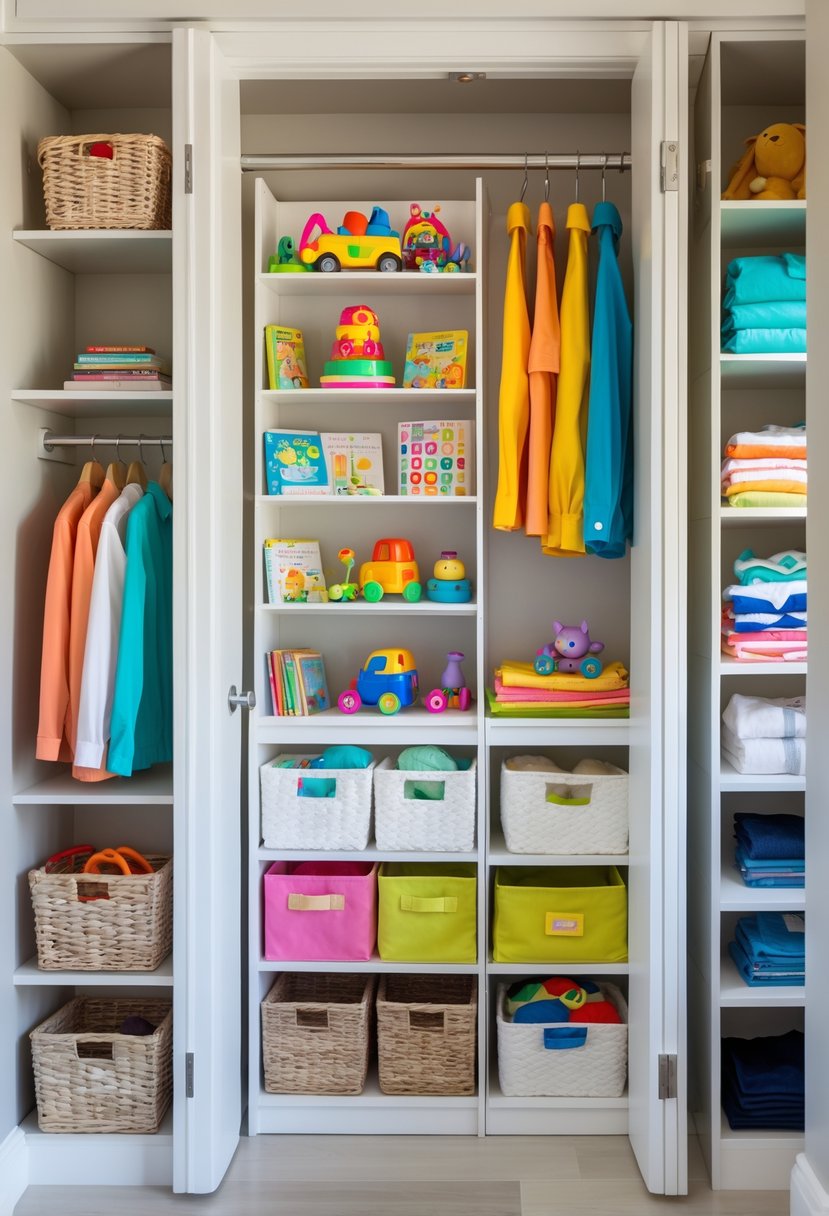
Over-the-door organizers are a simple way to add storage without taking up floor space. They hang on the back of the closet door and offer multiple pockets or compartments. This makes it easy to store small items like shoes, accessories, or toys.
Many organizers are made from fabric, which can be both durable and stylish. Installation is quick and fits most standard doors. This helps keep items visible and easy to reach, encouraging kids to stay organized.
14) Incorporate fabric bins for lightweight toys
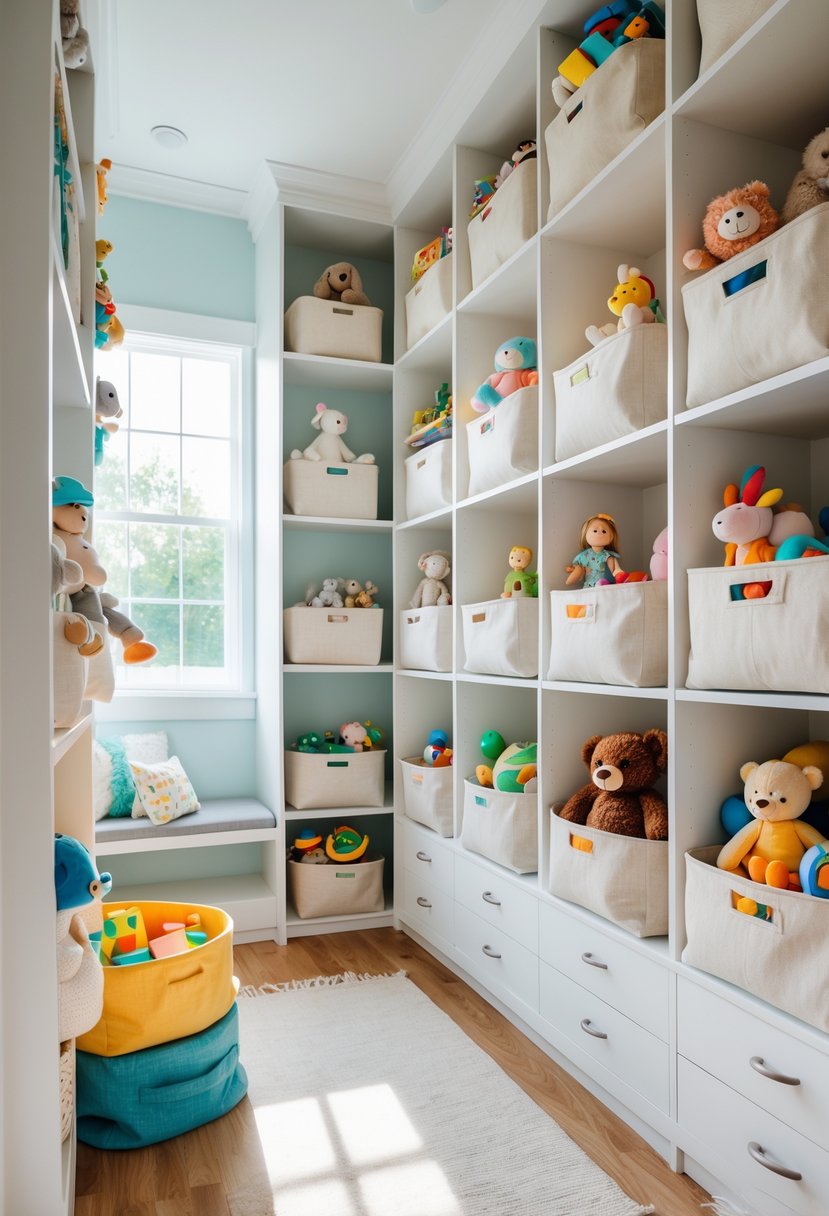
Fabric bins are a practical choice for storing lightweight toys. They are easy to move and can fit on shelves or inside closets. These bins help keep toys organized without taking up much space.
They come in many colors and patterns, making them a good way to add some style to the closet. Using fabric bins also lets kids reach their toys easily, encouraging tidiness.
Because they are collapsible, fabric bins can be folded away when not in use. This adds flexibility to the storage options in a kid’s closet.
15) Add a small dresser inside closet for folded clothes
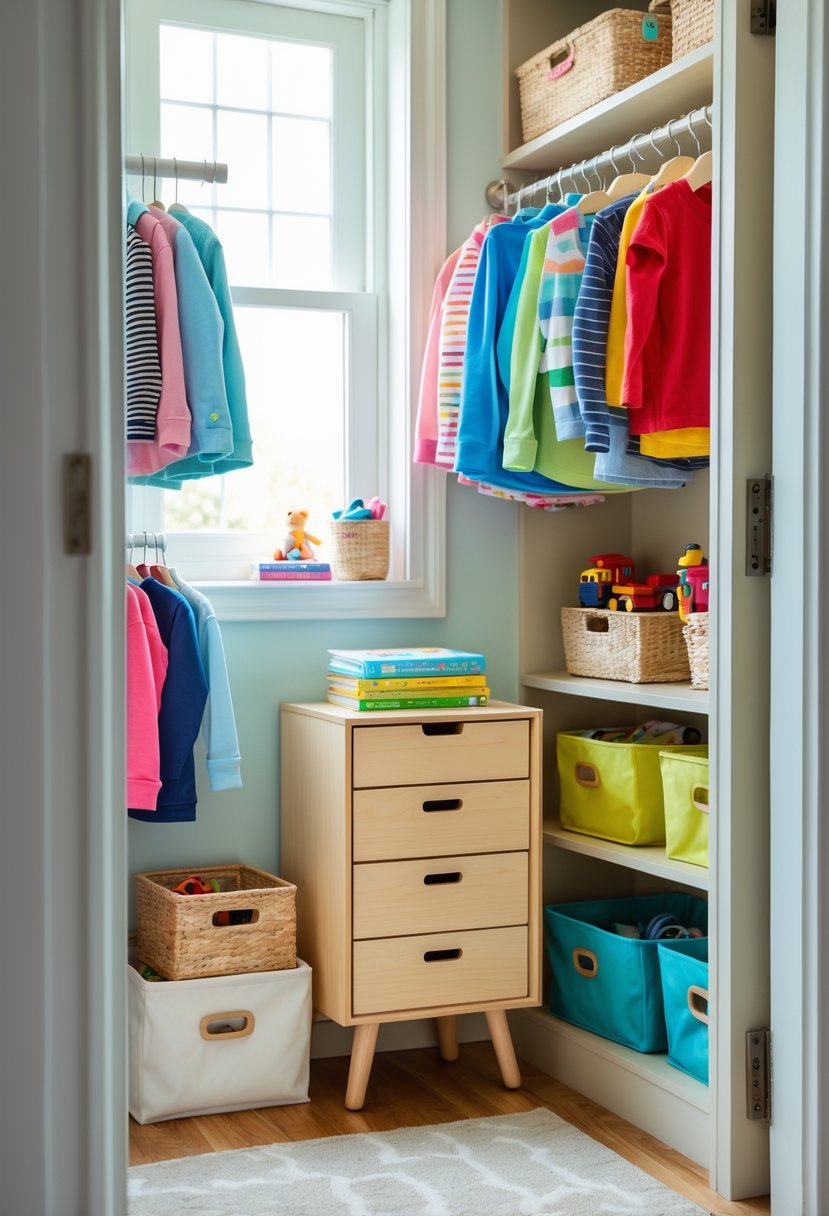
Adding a small dresser inside a closet helps keep folded clothes organized and easy to reach. It saves floor space in the bedroom by moving bulky furniture into the closet.
This setup works well for items like pajamas, socks, and underwear. It also creates a neat, uncluttered look by tucking away essentials.
A small dresser can fit under hanging clothes or in empty closet corners. This makes good use of vertical and horizontal space together.
16) Install a magnetic strip for small metal items
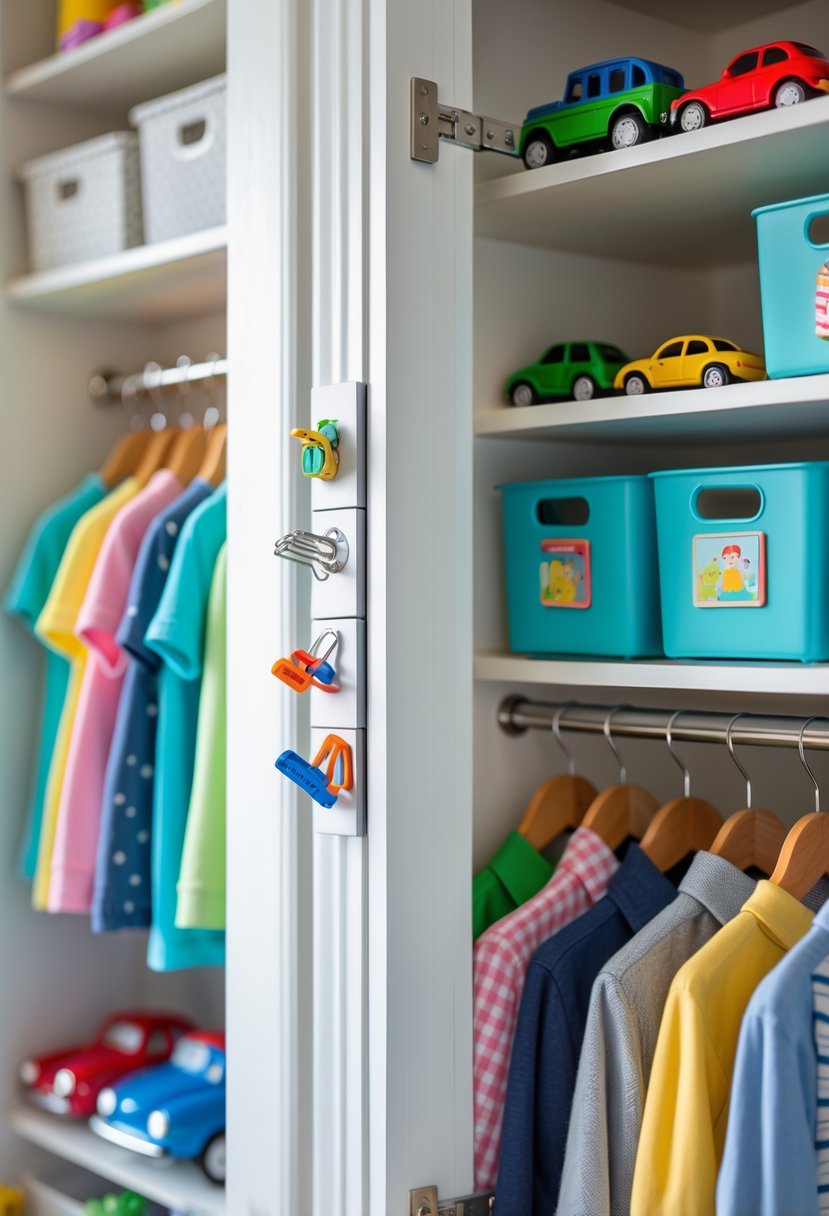
A magnetic strip can hold small metal toys like cars, trains, or building pieces. It attaches easily to a wall or inside the closet door, keeping these items visible and off the floor.
This method saves space and helps prevent lost pieces. It works well for metal accessories like hair clips or small tools too.
The strip keeps items organized and easy to reach. It is simple to mount and can be placed at any height for kids to use safely.
17) Use hanging closet organizers for shoes or toys
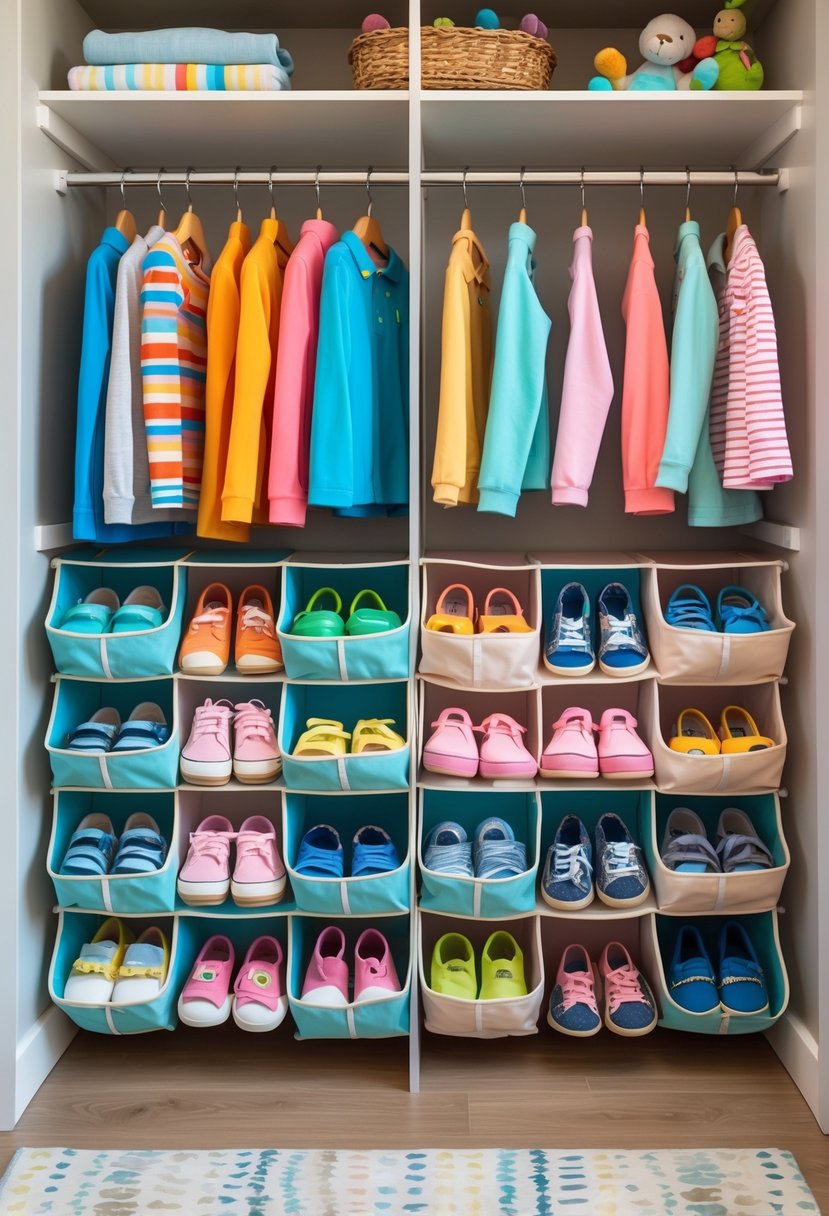
Hanging closet organizers help save space by using vertical areas. They keep shoes, toys, or small items visible and easy to reach.
These organizers usually have pockets or compartments. This design helps separate items and prevents clutter.
They work well in kids’ closets because children can find and put away things on their own. Hanging organizers keep the floor clear and make the closet look tidier.
Frequently Asked Questions
How can I maximize storage space in a small kids’ closet?
Adjustable shelving lets storage grow as kids get bigger. Wall-mounted hooks use vertical space for backpacks and jackets. Low hanging rods give kids easy access to clothes without needing help. Clear plastic boxes show what’s inside, reducing clutter.
What are the best budget-friendly ways to organize a kids’ closet?
Color-coded bins help sort toys and clothes quickly. Adhesive hooks avoid extra tools and damage to walls. Using secondhand shelves or repurposing containers also cuts costs. Simple, low-cost storage options often work better than expensive furniture.
Which DIY closet organization projects work best for children’s closets?
Building adjustable shelves and installing hooks at kid’s height are great DIY tasks. Painting bins or adding labels can make organizing fun and personal. These projects are usually small, affordable, and can adapt as children grow.
Are IKEA closet systems good for kids, and which components are most useful?
IKEA systems often have adjustable shelves and modular pieces, which fit kids’ changing needs. Components like low hanging rods and drawer inserts work well in kids’ rooms. The options to mix and match parts make it easier to create kid-friendly closets.
Is it cheaper to build custom closet storage or buy a pre-made organizer?
Pre-made organizers usually cost less upfront and take less time to set up. Custom storage can be more expensive but fits space perfectly and lasts longer. The choice depends on budget, room size, and how much flexibility is needed.
What should I do with excess kids’ clothes when the closet is overflowing?
Sort clothes by size and season before deciding. Donate or gift items that no longer fit. Store out-of-season clothes in labeled bins or under the bed. Keeping only what they wear daily helps maintain order.