Published On:
15 Singlewide Mobile Home Ideas for Efficient and Stylish Living
Share:


Living in a singlewide mobile home means making the most of a smaller space while keeping it comfortable and stylish. It can sometimes feel challenging to balance function and design, but simple changes can make a big difference.
This article helps you discover practical and creative ideas to refresh your singlewide mobile home, making it feel more open, cozy, and personalized. These ideas focus on improving storage, layout, and decor so your home suits your lifestyle without feeling cramped.
1) Use white walls with dark flooring for a modern, airy feel
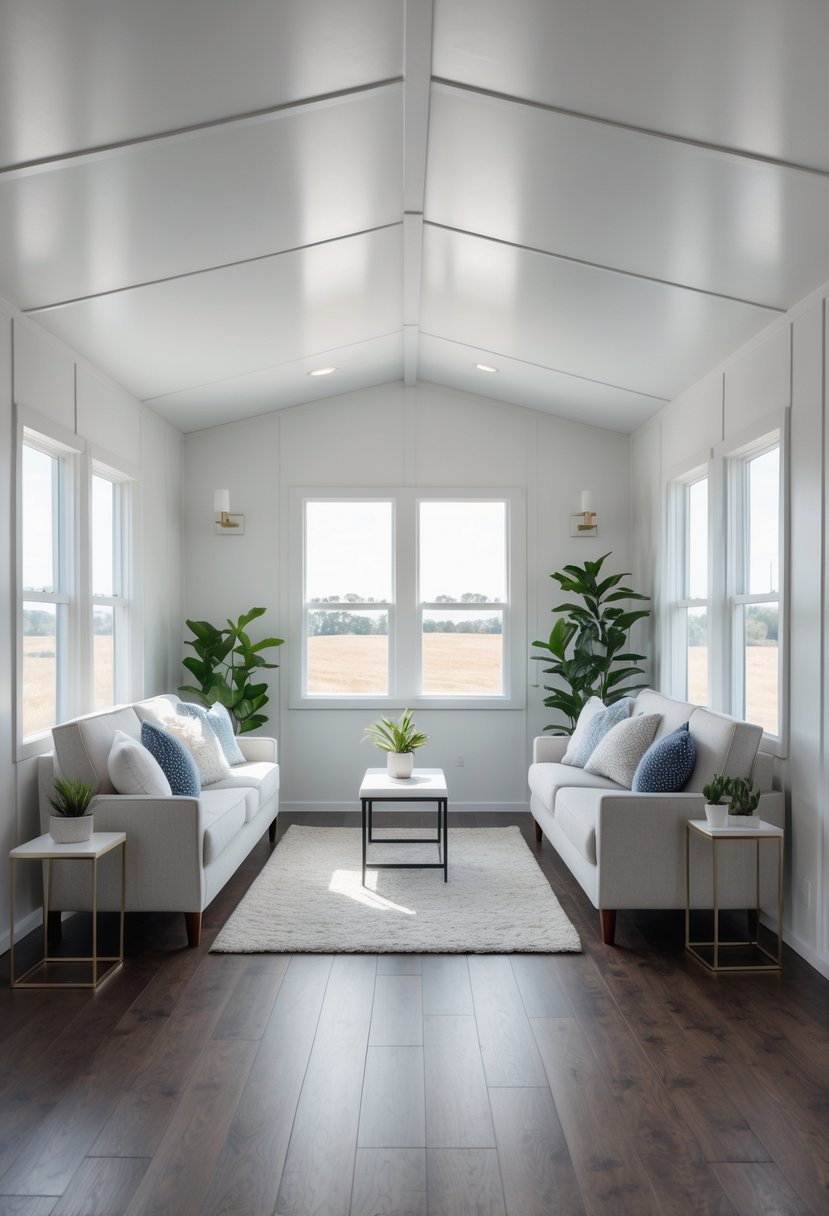
Using white walls with dark floors creates a clean and modern look in your mobile home. The contrast adds depth while keeping the space bright and open.
This combination works well with many decor styles, from simple to more traditional.
Dark floors ground the room, making it feel cozy without closing in the space. White walls reflect light, helping your home feel larger and airier.
2) Install peel-and-stick backsplash in the kitchen for easy style upgrade
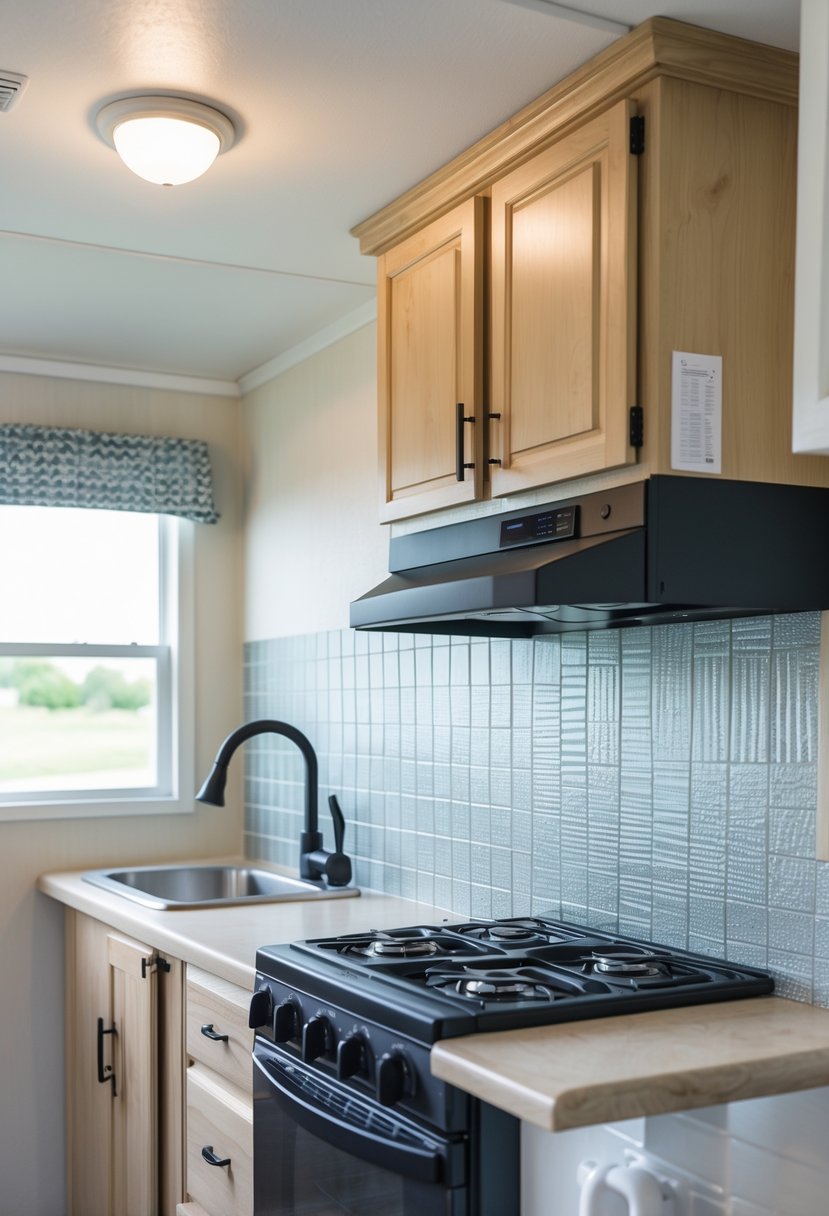
You can quickly improve your kitchen’s look by installing a peel-and-stick backsplash. These tiles are simple to apply and don’t need grout or mortar.
You only need basic tools, making this a great option if you want a quick, affordable update.
Peel-and-stick backsplashes come in many styles and colors. Choose one that fits your space and personal taste.
This project is renter-friendly and can be done in a weekend. It’s an easy way to add style without much work.
3) Incorporate open shelving to maximize storage and display
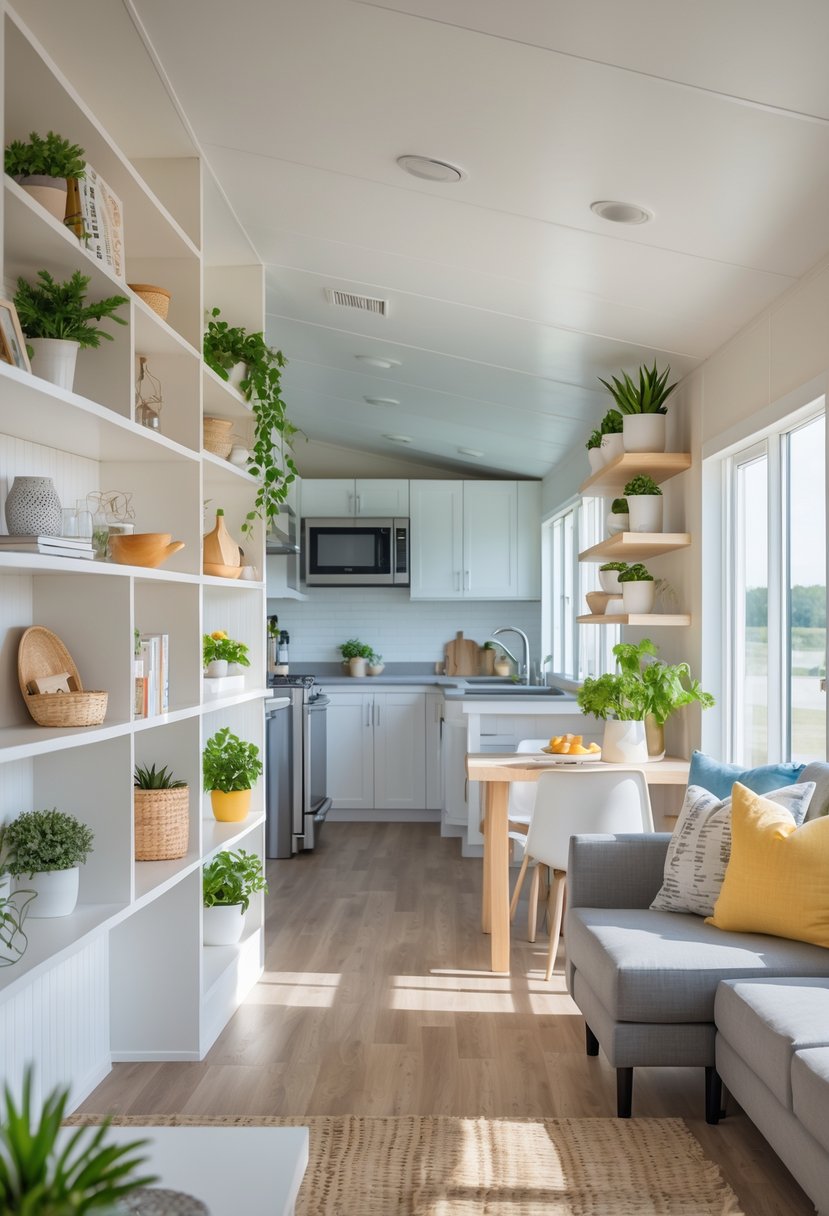
You can use open shelving to add storage without taking up too much space. Shelves mounted on walls free up floor area and keep your belongings easy to reach.
Open shelves also let you show off items like books, plants, or decorations. This adds personality while keeping things organized.
Choose shelves that fit your style, whether modern or rustic. Open shelving balances function and design in a small home.
4) Layer area rugs to add texture and define spaces
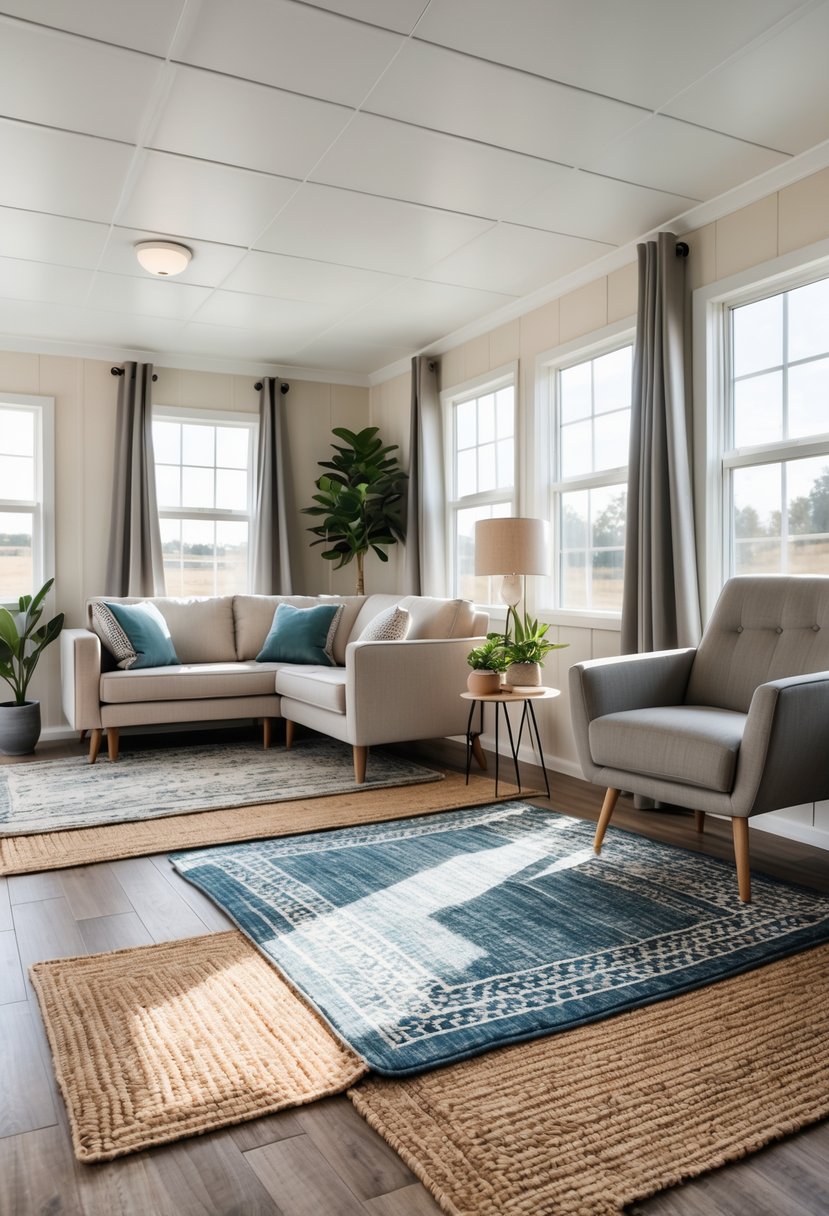
You can use layered rugs to add texture and color to your singlewide home. Place a large rug to anchor the main seating area. Then, add a smaller, patterned rug on top to create depth.
Layering also helps define different parts of a room, especially in open spaces. Mix different colors and textures for a balanced look. This adds warmth and keeps your space from feeling flat or plain.
5) Add wall-mounted storage like floating shelves to save floor space
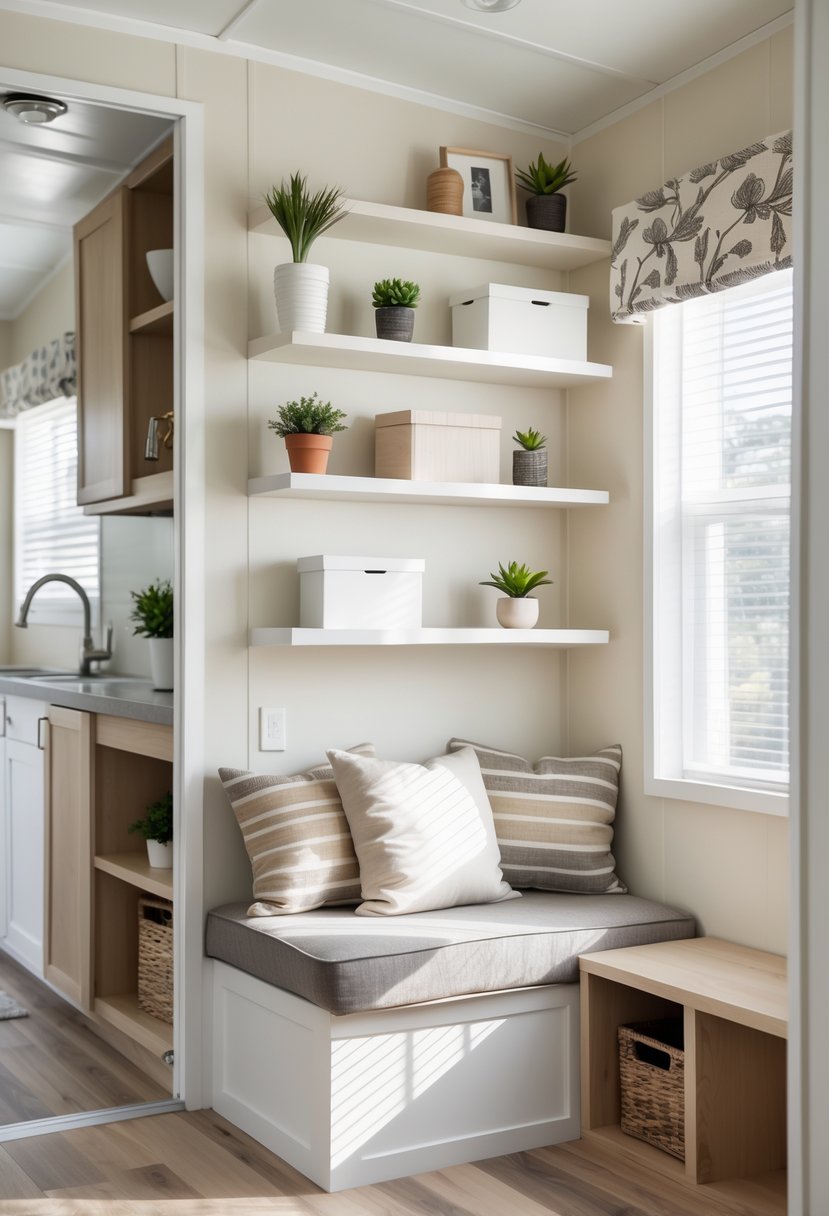
You can use floating shelves to free up floor space in your mobile home. These shelves attach directly to the wall without bulky supports, giving you more room to move around.
Floating shelves hold books, plants, or small items, keeping your living area organized. They also look clean and modern, which fits well in small spaces.
Installation is easy, and you can place them in any room. Adding wall storage helps keep your home tidy and maximizes every inch of space.
6) Choose multi-functional furniture with built-in storage
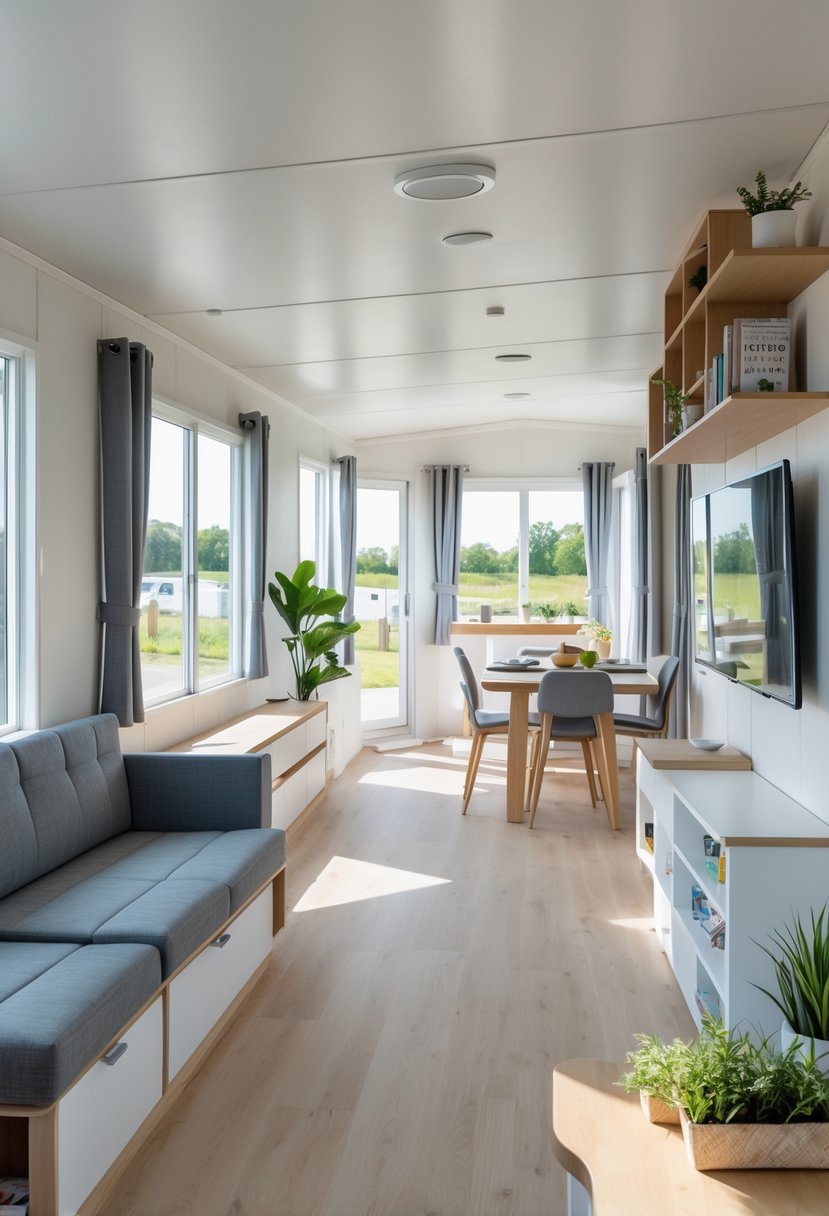
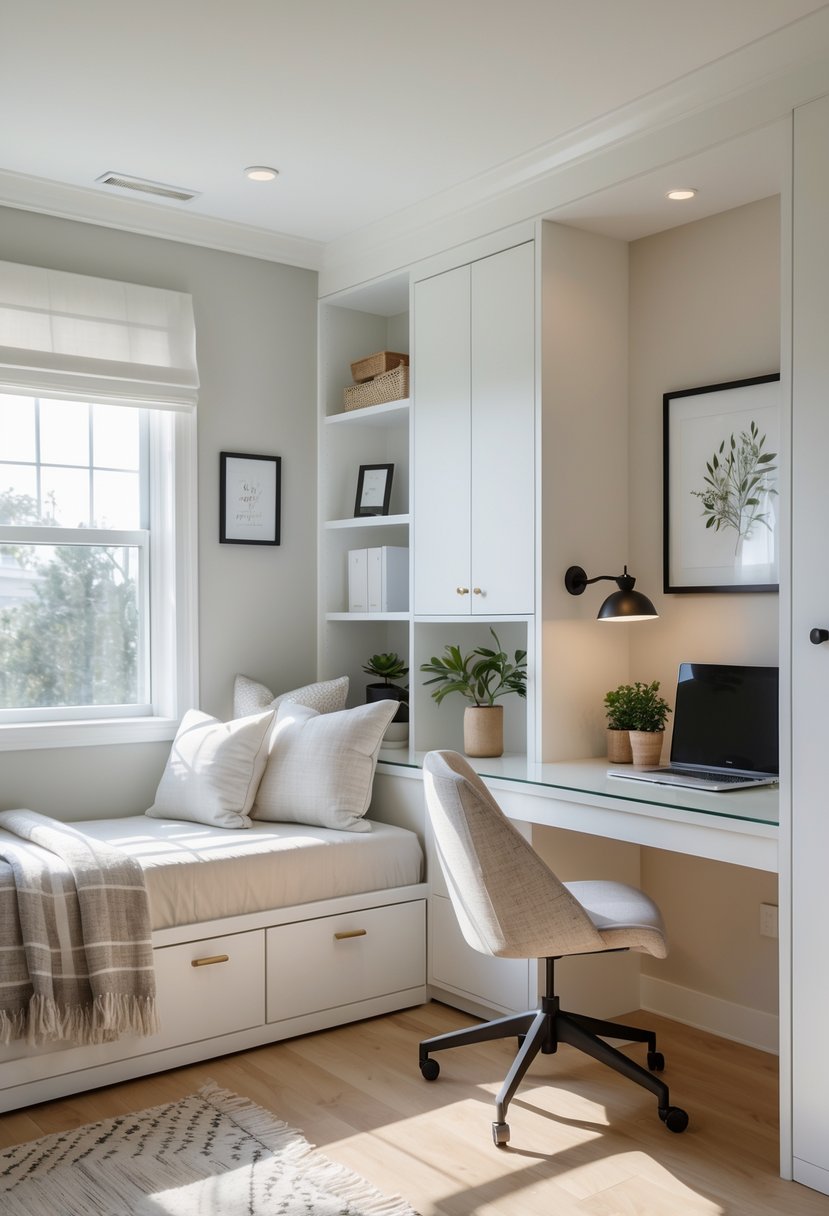
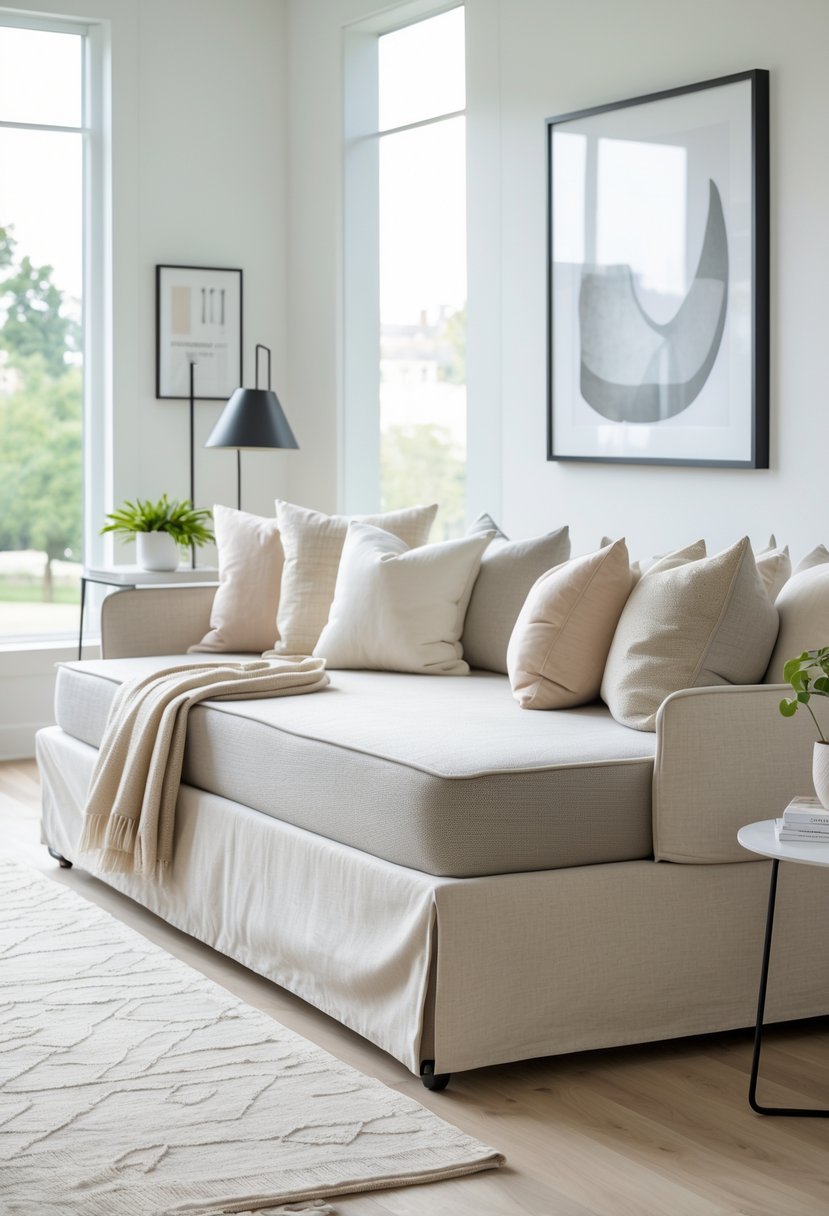
You can save a lot of space by picking furniture that has built-in storage. Items like sofas with hidden compartments or ottomans that open up give you extra room to store things.
This type of furniture keeps your home tidy without crowding it. Look for beds with drawers underneath or coffee tables with storage inside. These pieces help you use every inch wisely.
7) Apply woven textures through cushions and throws for warmth
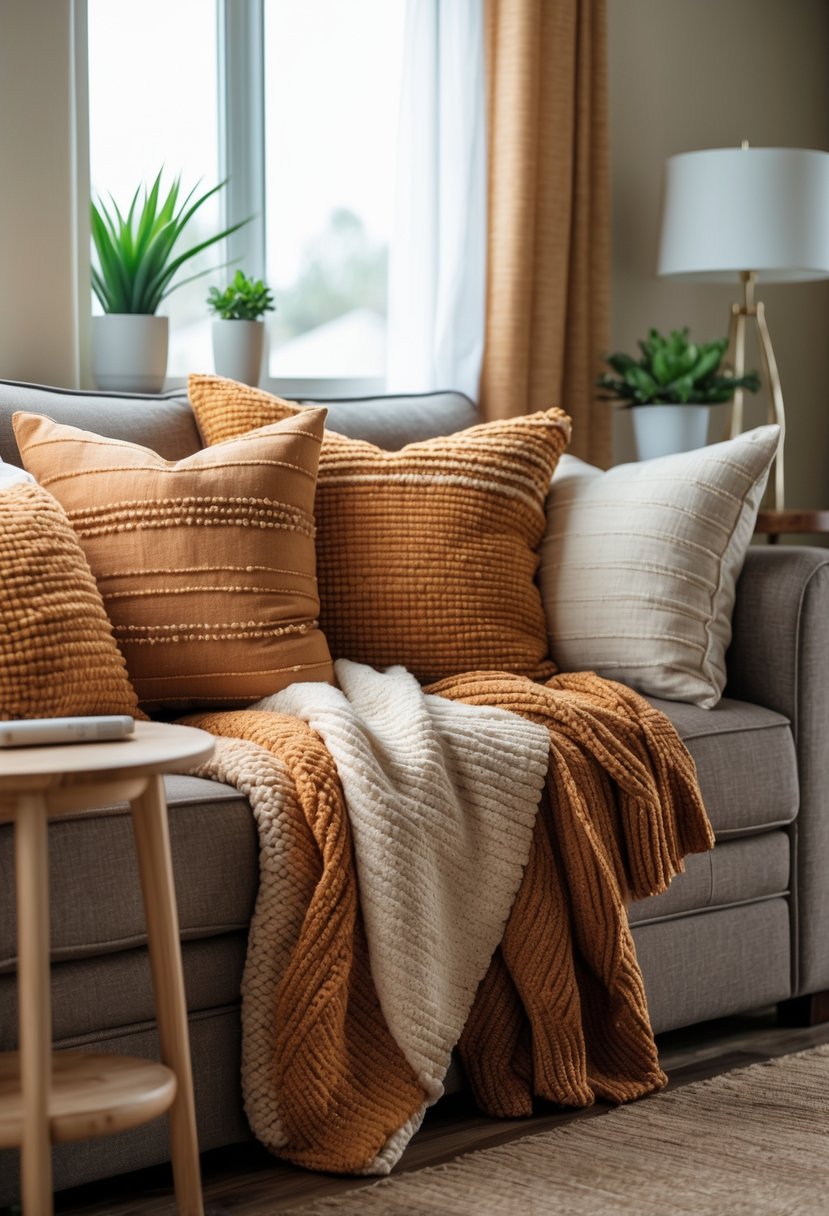
You can add warmth to your singlewide mobile home by using cushions and throws with woven textures. These soft fabrics bring a cozy feeling without taking up space.
Look for materials like wool, cotton, or chunky knits. They add depth and comfort to your living area. Mixing different textures also makes your space more inviting and visually interesting.
Throw blankets draped over chairs or sofas create a stylish way to stay warm on cooler days. Cushions with woven patterns help soften hard surfaces and make your home feel more comfortable.
8) Use smart storage solutions like pegboards in the workspace
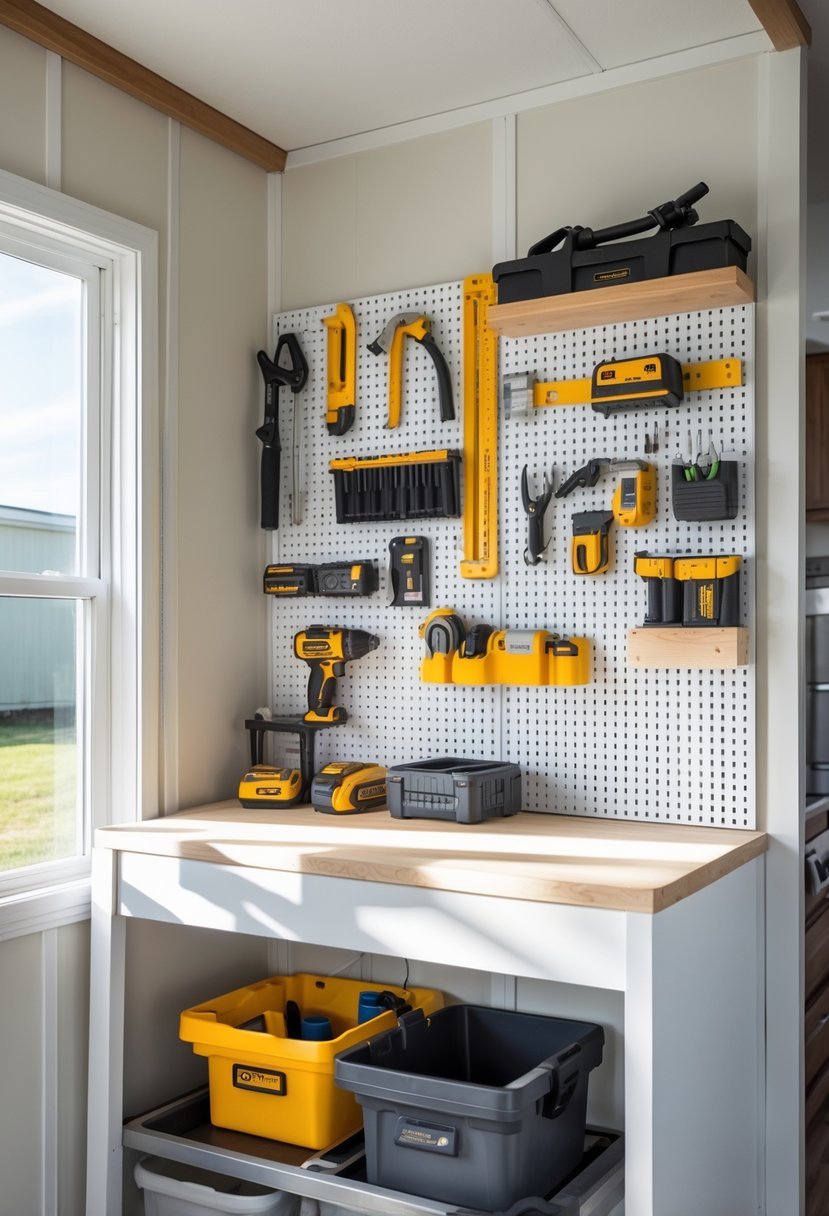
You can save space and stay organized by using pegboards in your mobile home’s workspace. Pegboards let you hang tools and supplies where you can see and reach them easily. This helps keep your work area clear and reduces clutter.
To keep hooks from falling out, lock them in place with zip ties or small clips. This makes your setup more secure and reliable. Pegboards also let you customize your storage as your needs change.
9) Create a galley-style kitchen layout for efficient use of space
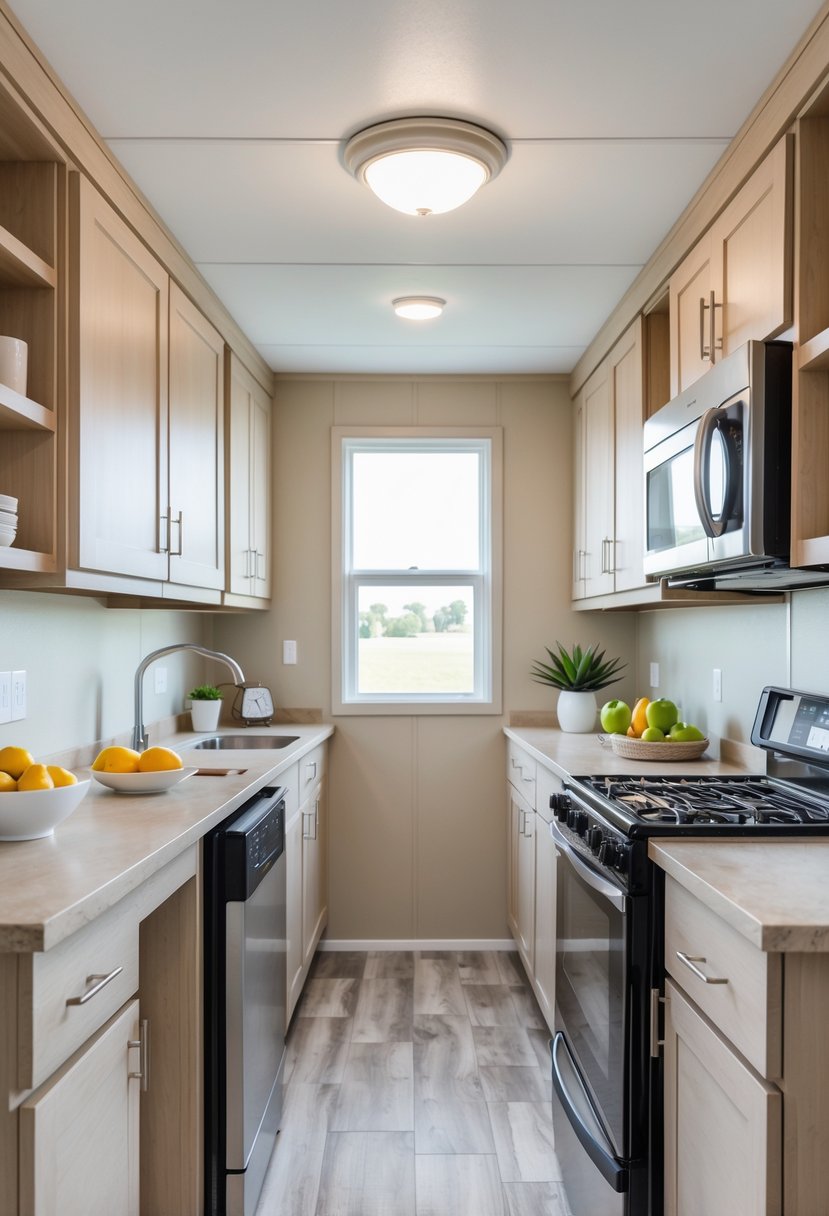
A galley kitchen uses two parallel walls, making the most of a narrow space. This layout keeps everything within easy reach, which helps you cook faster and cleaner.
You can add cabinets and shelves on both sides without overcrowding the area. This setup is ideal for a singlewide mobile home because it saves space but still offers enough storage.
Lighting and clear counter space are important. They keep the kitchen feeling open and comfortable, even though it’s compact.
10) Integrate ceiling-mounted pot racks to free up cabinets
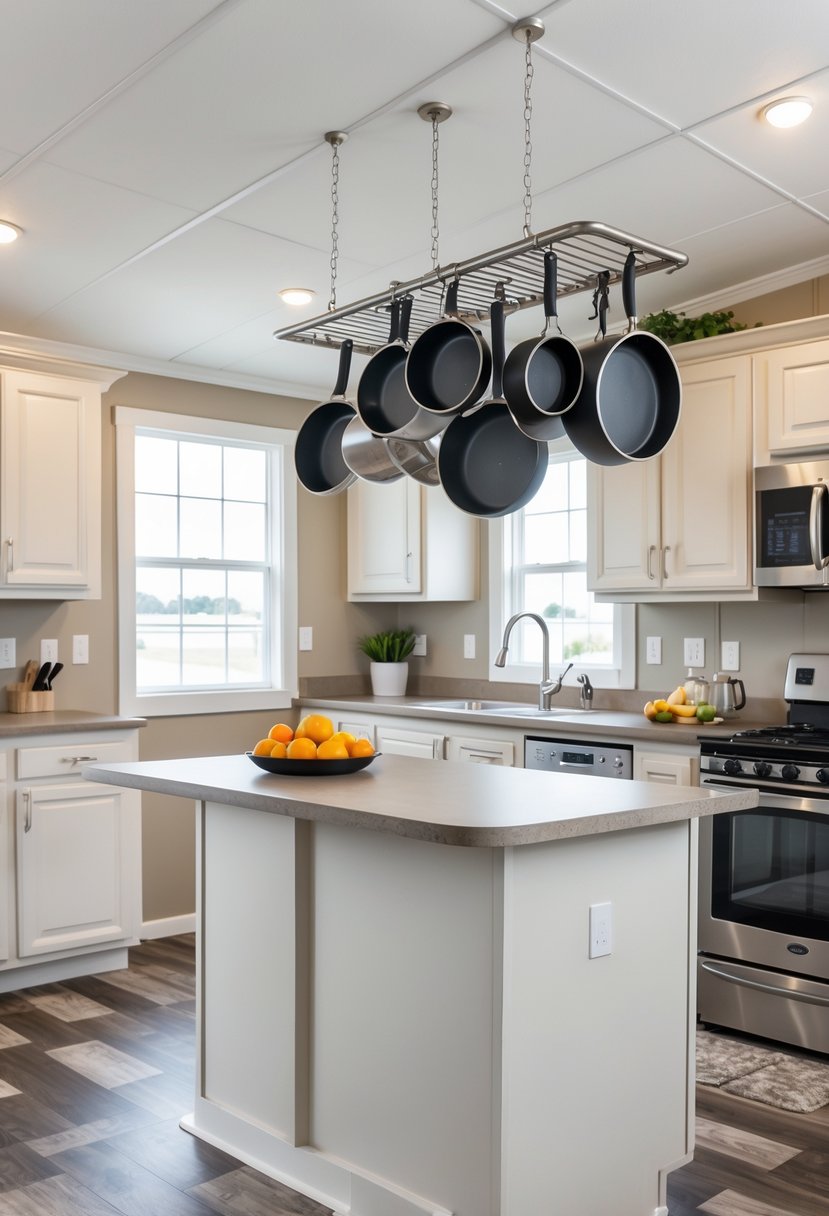
You can save a lot of cabinet space by using ceiling-mounted pot racks. These racks let you hang your pots and pans overhead, keeping them easy to reach.
This method uses vertical space well, which is key in a small kitchen. It also helps keep your counters clear and organized.
Choose a style that fits your kitchen. Metal racks work well for heavy cookware, while wooden or decorative racks can add style.
11) Opt for light-colored cabinetry to enhance brightness
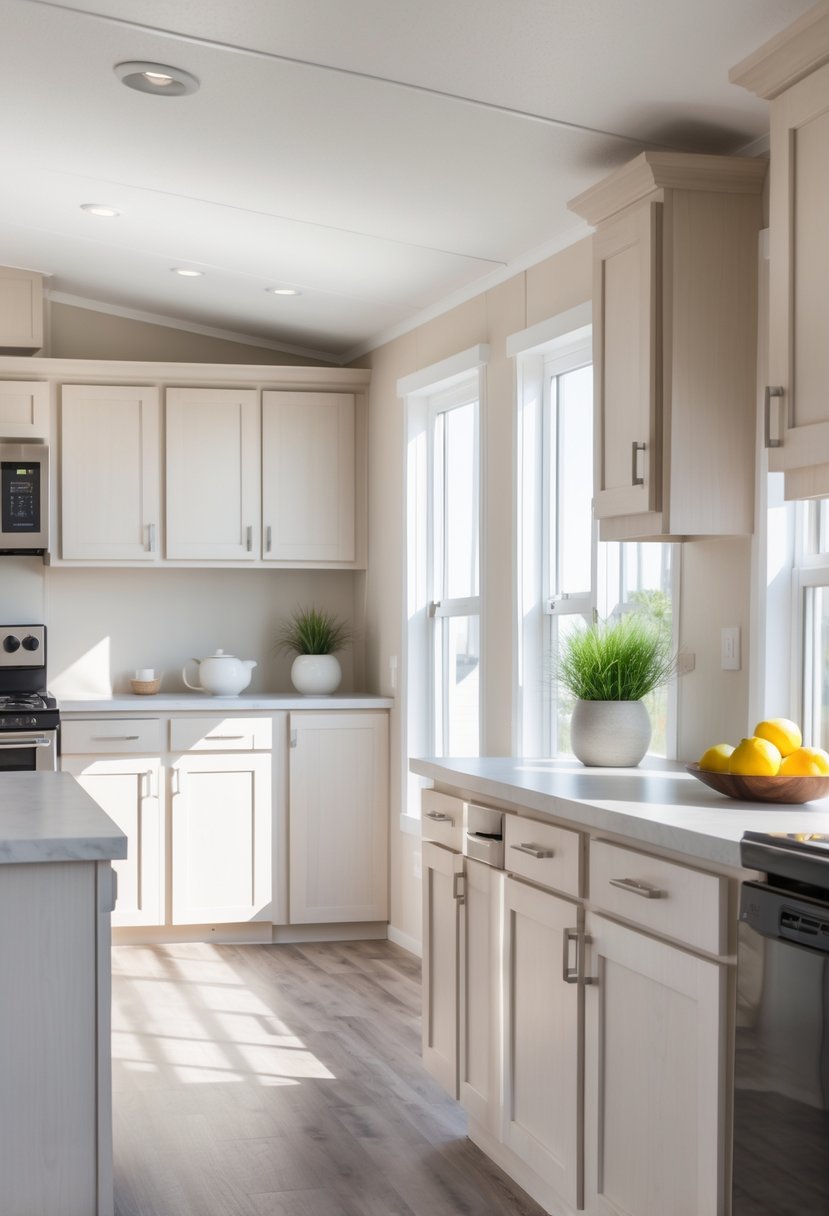
Choosing light-colored cabinets can make your singlewide mobile home feel more open and bright. Colors like white, cream, or soft gray reflect more light, which helps small spaces look larger.
Light cabinets also give you more flexibility with wall colors and décor. They create a clean, simple look that fits many styles.
If you want to add a bit of texture or interest, consider cabinets with glass doors or subtle wood grain. This adds depth without darkening your kitchen.
12) Place mirrors strategically to enlarge visual space
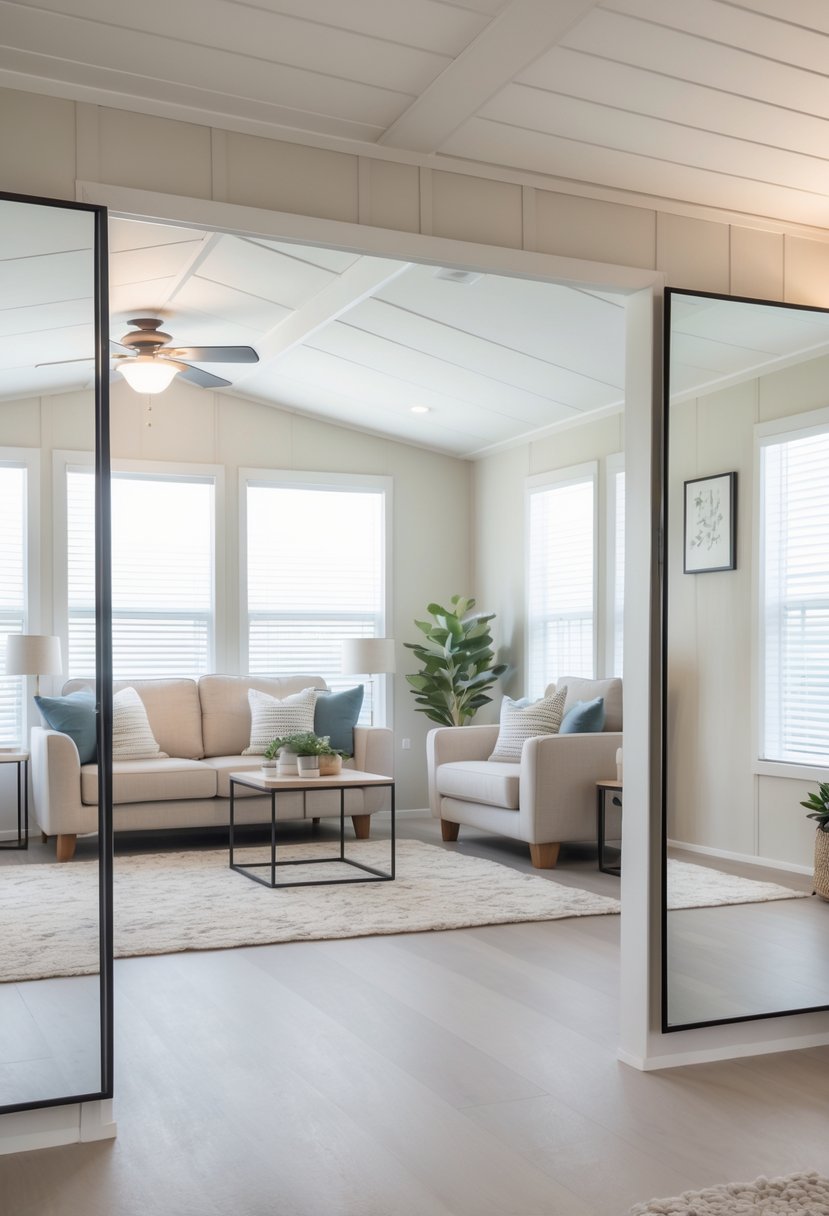
You can make your singlewide mobile home feel larger by using mirrors well. Place them where they catch natural light, like across from windows. This boosts brightness and creates an open feel.
Mirrors also reflect parts of the room, giving an illusion of more space. Use larger mirrors in small rooms or group smaller ones on a wall to add depth.
Think about areas like the living room or bedroom. Position mirrors so they show the most attractive parts of your home while making it feel less cramped.
13) Incorporate compact, space-saving appliances
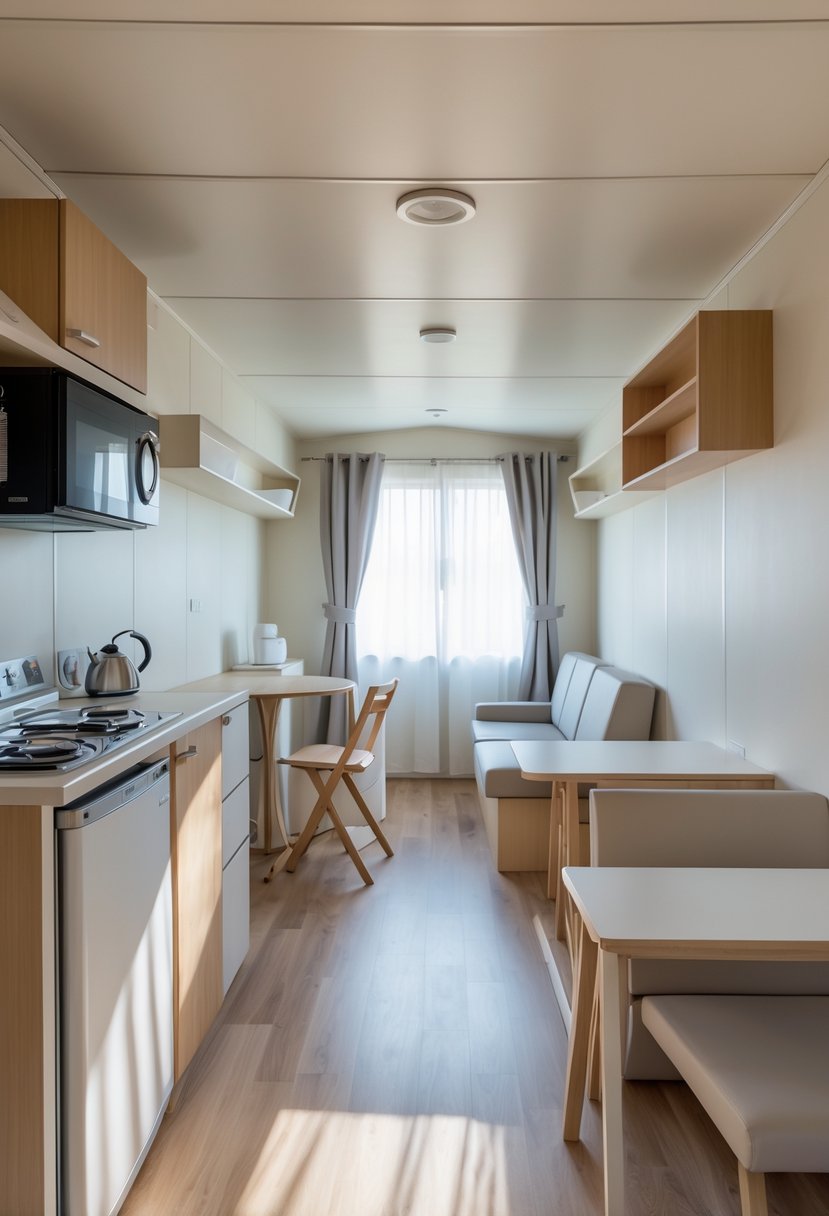
You can save a lot of room by choosing smaller appliances. Look for slim dishwashers or combination washer-dryers that fit into tight spaces. These help keep your home organized without crowding.
Compact appliances often use less energy and still work well. They let you enjoy all the features you need without taking up too much space. This makes your singlewide mobile home feel less cluttered and more functional.
14) Use slim-profile furniture to maintain flow and openness
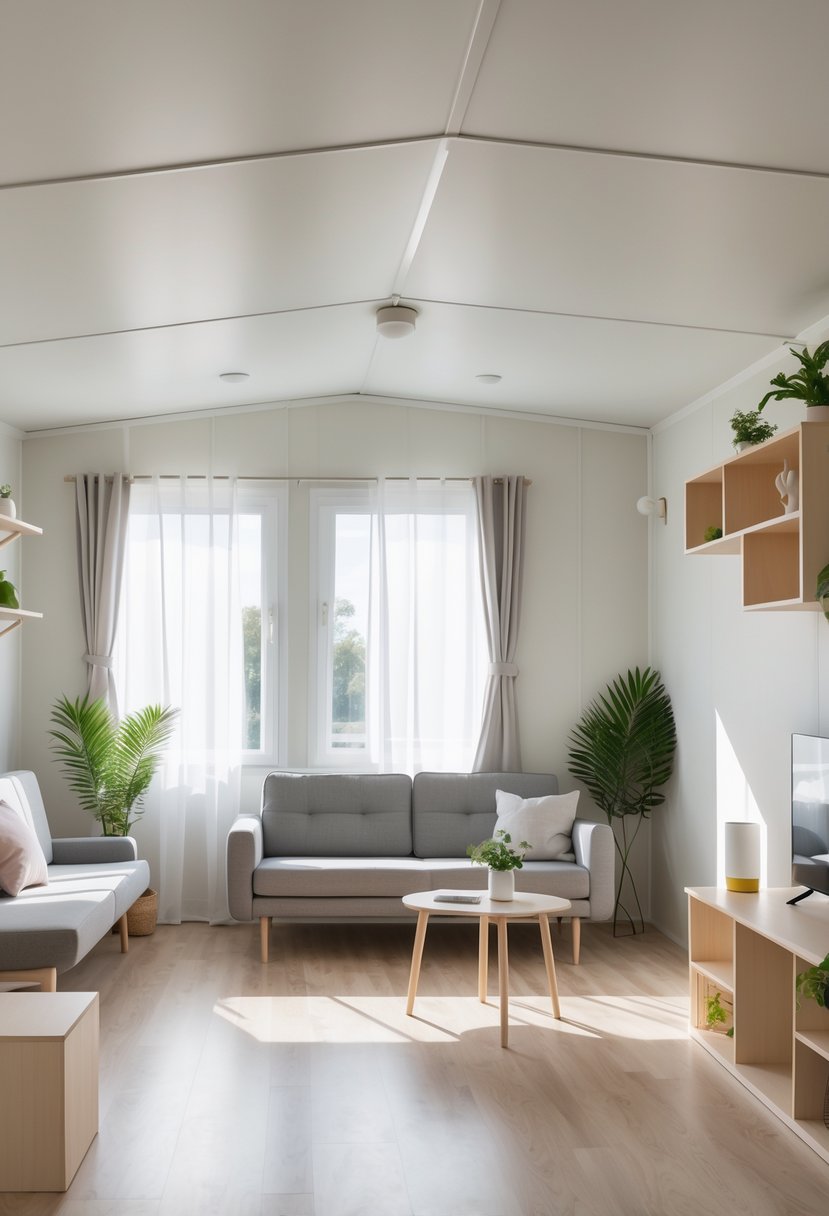
Choose slim-profile furniture to keep your singlewide mobile home feeling open. Bulky pieces can block pathways and make rooms look cramped.
Slim furniture fits better in narrow spaces and lets you move around easily. It also helps light travel through the room, making it feel larger.
Look for chairs, sofas, and tables with thin legs or simple designs. These options save space without sacrificing comfort or style.
15) Install sliding barn doors to save space in tight areas
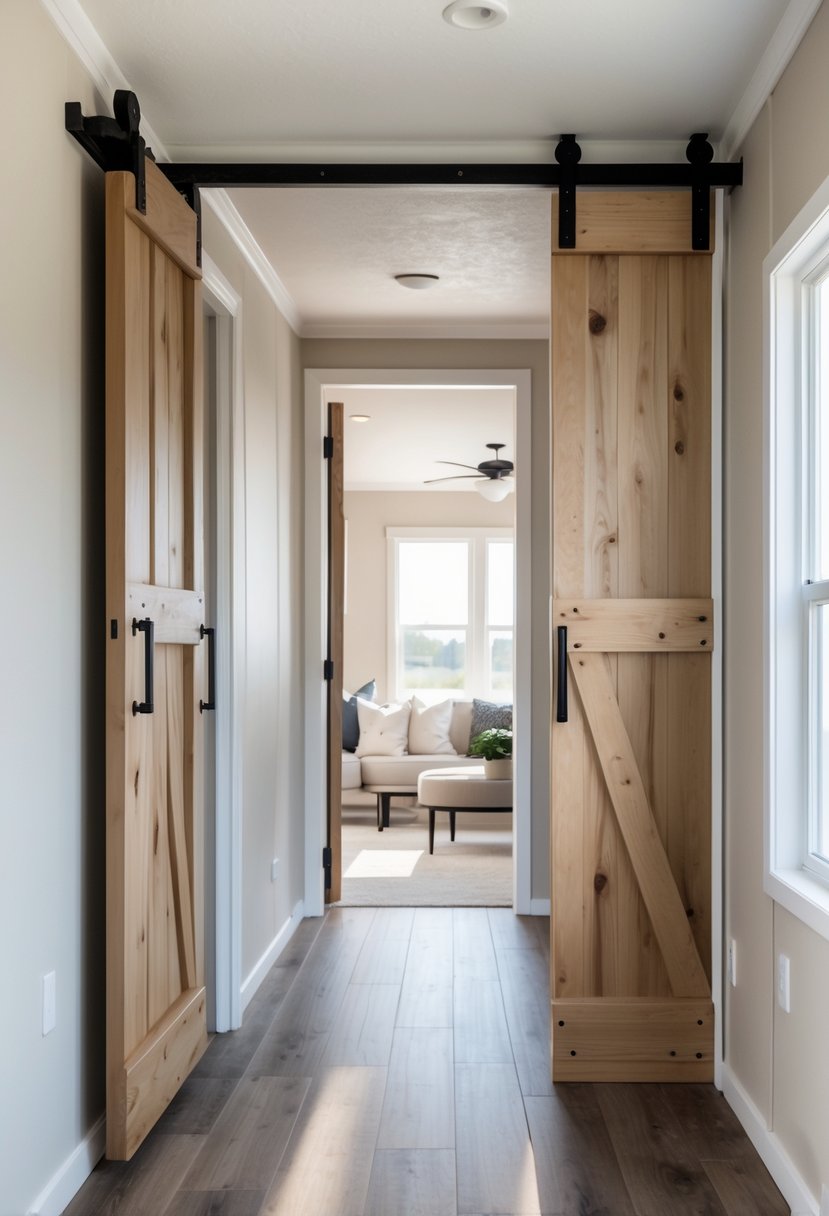
You can save a lot of room by using sliding barn doors instead of regular swinging doors. They slide along a track, so they don’t need extra space to open. This makes them perfect for narrow hallways or small rooms.
Barn doors also add a simple, stylish look to your home. Installing them is usually quick and does not require removing door trim. This upgrade helps you make the most of your limited space without a big renovation.
Frequently Asked Questions
When upgrading your single-wide mobile home, smart choices like using peel-and-stick backsplashes or open shelving can save money and boost style. You can also arrange furniture to make rooms feel bigger while keeping everything functional.
What are the best budget-friendly ways to remodel a single-wide mobile home?
Focus on simple updates such as painting walls white to brighten the space and using dark flooring for contrast. Peel-and-stick backsplashes in the kitchen offer a quick style boost without high cost. Adding floating shelves helps with storage and keeps floors clear, making rooms appear less crowded.
How can I make a small single-wide living room feel larger and more functional?
Use light wall colors to create an airy feel. Layering area rugs can define separate zones and add warmth. Choose furniture that doubles as storage or has a narrow footprint to save space. Open shelving keeps items organized without bulky cabinets.
What living room layout options work best in a single-wide mobile home?
Consider arranging furniture along walls to open the center for movement. A sofa paired with chairs set at angles can create a cozy, inviting area. Use rugs to separate zones for sitting, dining, or working. Avoid overcrowding by limiting large items.
What are the average costs to buy and set up a single-wide mobile home?
Costs vary widely by location and size but expect to pay between $40,000 and $70,000 for a new single-wide. Additional expenses include land preparation, utilities, and transportation, which can add several thousand dollars. Used mobile homes are often cheaper but may need upgrades.
How long does a single-wide mobile home typically last with proper maintenance?
With good care, single-wide homes can last 30 to 50 years. Regular roof checks, siding upkeep, and moisture control help extend their life. Timely repairs prevent small issues from becoming costly damage.
How many single-wide mobile homes can legally fit on one acre of land?
The number depends on local zoning rules and minimum lot sizes. Commonly, one acre can hold 2 to 4 single-wide homes, but regulations differ by county or state. You should check with local authorities before planning.