Published On:
15 Fall Classroom Door Ideas That Are Easy, Creative, and Actually Useful
Share:


Decorating a classroom door for fall does not need to mean spending an entire Sunday cutting out 100 tiny leaves. Some of the best fall classroom door ideas start with butcher paper, construction paper, old paper bags, student artwork, and supplies already sitting in the classroom.
Better yet, the door can do more than look cute. Students can add their names, reading recommendations, goals, kind actions, or things they are thankful for. Personalized pumpkins, leaves, apples, and other student-made pieces are commonly used by teachers because they turn seasonal decor into part of the classroom rather than something students simply walk past.
Here are 15 ideas designed to be easy to make, affordable, and adaptable for preschool through elementary classrooms.
1. Build a Pumpkin Patch With a Pumpkin for Every Student
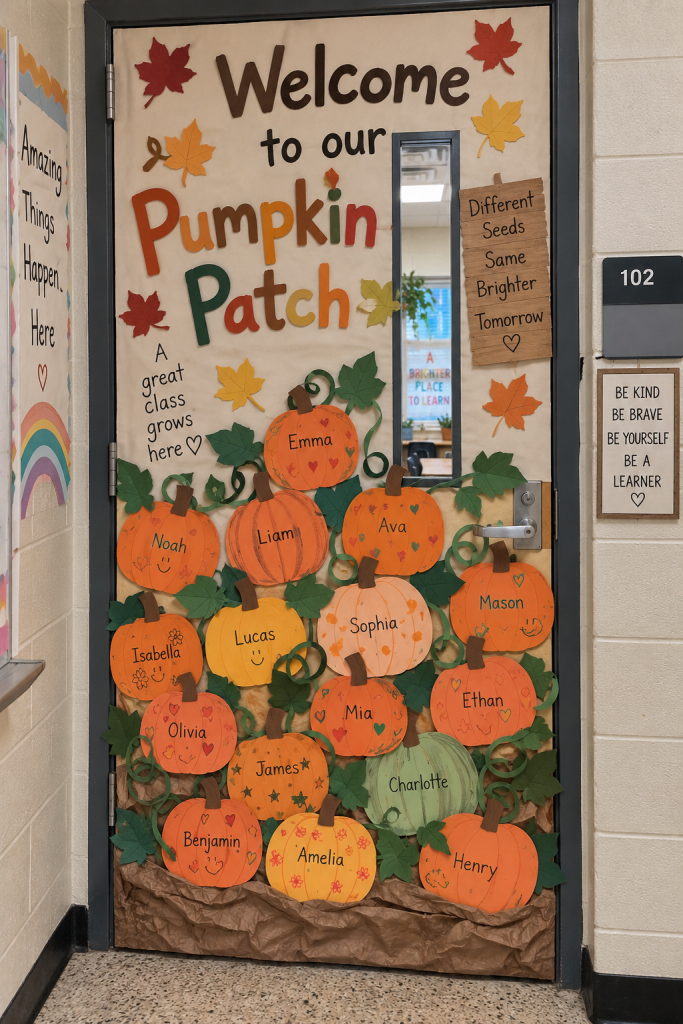
Instead of covering the door with identical store-bought pumpkins, let every student create one. Cut simple pumpkin shapes from orange, rust, yellow, and cream construction paper. Give each child a pumpkin and let them add their name, face, pattern, or small drawing.
Arrange them across the lower half of the door like a real pumpkin patch. Make curling vines from strips of green paper and use crumpled brown packing paper as the ground.
This works particularly well at the beginning of fall because students immediately look for their own pumpkin. Personalized pumpkin displays are also a recurring recommendation in current teacher-decor resources.
Quick tip: Keep several blank pumpkins. When a new student joins the class, you can add them without rebuilding the display.
2. Turn Student Goals Into Falling Leaves
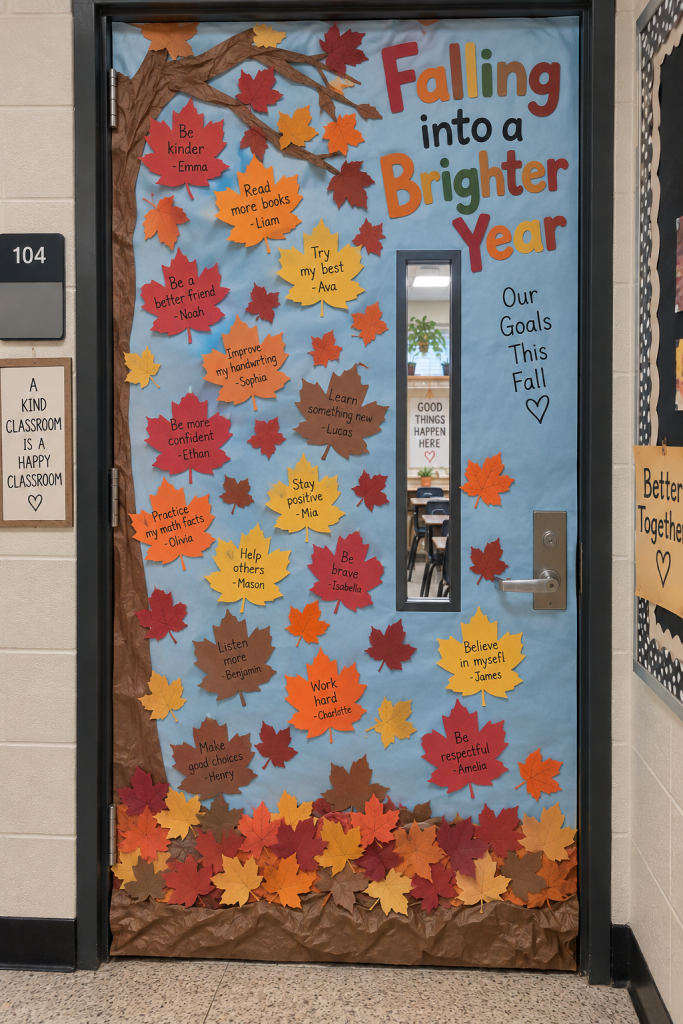
A falling-leaf door becomes much more meaningful when every leaf contains something written by a student.
Cover the door with kraft or pale blue butcher paper. Cut maple and oak leaf shapes from red, mustard, rust, orange, and brown paper. Ask each student to write one goal for the season, such as reading a chapter book, improving handwriting, helping classmates, or mastering multiplication.
Arrange the leaves diagonally from one upper corner toward the bottom so they look like they are blowing across the door.
Student-written leaves are already used for gratitude and learning activities, so adapting them into personal goals gives the familiar fall-leaf theme another purpose.
Make it easier: Fold several sheets of paper together and cut multiple leaves at once instead of cutting every leaf separately.
3. Make a Giant Scarecrow From Grocery Bags
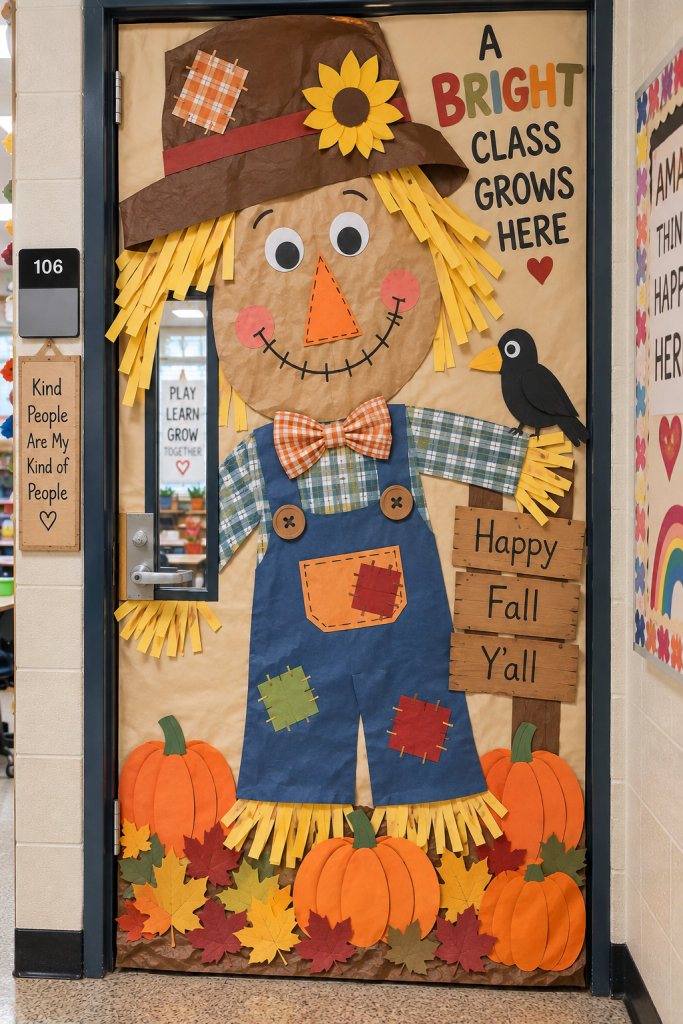
A scarecrow can cover almost the entire door without requiring dozens of separate decorations.
Use brown grocery bags or kraft paper for the face. Make a large triangular nose from orange paper, draw the mouth with a black marker, and create the hat from leftover cardboard. Strips of yellow scrap paper can become straw sticking out around the hat and collar.
Instead of creating complicated clothes, let the door itself become the scarecrow’s shirt by covering the lower section with inexpensive checked paper or a simple paper patchwork pattern.
Scarecrow doors remain a popular classroom fall theme, especially for younger grades.
Budget tip: Ask families to send clean brown grocery bags rather than purchasing a roll of kraft paper.
4. Build a Fall Weather Station Door
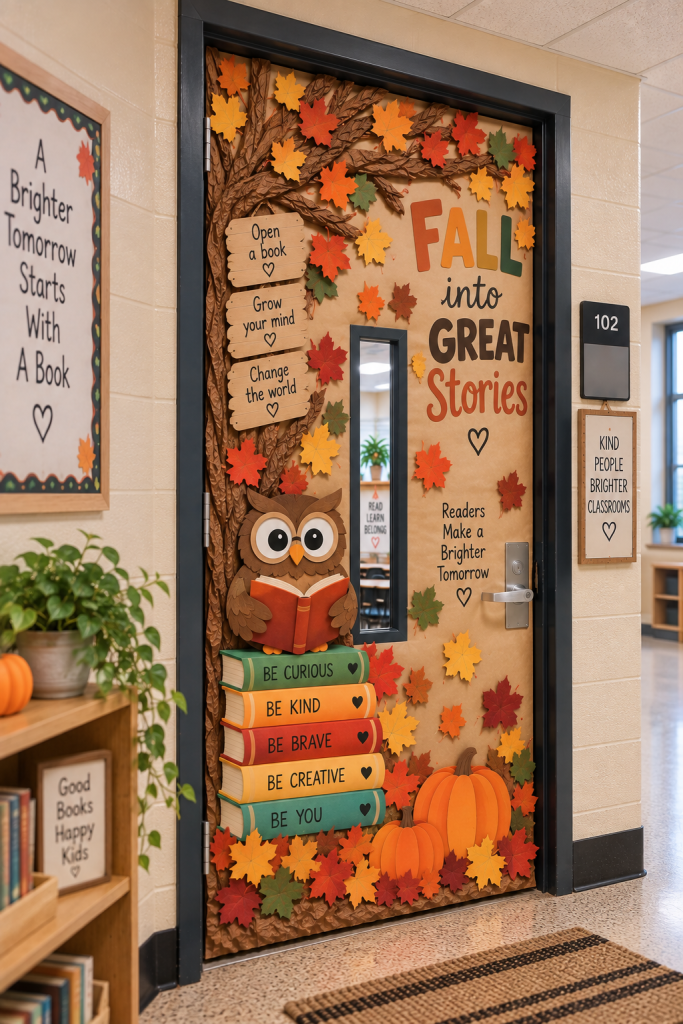
This one gives the seasonal theme an educational purpose.
Create a large paper thermometer, simple weather symbols, and a movable arrow for temperature. Add pockets labeled Sunny, Cloudy, Rainy, Windy, and Cool. A student can update the door each morning based on the day’s weather.
Surround the weather station with a small number of falling leaves to keep the autumn connection without hiding the useful parts.
For younger students, add picture symbols beside the words. Older elementary students can record the temperature or compare today’s conditions with yesterday’s.
Make it reusable: Laminate the weather pieces rather than the entire door. You can use the same components during other seasons.
5. Create an Apple Orchard With Sight Words
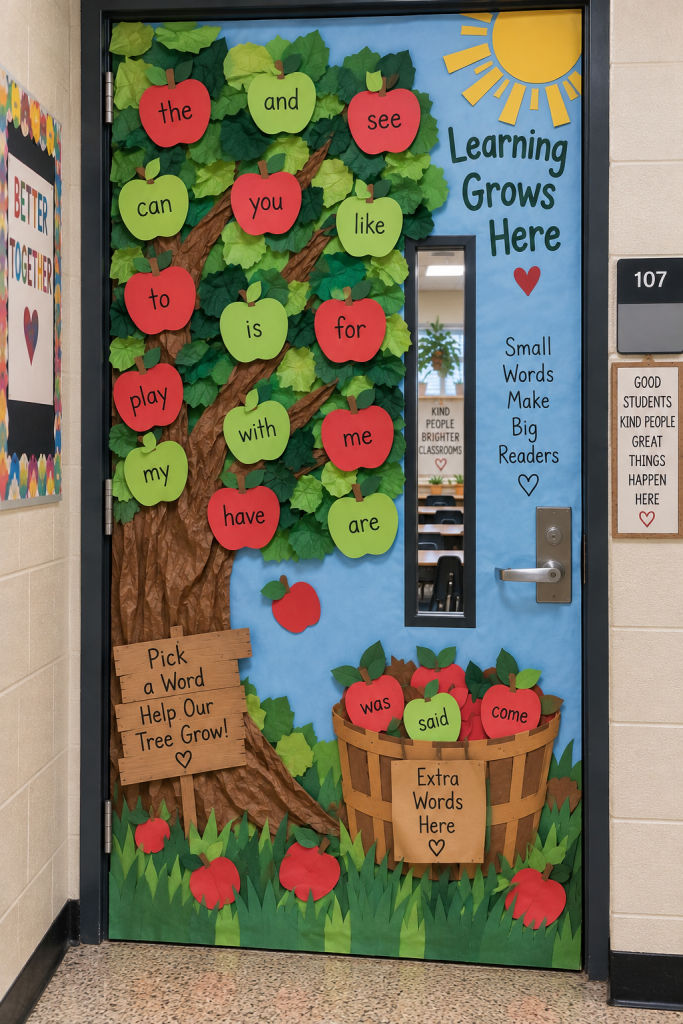
Turn the door into something younger students can actually use during lessons.
Make one large tree from brown butcher paper and add a simple green-and-gold paper canopy. Then cut red, green, and yellow apples from cardstock. Instead of writing only student names on them, add current sight words, spelling words, letters, or vocabulary.
Change five or six apples each week as students learn new words. Apple displays are already used by teachers for names, drawings, and sight words, making this an easy theme to turn into a reusable learning tool.
Quick tip: Attach the apples with reusable hook-and-loop dots so you can swap them without tearing the background.
6. Make a Patchwork Fall Door From Paper Scraps
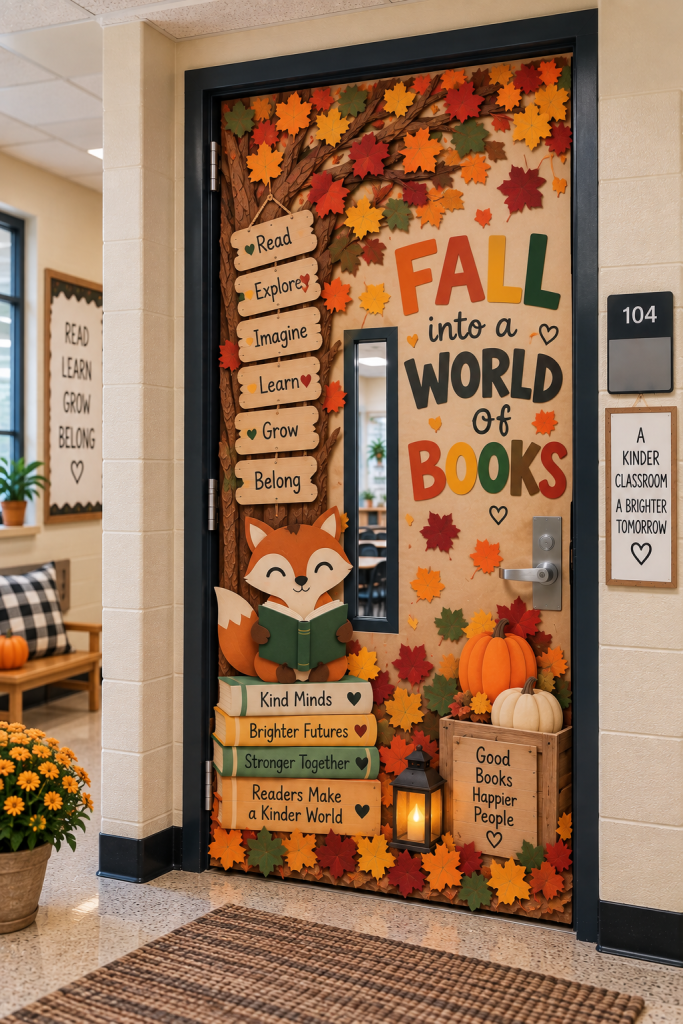
If your classroom has a drawer full of half-used construction paper, this idea helps use it up.
Cut the scraps into squares and rectangles in rust, mustard, burgundy, olive, orange, brown, cream, and muted blue. Let students arrange them into simple paper “quilt blocks.” Combine all the blocks across the door to make one large patchwork background.
Add only a few paper leaves or acorns around the edges. The student-made pattern should be the main feature.
Why it works: There is almost no precision cutting, every child can contribute, and you do not need enough paper of any one color to cover the entire door.
7. Make a “Fall Into a Good Book” Recommendation Door
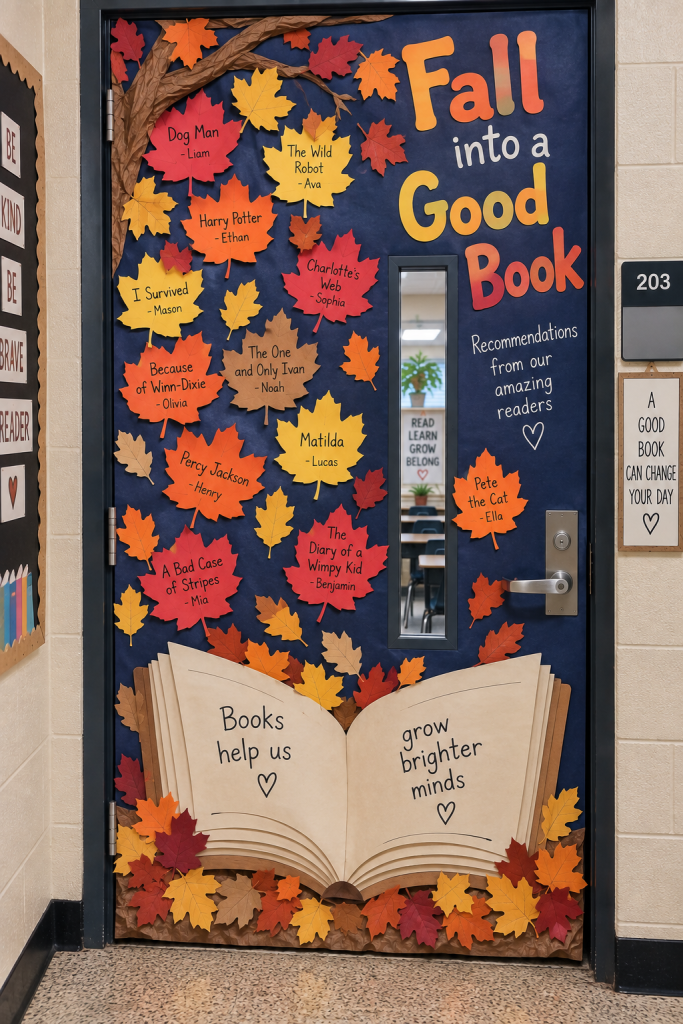
For this door, skip the giant seasonal character and turn the decorations into mini book recommendations.
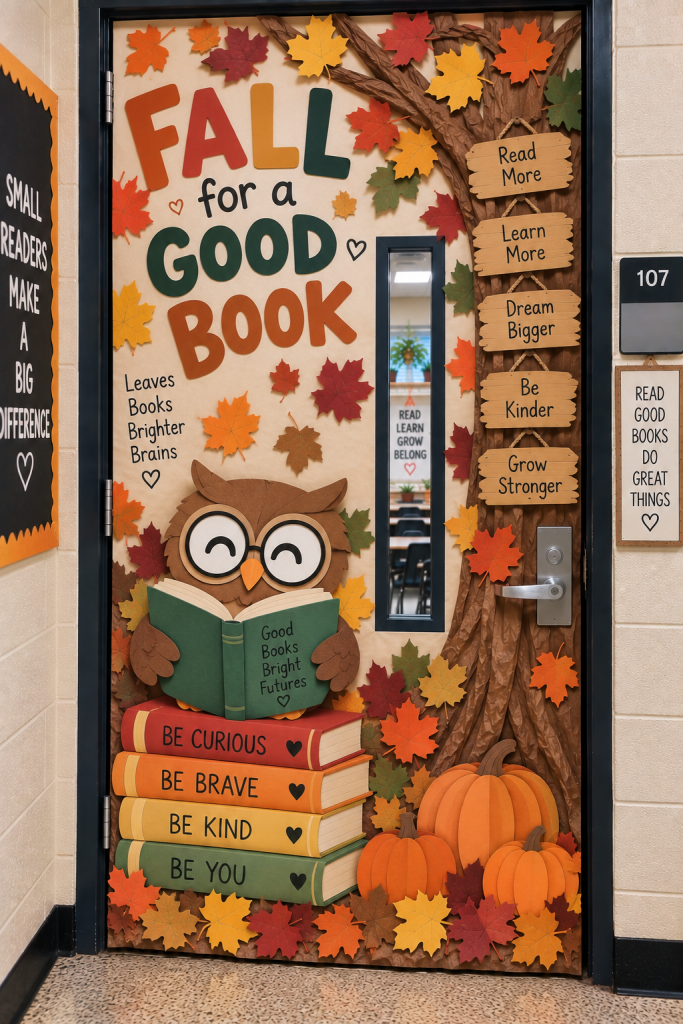
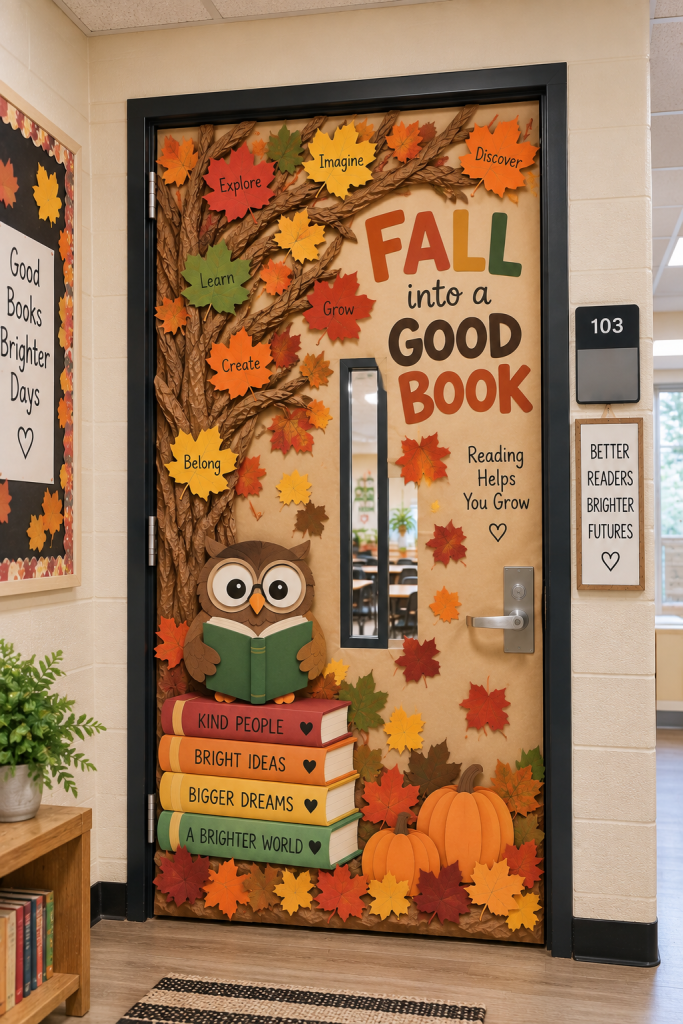
Create a simple open book from white and brown paper near the bottom of the door. Above it, add colorful paper leaves that appear to be flying out of the pages. Each leaf can contain the title of a book a student recommends.
Add new recommendations throughout fall instead of completing the entire display on day one.
Reading-based fall displays such as “Fall Into a Good Book,” “Rake in a Good Book,” and falling-leaf reading themes are popular classroom approaches.
Make it useful: Put the student’s initials below each recommendation so classmates know whom they can ask about the book.
8. Create a 3D Tree From Crumpled Packing Paper
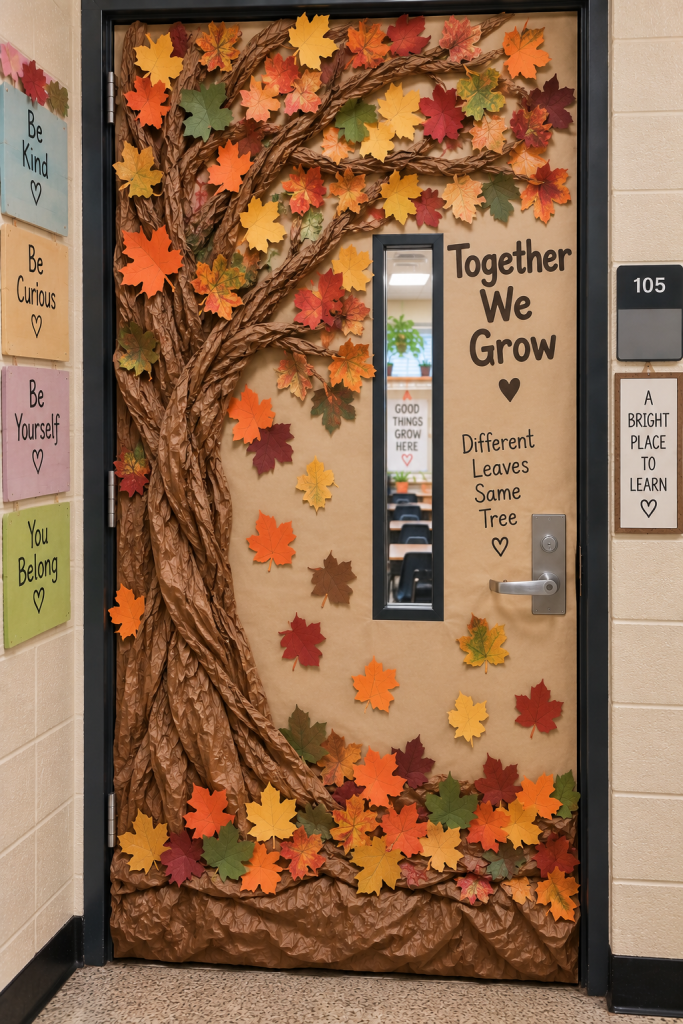
Save the brown packing paper from classroom deliveries. Twist and crumple long pieces to create a raised tree trunk and several branches stretching across the door.
Students can then make leaves using construction-paper scraps rather than perfectly matching templates. Mix hand-cut, torn-paper, and traced leaves so the tree has more texture.
Crumpled-paper trees are an inexpensive way to create a dimensional classroom display, and current teacher resources suggest labeling leaves with vocabulary, dates, or lesson concepts.
Easy update: Start September with mostly green and yellow leaves. Gradually replace them with orange, red, and brown ones as the season progresses.
9. Make an Acorn Door With Student Photos
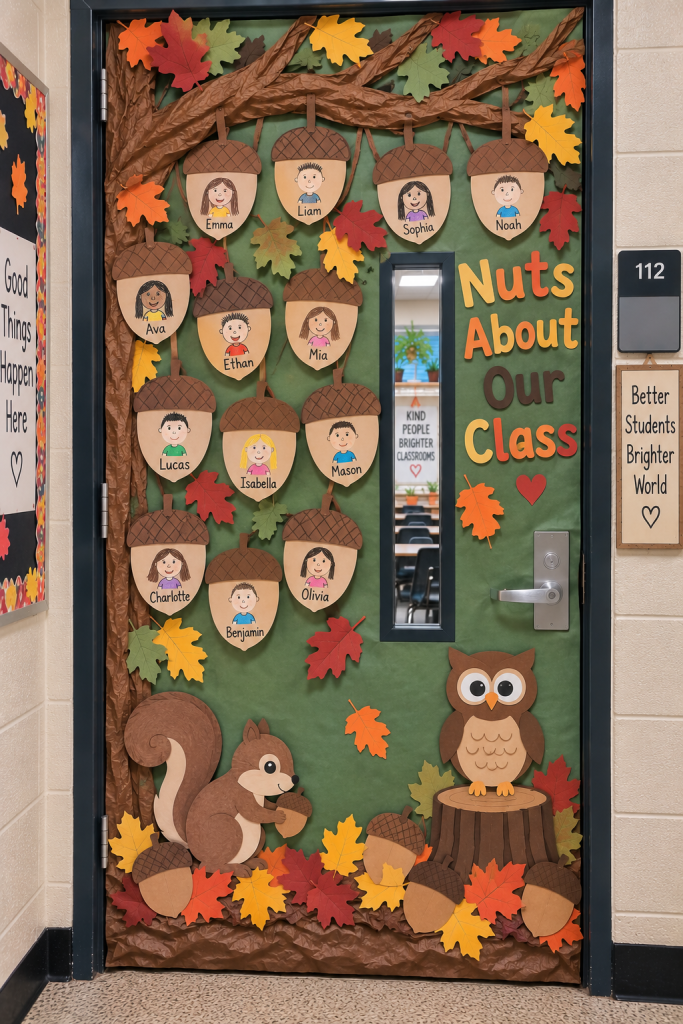
This is a fun alternative if you have already used pumpkins in previous years.
Cut oversized acorns from tan and dark-brown cardstock. Put a small student photo in the center of each acorn, or let children draw self-portraits if photos are not available. Arrange them beneath a large paper oak branch.
A heading such as “Nuts About Our Class” can finish the display. Acorn-backed student photos and woodland themes are among the ideas currently suggested in teacher fall-board collections.
Save time: Make one acorn template from cardboard and let older students trace and cut their own instead of preparing every piece yourself.
10. Build a Gratitude Tree That Changes Every Friday
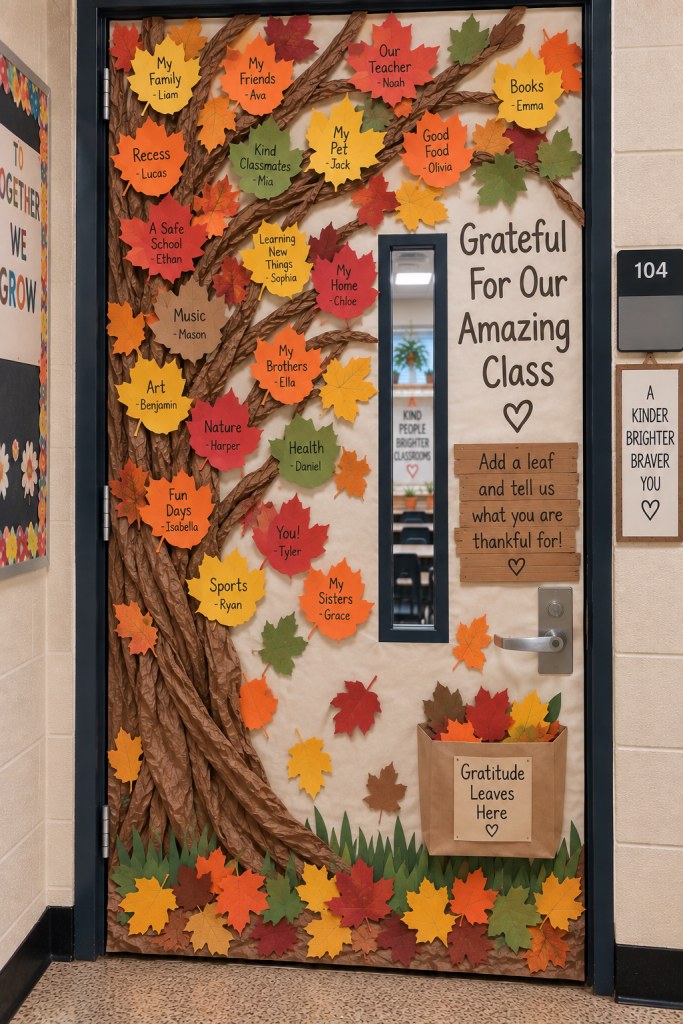
Rather than making a Thanksgiving door that stays unchanged for a month, create one students can update.
Make a simple bare tree using brown paper. Keep a container of small paper leaves inside the classroom. Every Friday, ask students to write one thing they appreciated that week and add the leaf to the door.
The tree starts sparse and gradually becomes full.
Gratitude leaves are already recommended as an interactive way to extend fall displays toward Thanksgiving.
Helpful tip: Use several leaf colors but keep every leaf roughly the same size. The finished tree will look colorful without becoming visually messy.
11. Make a Paper Cornfield With Hidden Vocabulary
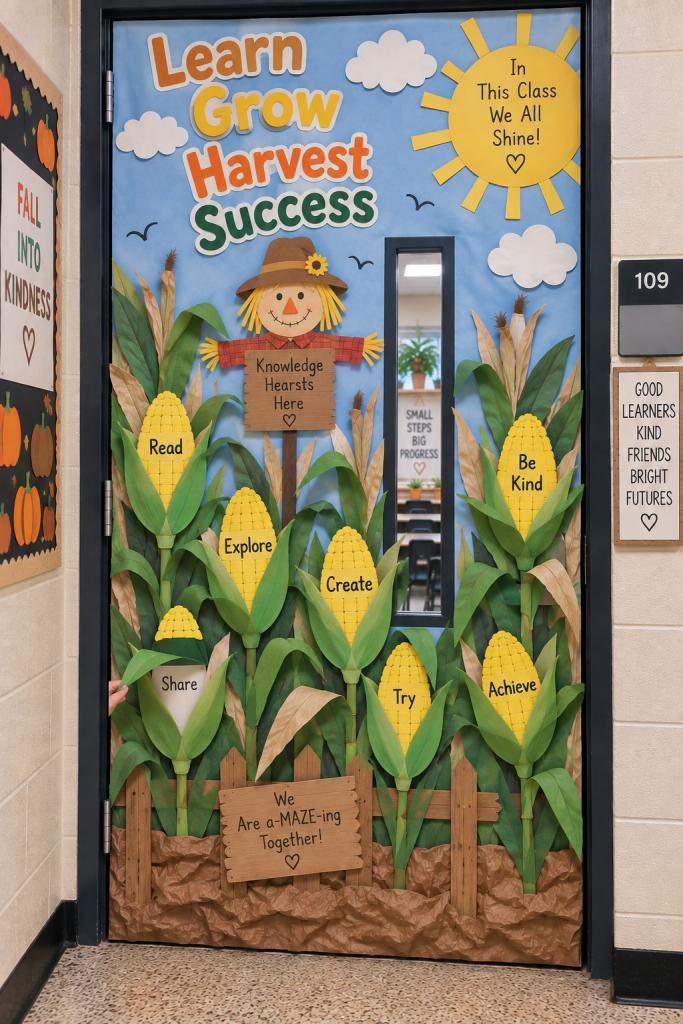
Create something students do not see on every other classroom door.
Cover the bottom half of the door with simple corn stalks cut from green and tan construction paper. Make ears of corn from yellow cardstock and give each one a paper husk that opens like a flap.
Hide vocabulary words underneath the husks. Students can lift one during morning arrival and try to define the word before entering class.
You can easily change the words to match science, spelling, math, or social studies.
DIY shortcut: You do not need 25 detailed stalks. Four or five tall stalks plus several large ears of corn will fill most standard doors.
12. Create a “Rake Up Kindness” Door
Make a large paper rake from brown and dark-gray cardstock and position it diagonally across the lower part of the door. Scatter colorful leaves around it.
The difference is what goes on those leaves.
Whenever someone notices a helpful or kind action, write it on a new leaf and add it to the pile. By late fall, the small pile should become a huge one.
This takes inspiration from established fall leaf and “rake” classroom themes but shifts the focus from decoration toward positive classroom behavior. Reading-themed “rake” displays and kindness-focused seasonal activities both appear in teacher resources.
Teacher tip: Describe the action instead of simply writing a student’s name: “Helped clean the art table” tells the class what kindness actually looked like.
13. Make a Woodland Door With Owls, Squirrels, and Acorns
Not every fall door needs pumpkins.
Create a woodland scene using a dark green, muted blue, or kraft-paper background. Add one large branch stretching across the door, then make simple paper owls and squirrels from basic circles and oval shapes. Finish with oversized acorns and a few rust-colored leaves.
Woodland animals such as owls and squirrels are regularly used in fall classroom displays, particularly for preschool and younger elementary classrooms.
Let students decorate the animals rather than making every one yourself.
Keep it inexpensive: Use paper scraps for feathers, tails, and leaves. The slight color differences actually make the woodland scene more interesting.
14. Create a Fall “Guess Who?” Pumpkin Door
Turn the pumpkin patch into a hallway game.
Give every student a paper pumpkin and ask them to write three simple clues about themselves on the front without including their name. Examples might include a favorite book, hobby, pet, or favorite school subject.
Put their name or photo underneath a paper flap. Students can read the clues, make a guess, and lift the flap to check.
Interactive pumpkin displays with hidden student photos already work well in classrooms; this version adds a simple reading and community-building activity.
Important: Keep clues classroom-appropriate and avoid asking children to share personal information they would rather keep private.
15. Create a Fall Door That Changes From September to November
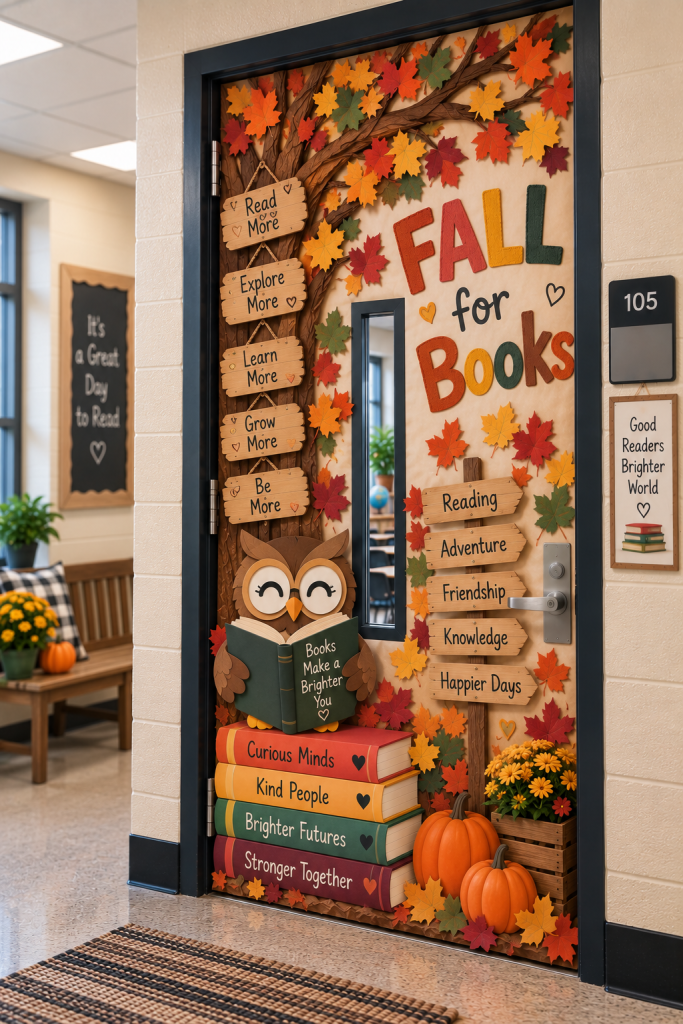
Instead of making three seasonal doors, design one background that can evolve.
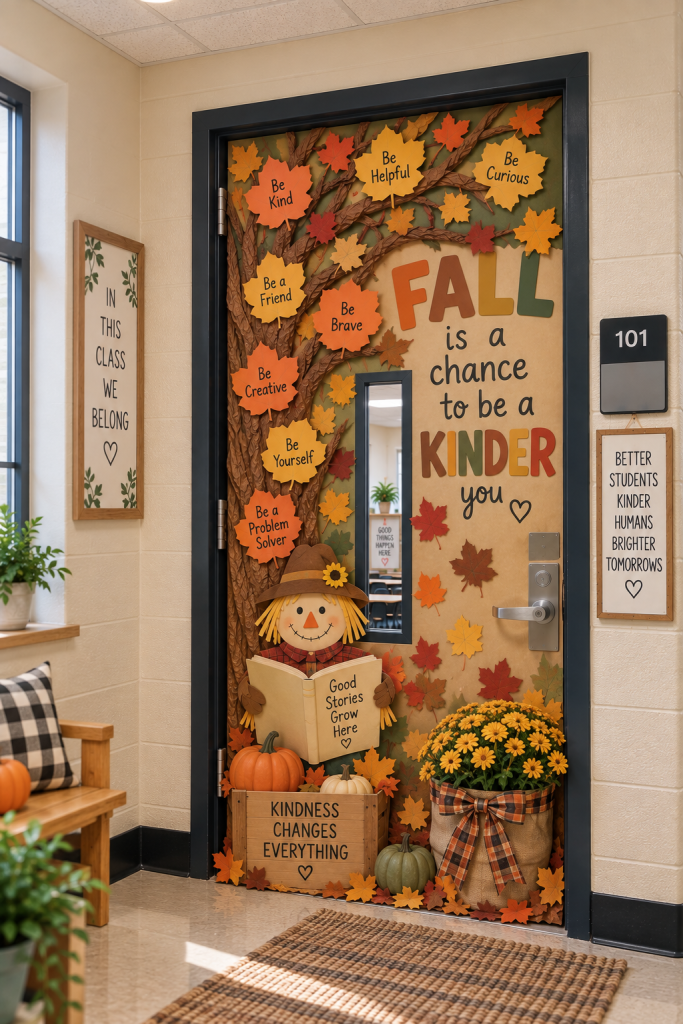
Start with a large kraft-paper tree, grass, and a simple heading such as “Growing Together.” In September, fill the tree with student-name leaves. During October, add pumpkins containing reading goals or vocabulary words along the bottom. In November, replace some falling leaves with gratitude notes.
Teacher resources specifically recommend fall displays that can remain appropriate as the season moves toward Thanksgiving, which can save considerable decorating time.
Best time-saving tip: Keep permanent pieces neutral—tree, ground, border, and heading—and make only the small seasonal pieces removable.
Conclusion
The most useful fall classroom door decor is not necessarily the door with the most pumpkins, leaves, or expensive printable pieces. A simple design becomes far more interesting when students can actually contribute to it.
Use student pumpkins for names, leaves for goals, apples for sight words, corn for vocabulary, book leaves for recommendations, or a growing gratitude tree. Construction paper, butcher paper, grocery bags, cardboard, packing paper, and scraps are enough for most of these projects. Current teacher resources consistently lean on these inexpensive materials and student-made elements, which also makes the finished displays easier to personalize.
One practical note before decorating: check your school’s rules for door coverings, adhesives, and fire safety. Requirements can vary by building, so a beautiful idea still needs to work with your school’s specific safety policy.
FAQs About Fall Classroom Door Decorations
What is the easiest fall classroom door to make?
A falling-leaves door is probably the easiest. Cover the door with butcher paper, add a short heading, and scatter construction-paper leaves across it. You can make it more useful by putting student names, goals, vocabulary words, or gratitude notes on the leaves. Construction paper, cardstock, and butcher paper are among the commonly recommended low-cost materials for fall doors.
How can I decorate a classroom door for fall on a small budget?
Start with materials already available at school: butcher paper, construction-paper scraps, cardboard boxes, grocery bags, old packing paper, markers, and leftover bulletin-board borders. Student artwork can provide most of the actual decoration. Paper leaves, DIY pumpkin patches, and crumpled-paper trees are all examples of low-cost approaches recommended in teacher resources.
What fall classroom door ideas work for preschool and kindergarten?
Keep the shapes large and the activity simple. Pumpkins with student names, an apple tree, friendly woodland animals, a scarecrow, or a large fall tree work particularly well. Preschool-focused resources also recommend interactive pieces and simple tear-paper crafts because young children can participate instead of the teacher doing all the decorating.
How can I make a fall classroom door interactive?
Give students something they can add, reveal, change, or read. Hide photos beneath pumpkin flaps, swap sight-word apples, add weekly gratitude leaves, display book recommendations, or let students uncover vocabulary under paper corn husks. Interactive pumpkin displays with hidden student photos are one example already being used in classrooms.
How do I make fall classroom door decorations last longer?
Use a neutral background and make the smaller elements removable. Cardstock holds its shape better than thin paper, while pieces you plan to reuse can be laminated. Instead of rebuilding the entire door, keep the tree, heading, or background and swap pumpkins, leaves, student work, and gratitude pieces as fall progresses.