
Published On:
15 Sewing Room Ideas to Maximize Space and Improve Creativity
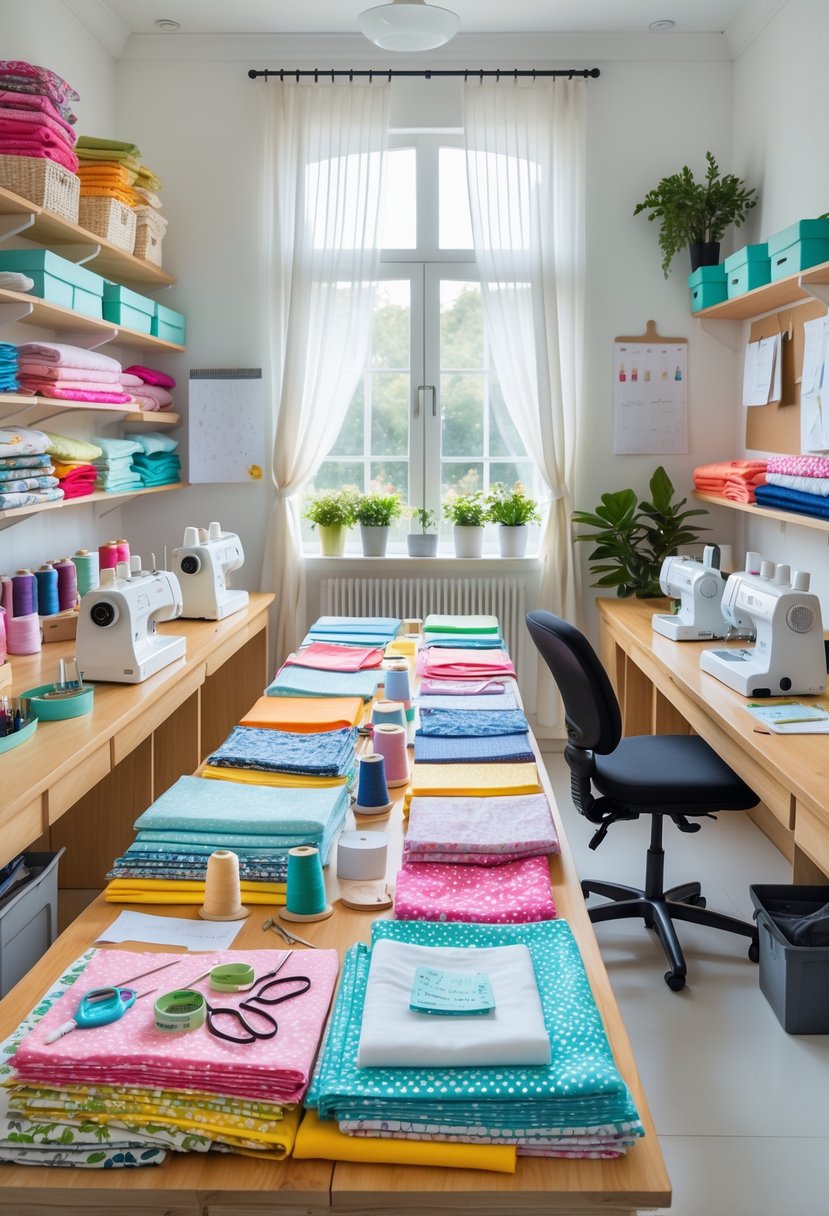
Creating a sewing room that fits your needs can make a big difference in how much you enjoy your projects. Whether you have a full room or just a small corner, organizing and decorating your space can help you work more efficiently and feel more inspired.
These 15 sewing room ideas will help you design a space that is both practical and creative, making it easier to find what you need and stay motivated. With the right setup, your sewing area can become a place where creativity flows smoothly and clutter stays under control.
1) Dedicated worktable with adjustable height
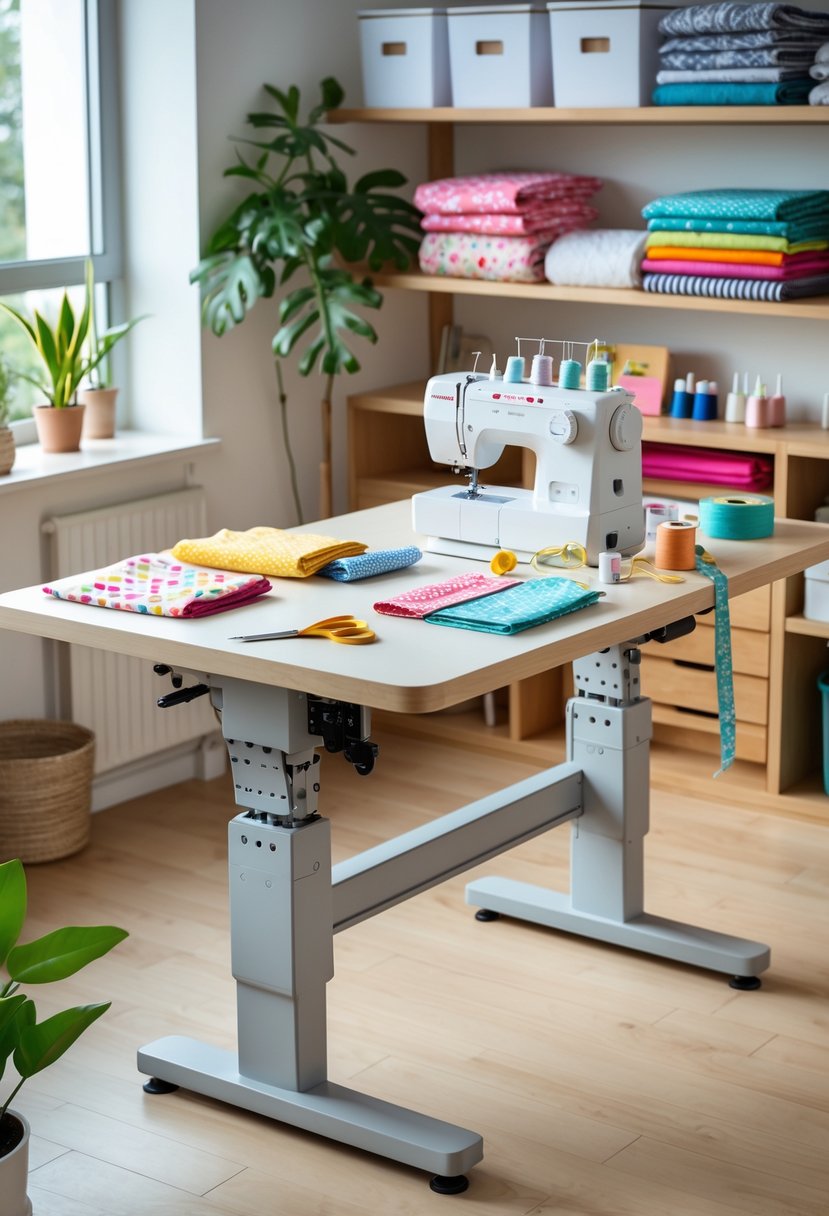
You need a sturdy worktable designed just for sewing. An adjustable height feature lets you switch between sitting and standing. This can help reduce fatigue during long projects.
Having a table that fits your height keeps your posture better. It also gives you a stable surface for precise sewing tasks.
Look for one with enough space for your machine and supplies. This makes your work easier and more organized.
2) Wall-mounted pegboards for tools and scissors
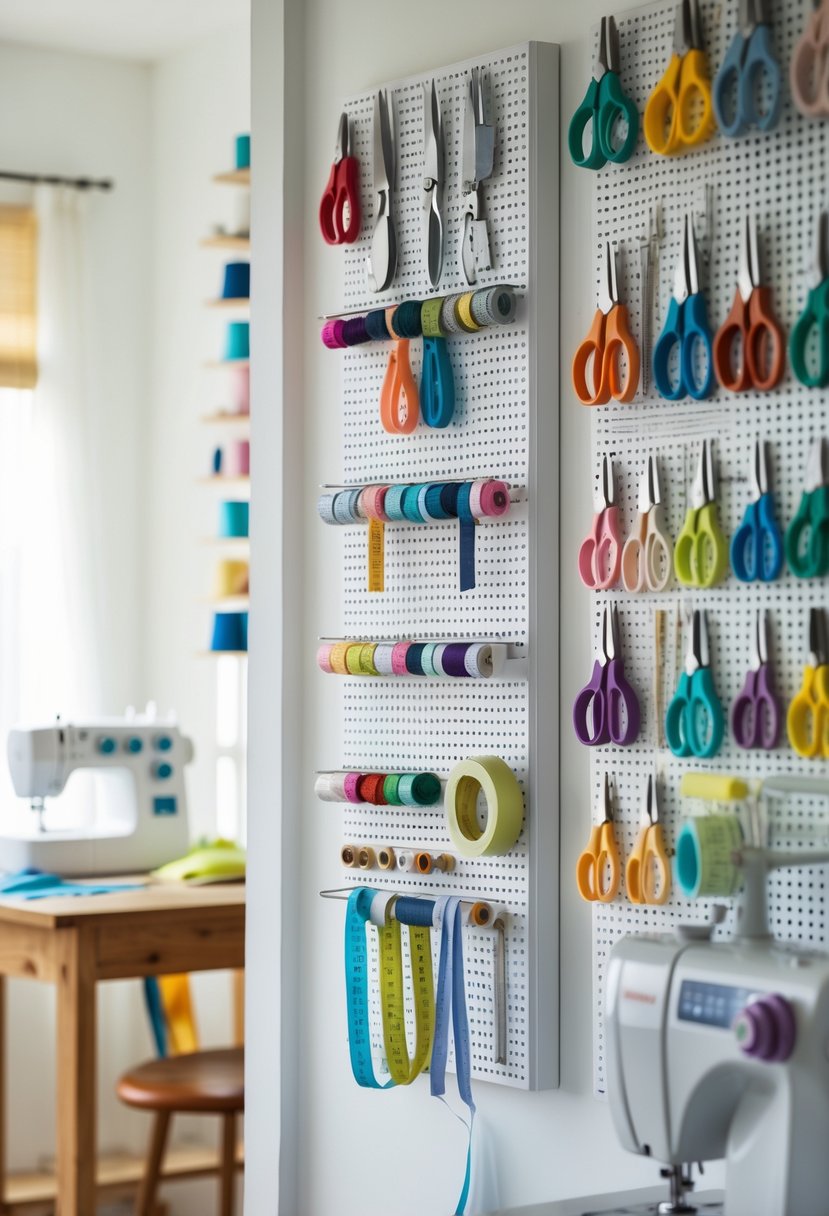
You can use wall-mounted pegboards to keep your sewing tools organized and easy to reach. Pegboards let you hang scissors, rulers, and other supplies neatly.
Adding small hooks makes it simple to arrange items without clutter. You can also use baskets or magnetic strips for pins and thread spools. This setup saves space and keeps your work area tidy.
3) Color-coded bins for fabric scraps
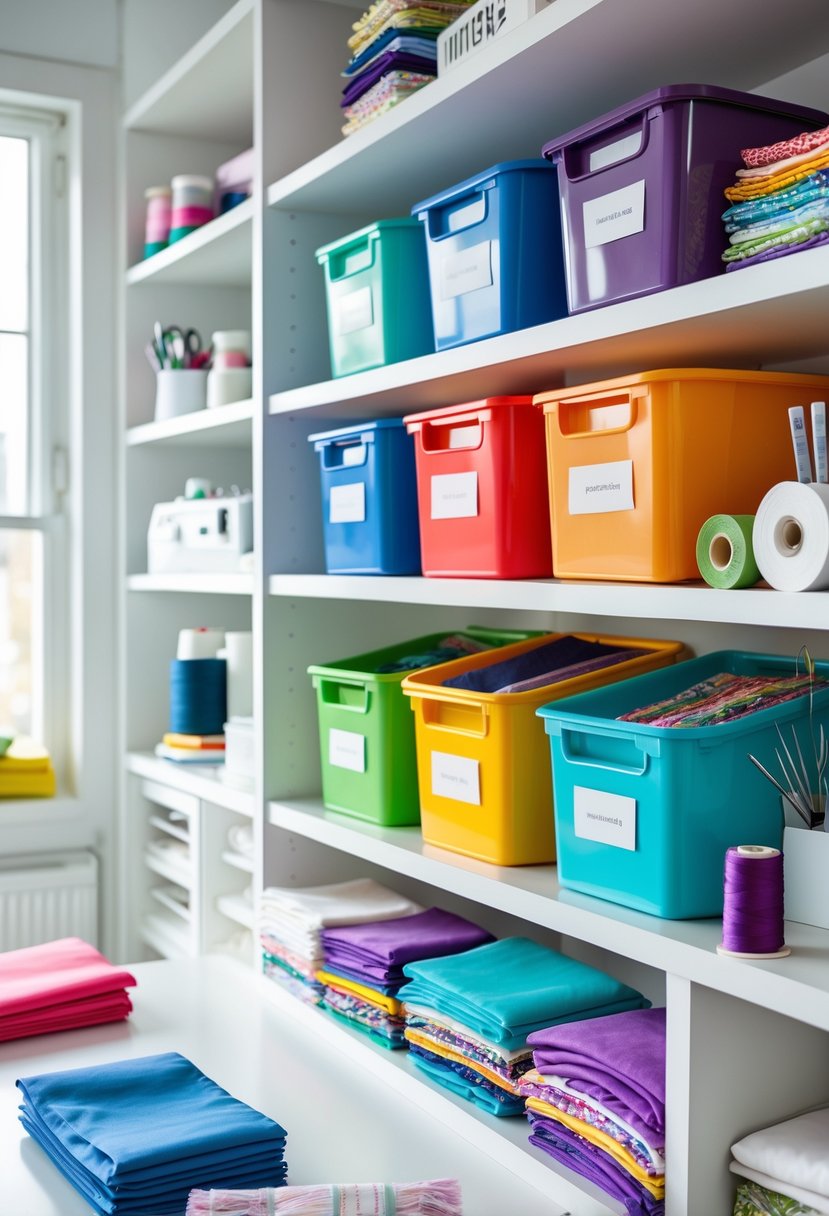
You can use color-coded bins to organize your fabric scraps by color, size, or type. This makes it easier to find what you need quickly.
Clear or labeled bins help keep your scraps visible and neat. Stackable bins save space and create a tidy, colorful display.
By sorting your scraps this way, you reduce clutter and keep your sewing area efficient. This system also helps you decide which scraps to keep or discard over time.
4) Open shelving for easy access to supplies
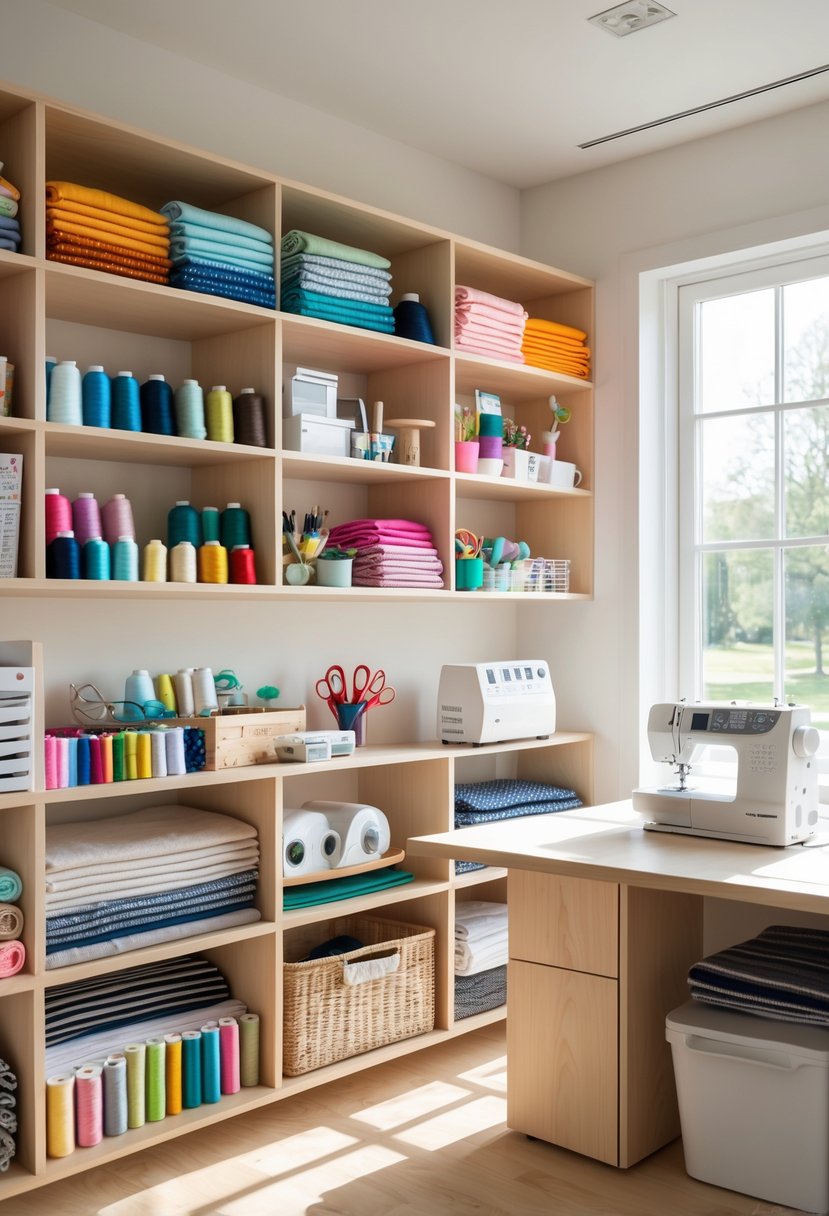
Open shelving lets you see all your sewing supplies at a glance. You can keep fabrics, threads, and tools organized and within reach. This makes your work faster and less frustrating.
Using clear containers or baskets on the shelves helps keep small items tidy. Open shelves also allow you to arrange supplies by color or type, making it easier to find what you need.
Place shelves at different heights to fit tall bottles and small boxes. This setup can save space and keep your sewing room neat.
5) Rolling carts for mobile storage
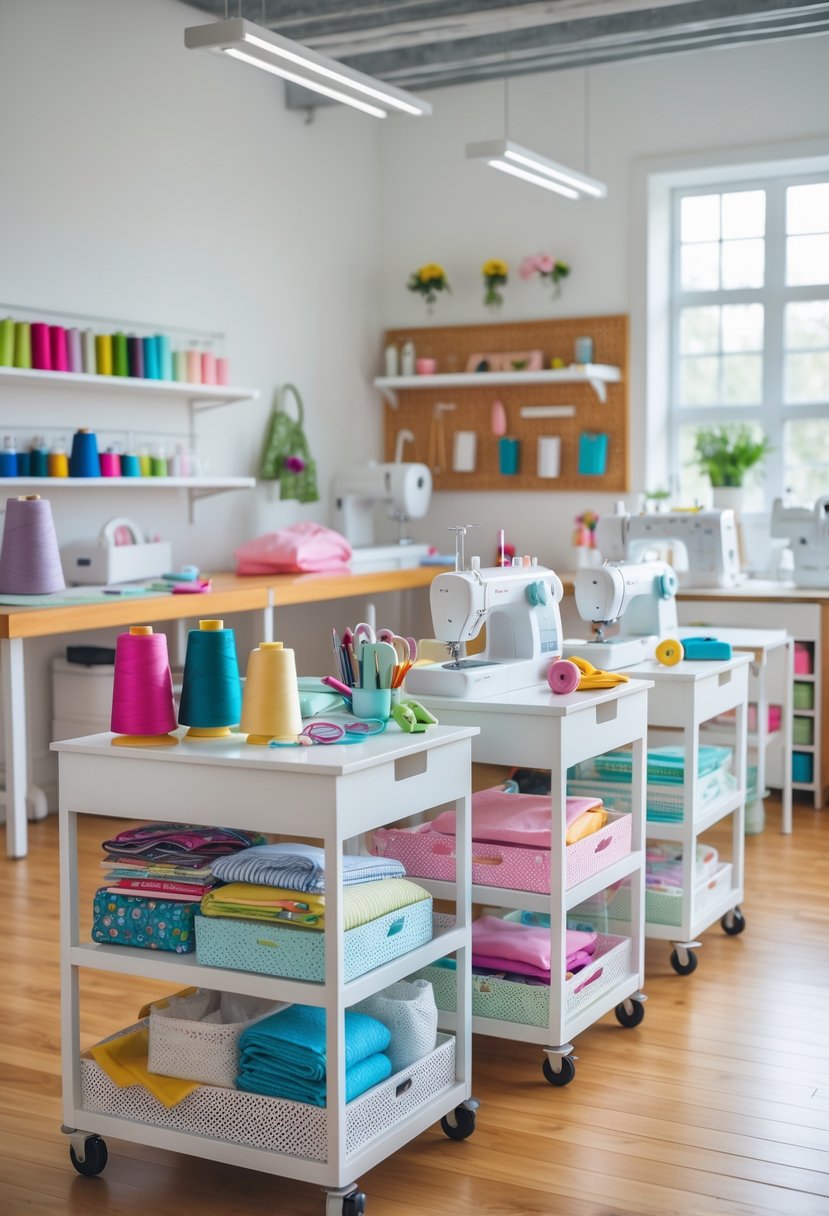
You can use rolling carts to keep your sewing supplies organized and easy to move. These carts often have multiple tiers and drawers, helping you store thread, fabric, and tools neatly.
A rolling cart lets you take your sewing station wherever you need it. When your project is done, simply roll the cart out of the way to keep your space tidy.
Look for carts with sturdy wheels and enough compartments to hold everything you use daily. This makes your sewing workflow smoother and more efficient.
6) Built-in good lighting with adjustable lamps
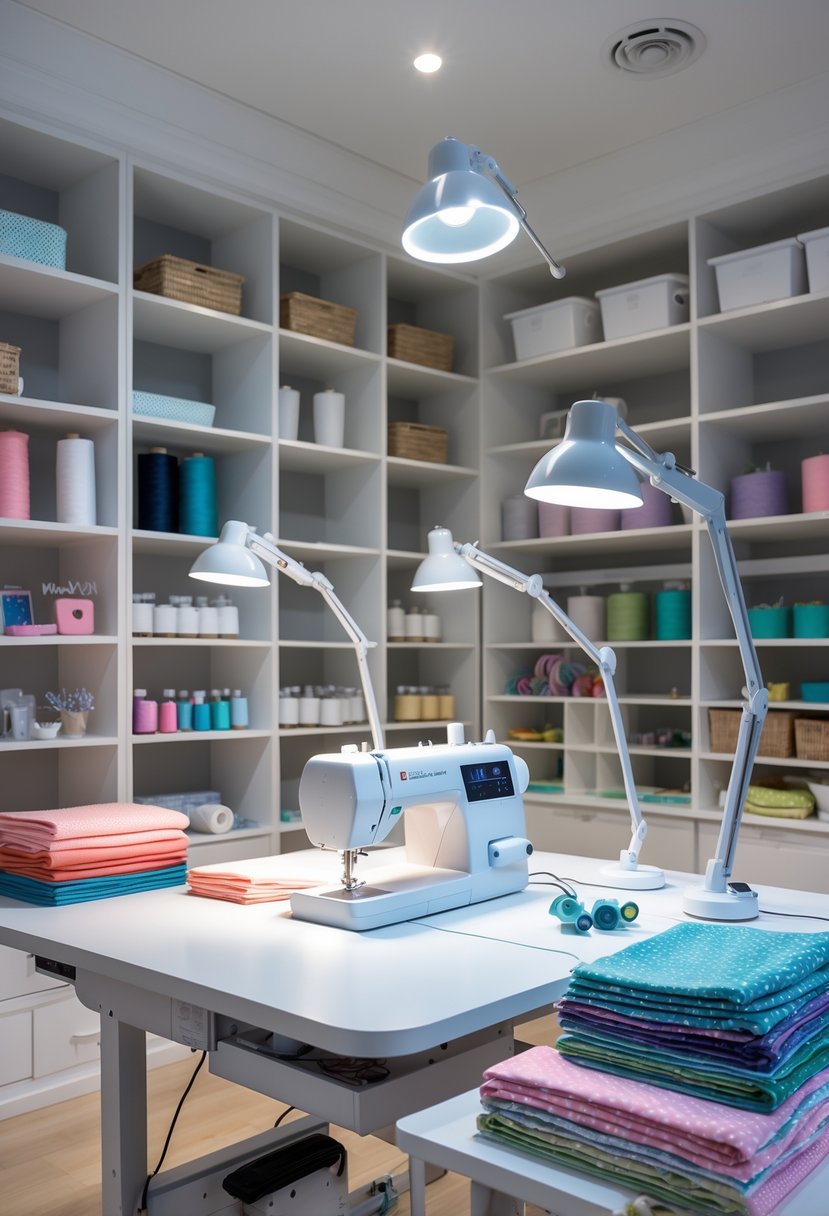
You need good lighting to work precisely on your sewing projects. Adjustable lamps help you direct light exactly where you need it.
Built-in lighting combined with task lamps reduces eye strain and shows details clearly. Choose LED lamps with flexible arms for bright, even light without heat.
This setup lets you change brightness and angle, making your space both practical and comfortable. Proper lighting also helps your room feel more inviting while improving your focus.
7) Vertical storage racks for bolts of fabric
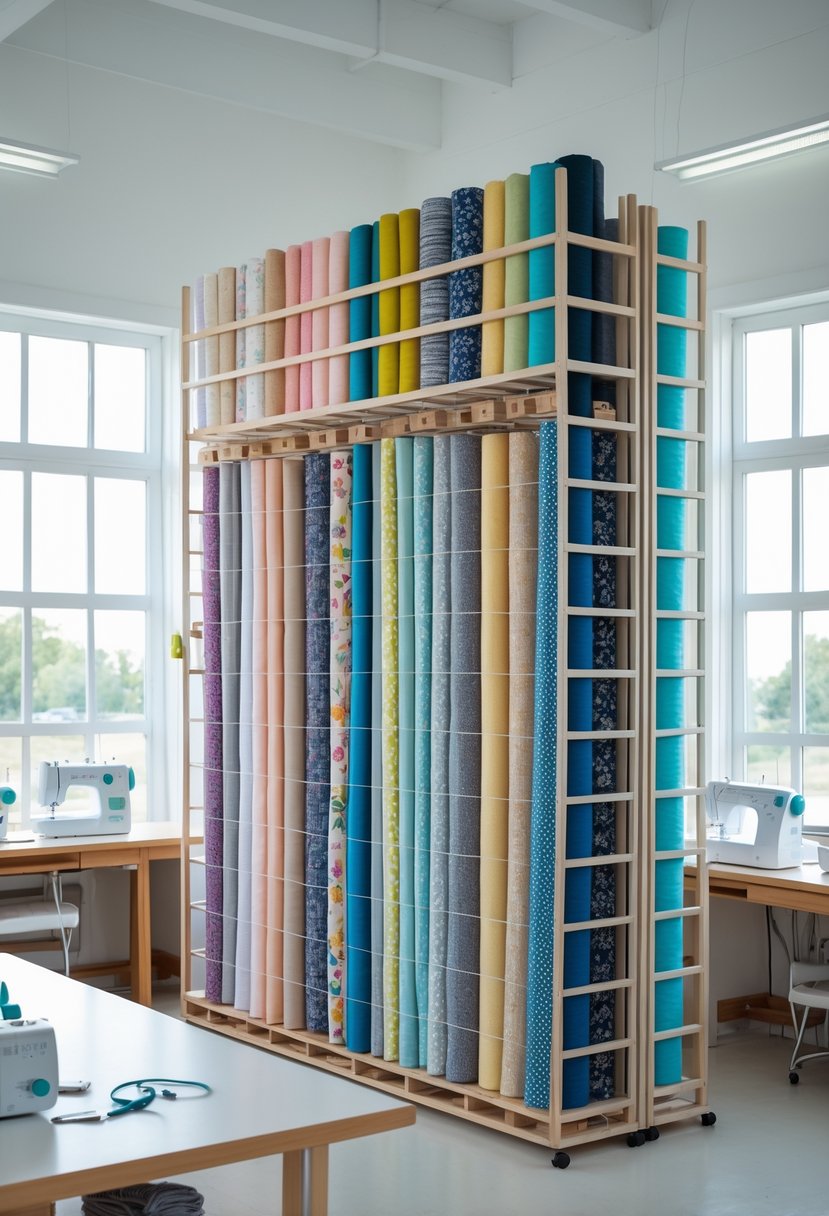
You can save a lot of space by using vertical storage racks for your fabric bolts. These racks keep fabric visible and easy to access.
Vertical racks help avoid wrinkles and damage by keeping bolts upright. You can place them against a wall or inside a closet.
Choose racks with adjustable slots to fit different fabric sizes. It makes organizing simple and efficient. You’ll have more room for other supplies in your sewing area too.
8) Magnetic strips to hold small metal tools
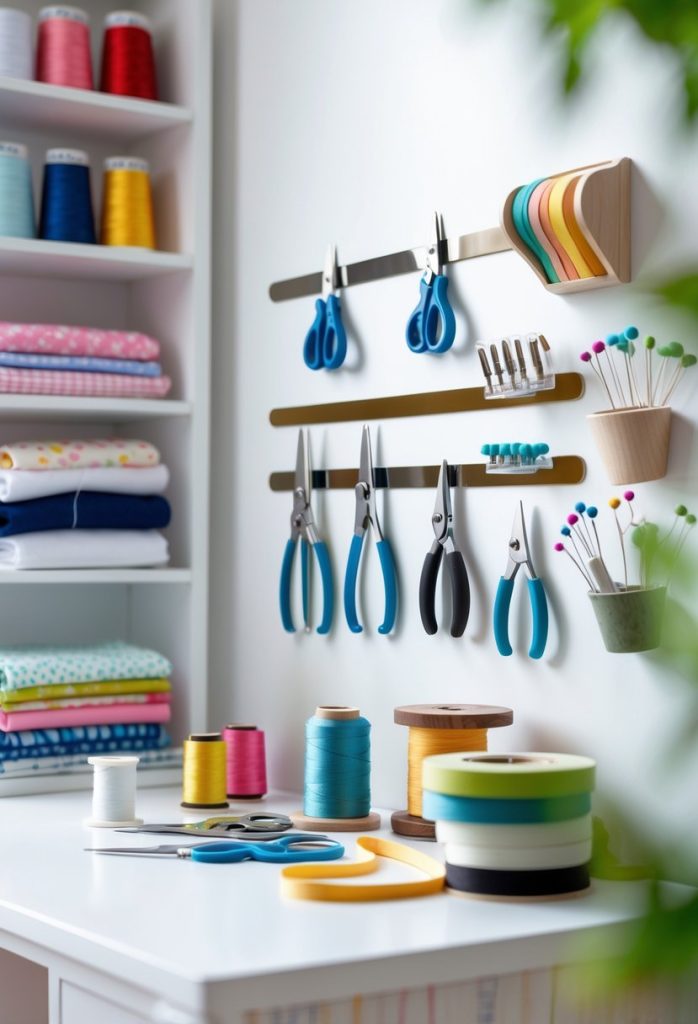
You can use magnetic strips to keep your small metal tools like scissors, pins, and seam rippers easy to find. Attach the strips to your sewing room wall or workspace edges.
This method saves drawer space and keeps tools visible and within reach. It also helps prevent losing small items.
Magnetic strips work best for metal tools and make your sewing area more organized and efficient without taking up extra room.
9) Fold-down ironing board to save space
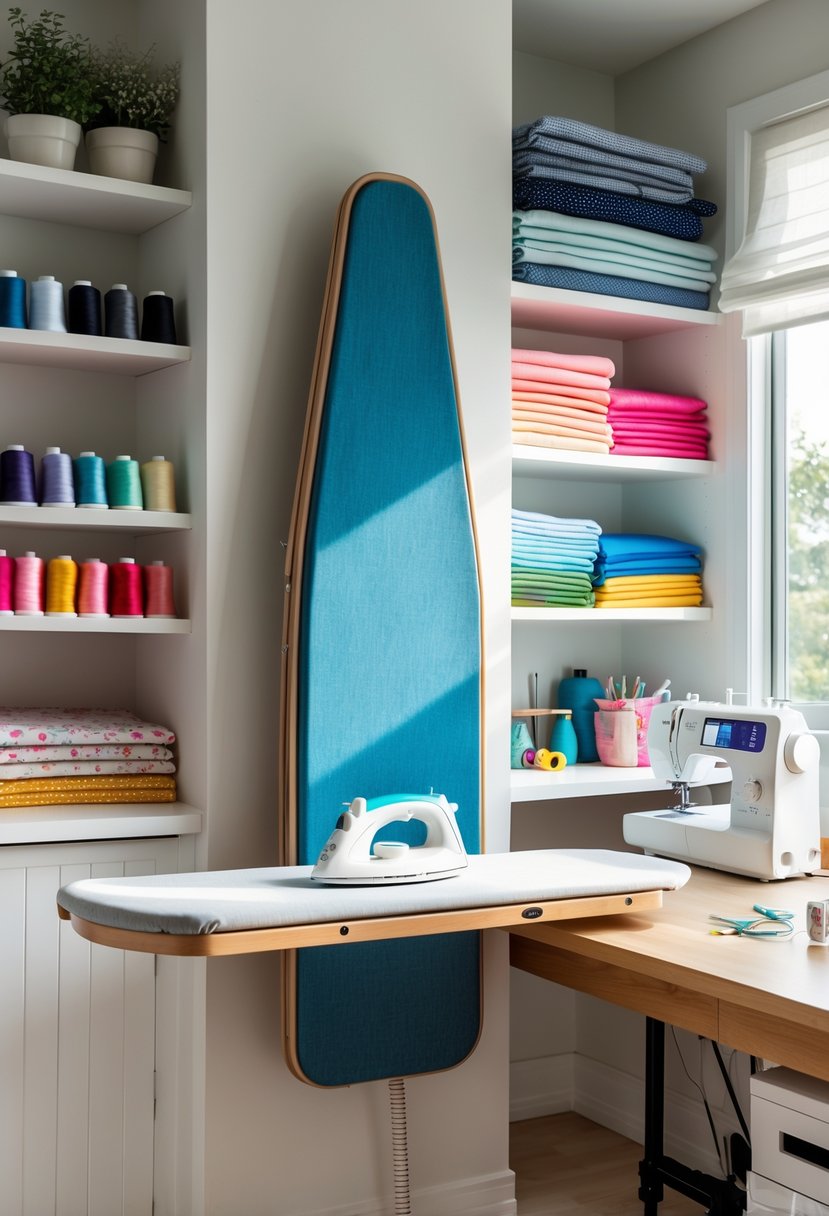
You can install a fold-down ironing board to keep your sewing room tidy. It folds flat against the wall or inside a cabinet when not in use. This saves floor space and keeps your ironing area hidden.
When you need to iron, simply fold the board down. Some designs include storage for your iron and accessories, making your workspace more organized. This setup helps maintain a smooth workflow and keeps your room clutter-free.
10) Glass jars to organize buttons and notions
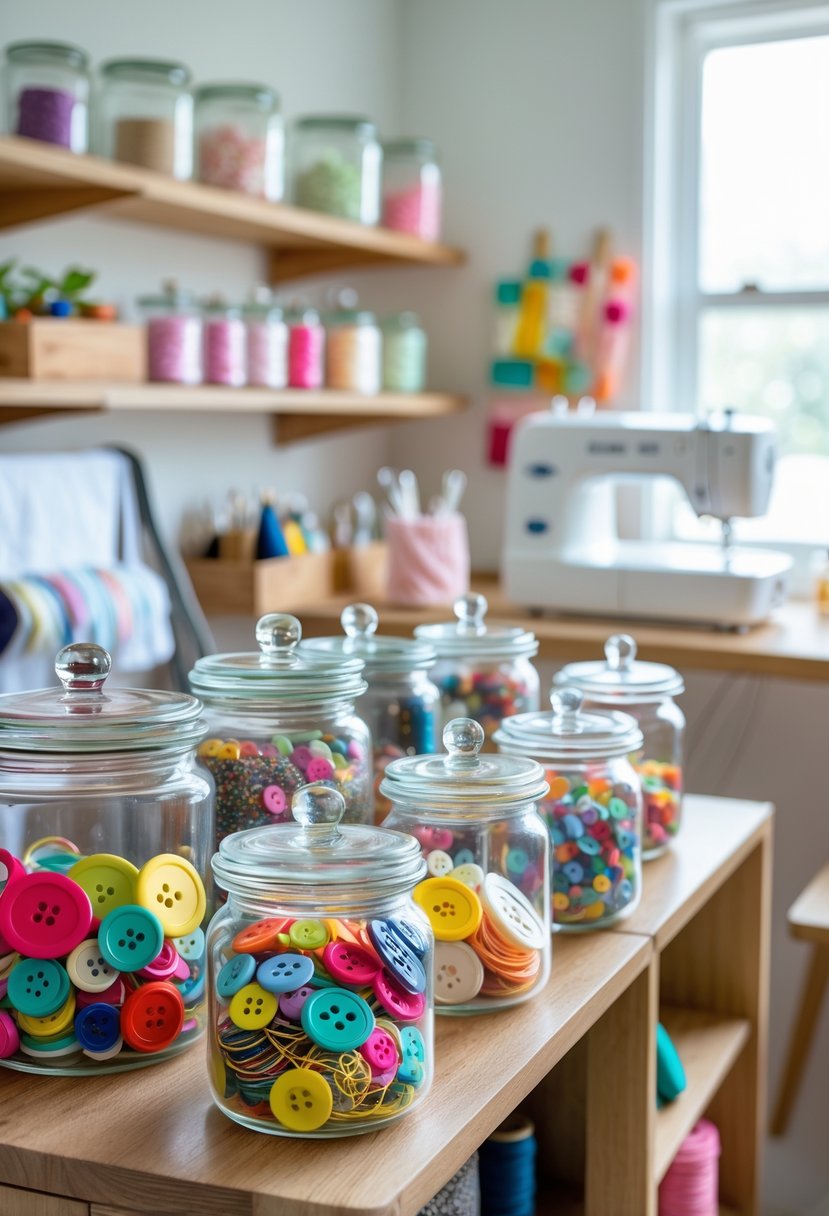
Using glass jars is a simple, clear way to keep buttons and small sewing items sorted. You can see what’s inside without opening each container.
Small jars work well for pins and needles. Medium jars are great for buttons sorted by size or color. Larger jars can hold ribbons or trims.
Glass jars also protect your items from dust and make your sewing space look neat. You can use old mason jars or buy new ones, depending on your style.
11) Corkboard for pinning patterns and ideas
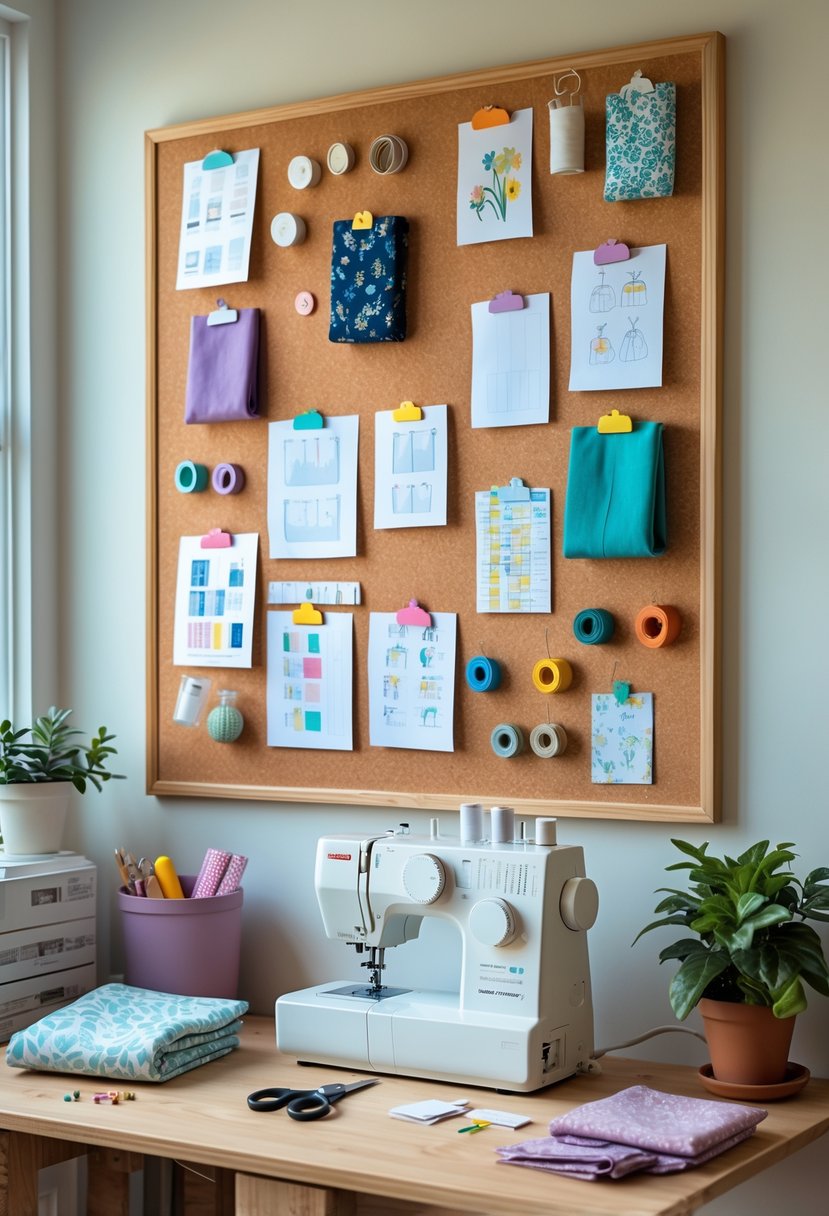
A corkboard is useful for keeping your sewing patterns and ideas visible. You can pin fabric swatches, sketches, and notes to stay organized.
Using different colored pins helps you separate projects or mark deadlines. This way, you avoid losing important details.
Having your patterns and inspirations in one place makes it easier to plan and track your work. It also helps keep your sewing space neat and focused.
12) Drawer dividers for thread spools and bobbins
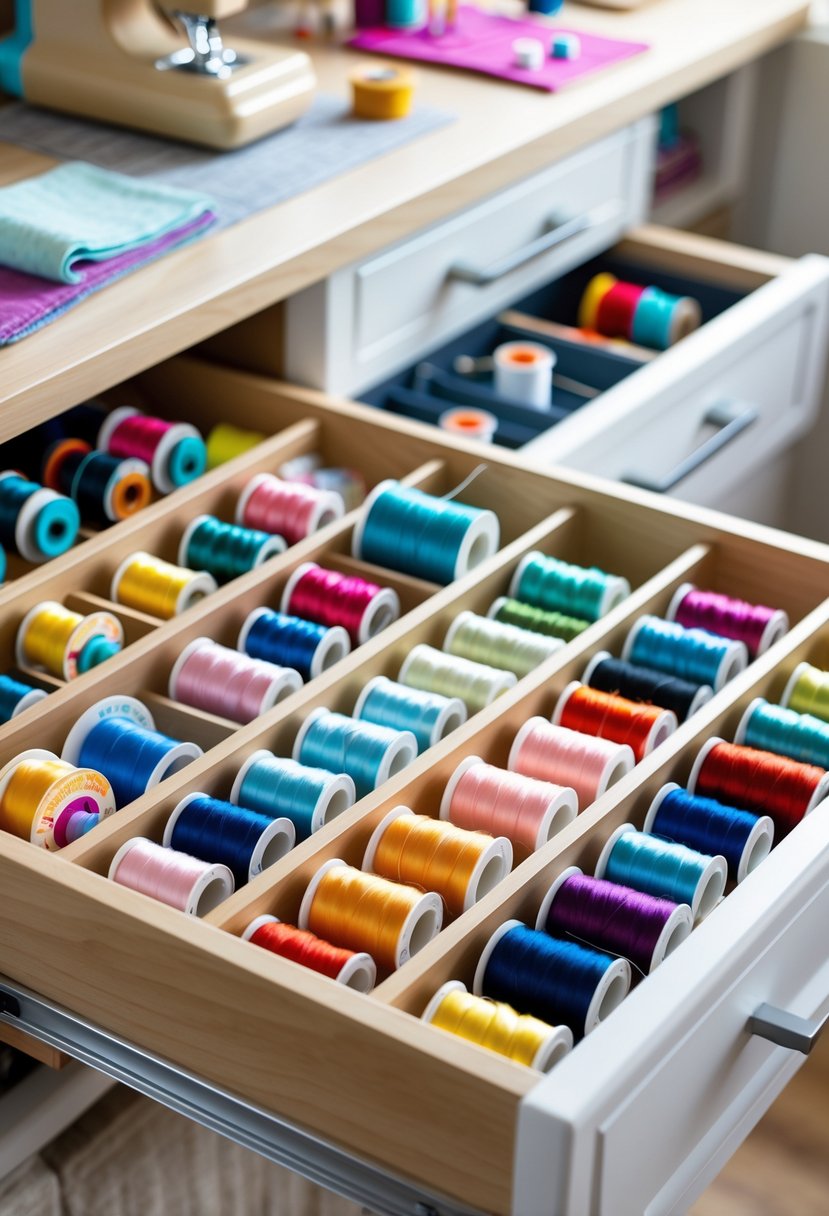
You can use drawer dividers to keep your thread spools and bobbins neat and easy to find. These dividers create small compartments, preventing threads from rolling around or getting tangled.
Clear acrylic or foam-lined trays work well and let you see your colors at a glance. You can also find adjustable dividers that fit different spool sizes.
Organizing your threads this way saves space and keeps your sewing area tidy. It’s a simple solution that makes your creative work smoother.
13) Recycled wooden hymn rack for thread spools
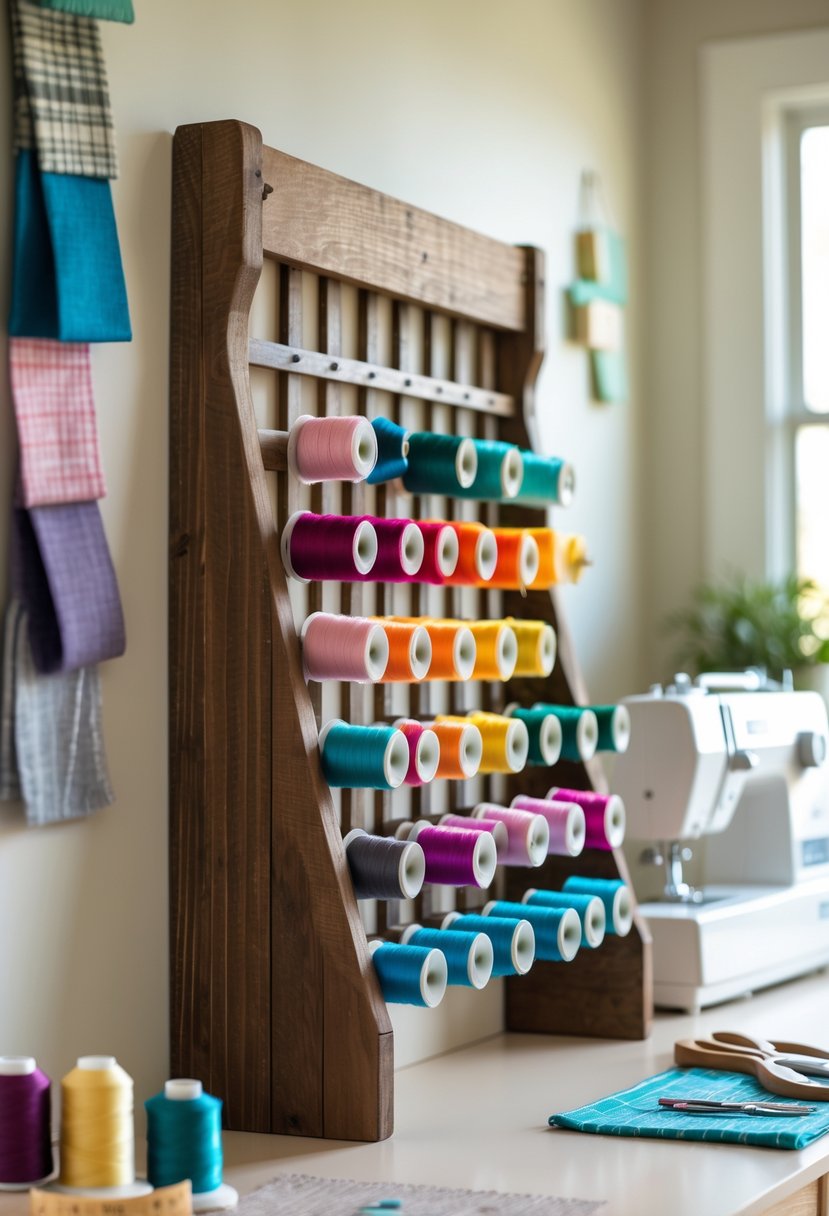
You can use a recycled wooden hymn rack to store your thread spools neatly. Its slots are perfect for holding spools of different sizes, keeping them visible and easy to reach.
This rack saves space and gives your sewing room a unique, vintage look. It also helps prevent your threads from tangling or getting lost.
Using something recycled like this is eco-friendly and cost-effective. It turns an old item into a practical storage solution for your sewing space.
14) Rainbow fabric wall display for inspiration
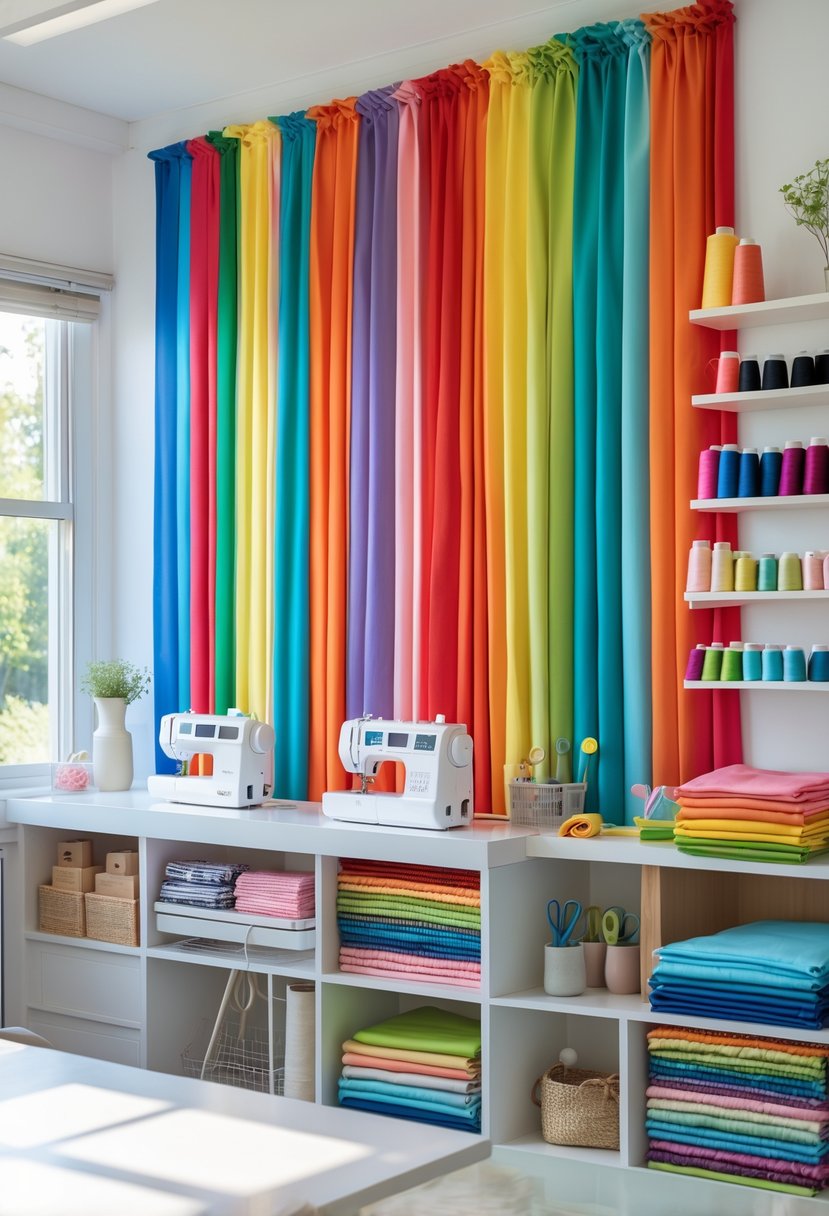
You can brighten your sewing room with a rainbow fabric wall display. Arrange fabrics by color on shelves or in bins to create a clear, organized look.
This setup not only keeps your materials easy to find but also adds a colorful, inspiring touch to your space.
Seeing your fabrics at a glance helps you plan projects faster. It turns your wall into both storage and decoration, making your room more functional and inviting.
15) Flexible room layout for evolving projects
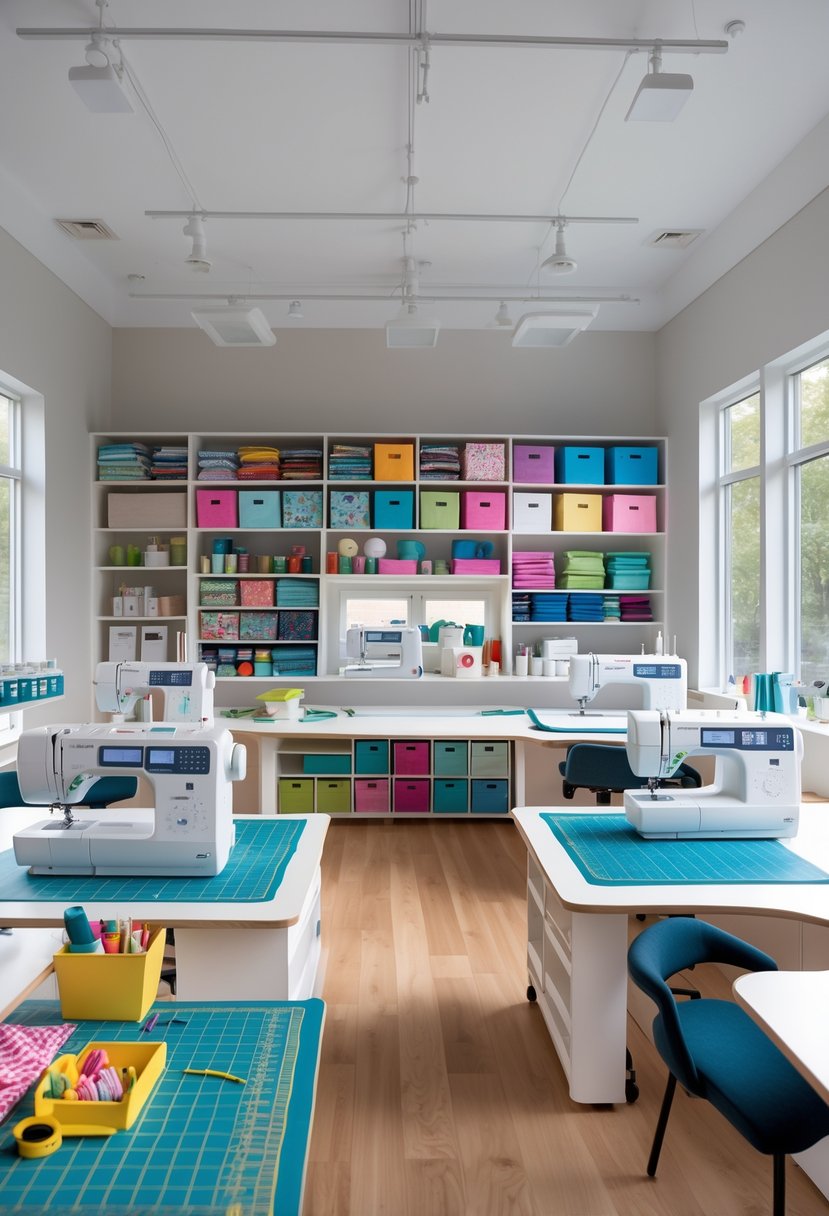
Your sewing needs may change over time. A flexible layout lets you adjust your space as projects and tools evolve.
Arrange tables, storage, and seating so you can move or add pieces easily. This helps keep your workflow smooth and efficient.
Consider modular furniture or wheels on key items. You’ll be able to create space for bigger projects or rearrange when you try new techniques.
Frequently Asked Questions
Creating a sewing space that works well means focusing on smart storage, proper furniture, and good layout. You want to organize your tools efficiently and make sure your room feels comfortable and inspiring.
How can I set up an efficient sewing space in a small room or corner?
Use a compact worktable with adjustable height to save space. Mount pegboards on the wall to hang your scissors and tools. Open shelving helps keep supplies visible and easy to reach without cluttering the area.
What are the best budget-friendly ways to organize fabric, patterns, and notions?
Use color-coded bins for fabric scraps and label them clearly. Rolling carts can hold small notions and move easily when needed. Repurpose jars or small containers to store buttons, needles, and other tiny items.
Which IKEA storage solutions work well for sewing supplies and fabric?
IKEA’s Kallax shelves are good for organizing fabric and bins. The Raskog rolling cart is perfect for mobile storage of notions or ongoing projects. Wall-mounted storage like the Grundtal rail can hold tools and keep your space tidy.
What essential furniture and tools should a functional sewing room include?
A sturdy, adjustable-height worktable is key. You need a good chair for long sewing sessions. Pegboards keep tools in sight, and open shelves hold fabrics and patterns. Consider good lighting and a cutting mat for precise work.
How big does a dedicated sewing room need to be for comfortable workflow?
A room around 8 by 10 feet can work well if you arrange furniture efficiently. Make sure you have enough space to move around your table and access storage easily. If space is tight, focus on vertical storage and mobile carts.
How can I apply feng shui principles to improve the layout and energy of a sewing space?
Keep your sewing room clutter-free and organized to allow positive energy flow. Position your worktable near a window for natural light. Use colors like soft greens and blues to create calm and focus. Avoid blocking doorways or walkways to maintain good energy movement.


