Published On:
15 Italian Farmhouse Exterior Ideas Inspired by Tuscany Homes
Share:


You want a home that feels warm, timeless, and connected to the land. This article shows 15 Italian farmhouse exterior ideas that help you spot classic materials, rooflines, doors, shutters, and planting choices so you can picture what will suit your home and style.
Explore examples that range from soft stone and chalky plaster to terracotta roofs, deep green shutters, and neat terracotta pots that shape the overall mood. You will learn clear, real-world design cues to help you choose the exterior elements that bring Italian farmhouse charm to your house.
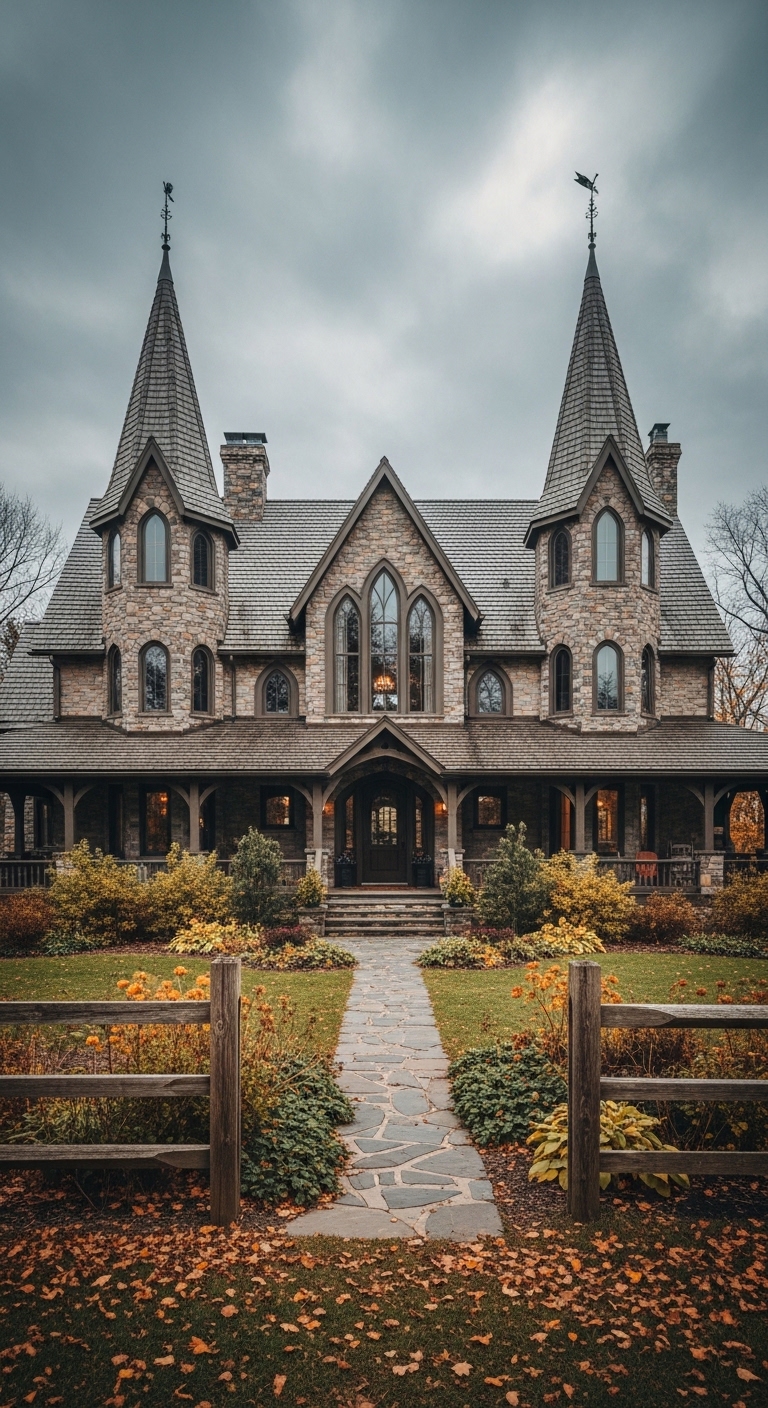
1) Soft beige and gray stonework exterior
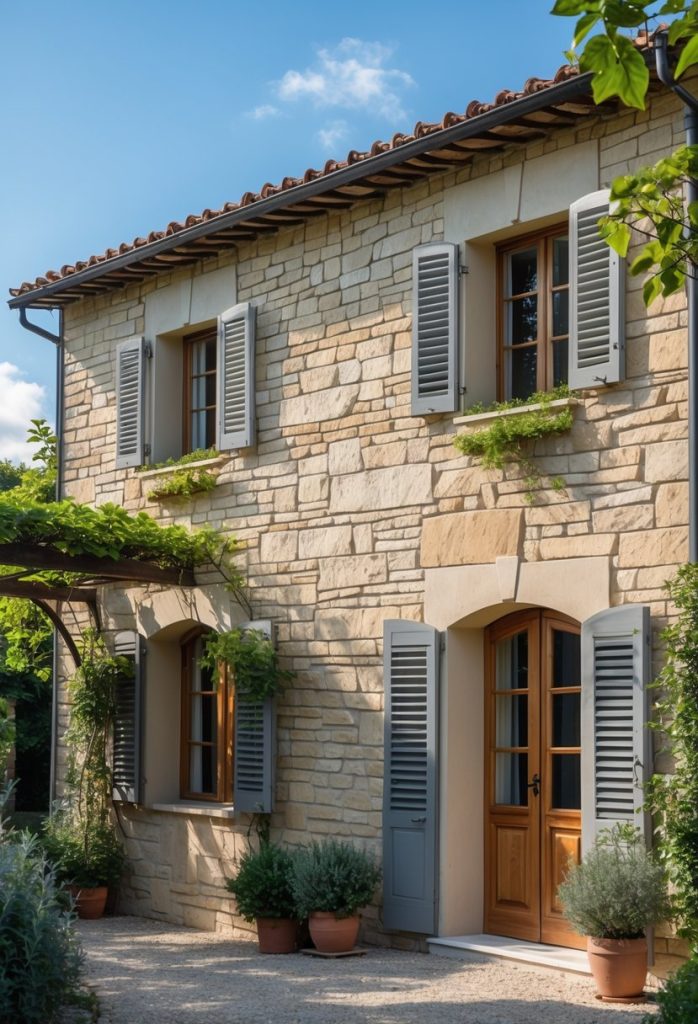
You can give an Italian farmhouse a calm, timeless look by pairing soft beige walls with gray stone accents. The beige adds warmth, while the gray stone brings texture and a natural, grounded feel.
Use stone around the base, entryway, and corners to create visual weight. Small, dark shutters or wood beams add contrast without stealing the simple, elegant feel.
Keep trim and roof colors muted to maintain harmony. Good lighting at night will highlight the stone’s surface and the soft beige tones.
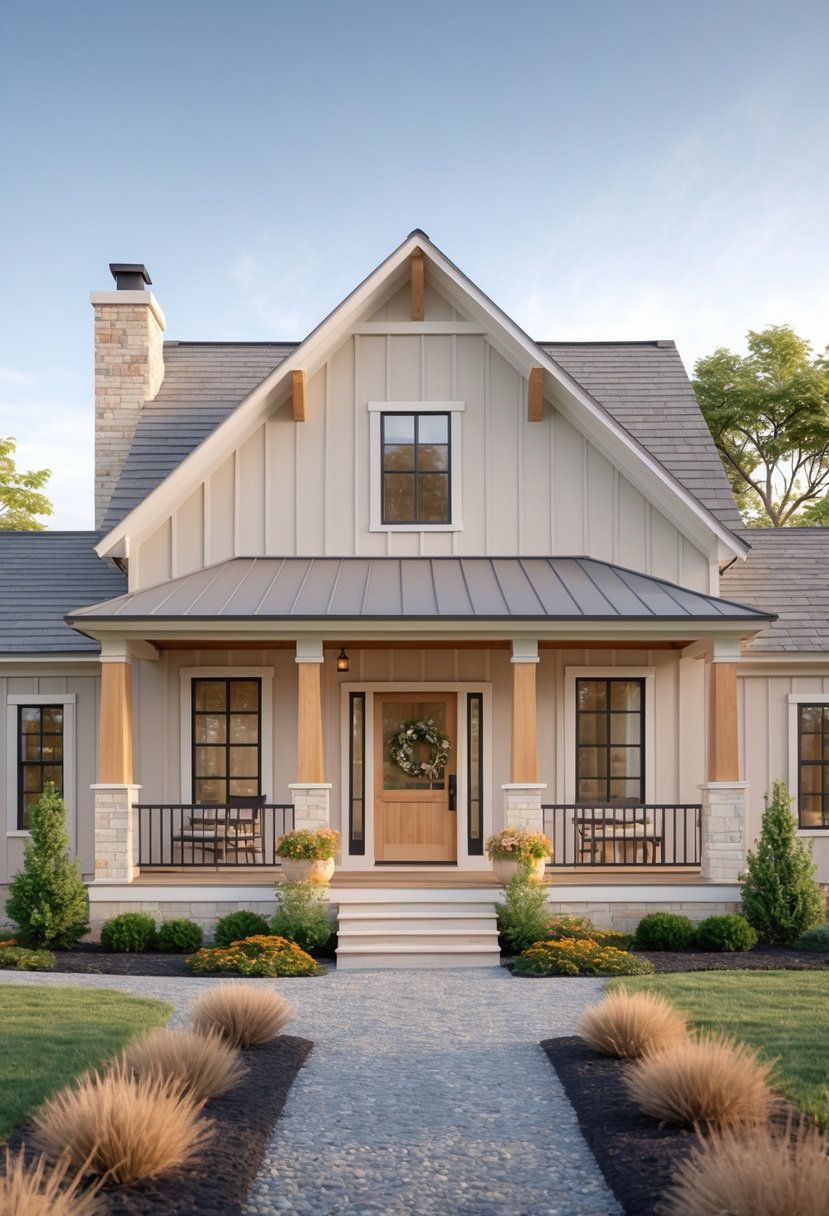
2) Dark gabled roof for contrast
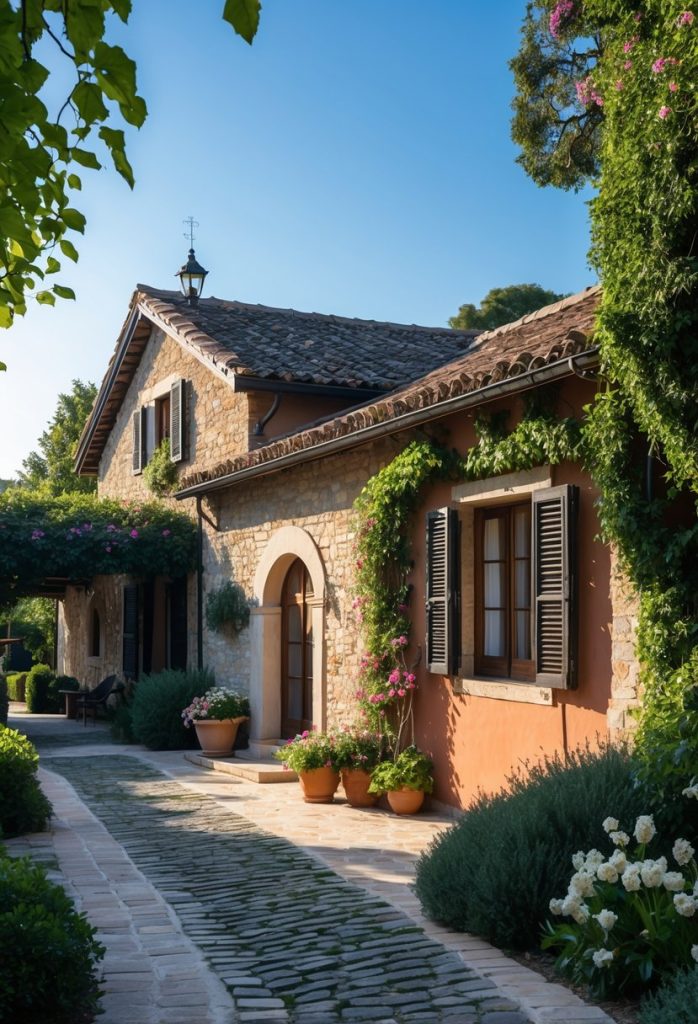
A dark gabled roof gives your Italian farmhouse a strong, clean silhouette. It contrasts with light stone or stucco walls and draws the eye to the roofline.
You can use dark slate, metal, or tile to get this look. These materials handle weather well and add a modern touch without losing rustic charm.
Keep trims and wood accents warm to balance the dark roof. That contrast highlights doors, windows, and porch details so your exterior feels layered and intentional.
3) Warm wooden doors and trim
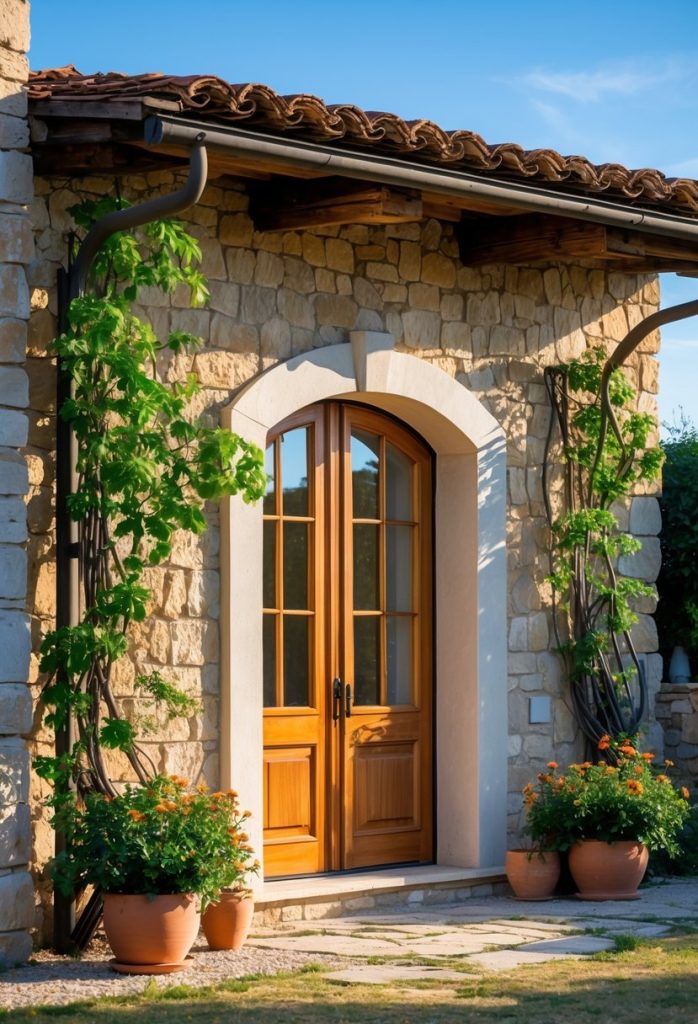
You can use warm wooden doors to anchor an Italian farmhouse look. Natural wood tones add a sense of craft and age without feeling heavy.
Pair the door with matching trim and shutters to create a calm, unified face for your home. The wood softens stone or stucco and works well with iron or lantern-style lighting.
Choose finishes that show grain and texture for a lived-in, authentic feel. Keep maintenance in mind: a good sealant preserves color and resists weathering.
4) Sleek plaster exterior with clay-tiled roof
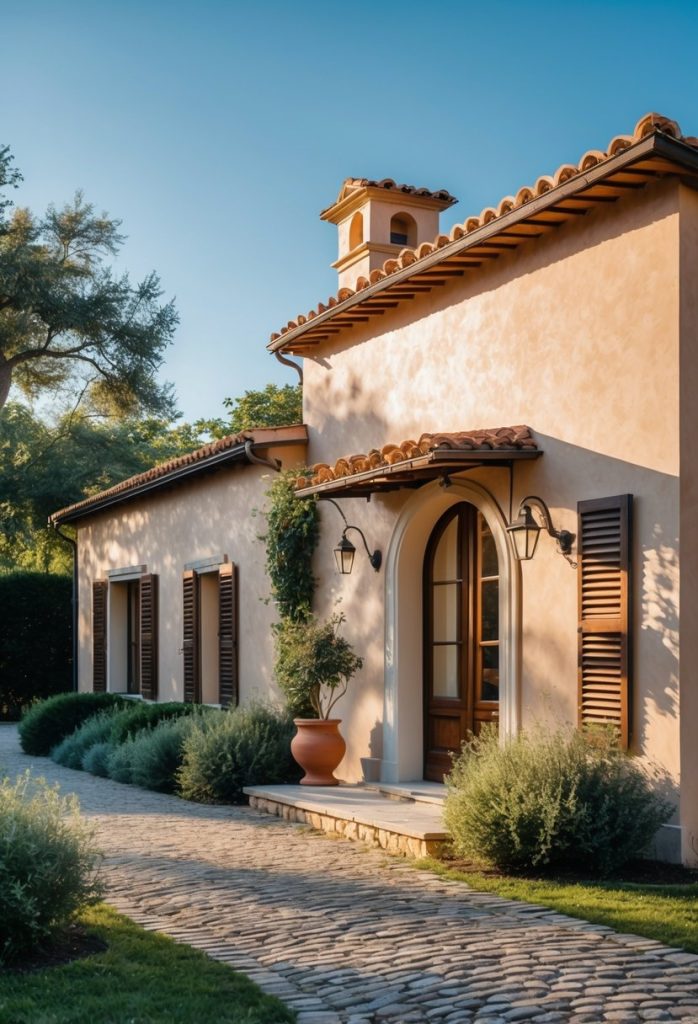
You’ll notice a smooth plaster finish gives the farmhouse a clean, modern look while still feeling warm. The plaster hides imperfections and creates a calm backdrop for windows, doors, and plants.
A clay-tiled roof adds texture and protects the house from sun and rain. These tiles come in warm tones that contrast nicely with pale plaster and help keep interiors cooler in summer.
Keep window frames and doors simple and dark to sharpen the plaster’s soft appearance. Add potted greenery or a stone path to balance sleek surfaces with natural detail.
5) Tall wooden doors and windows
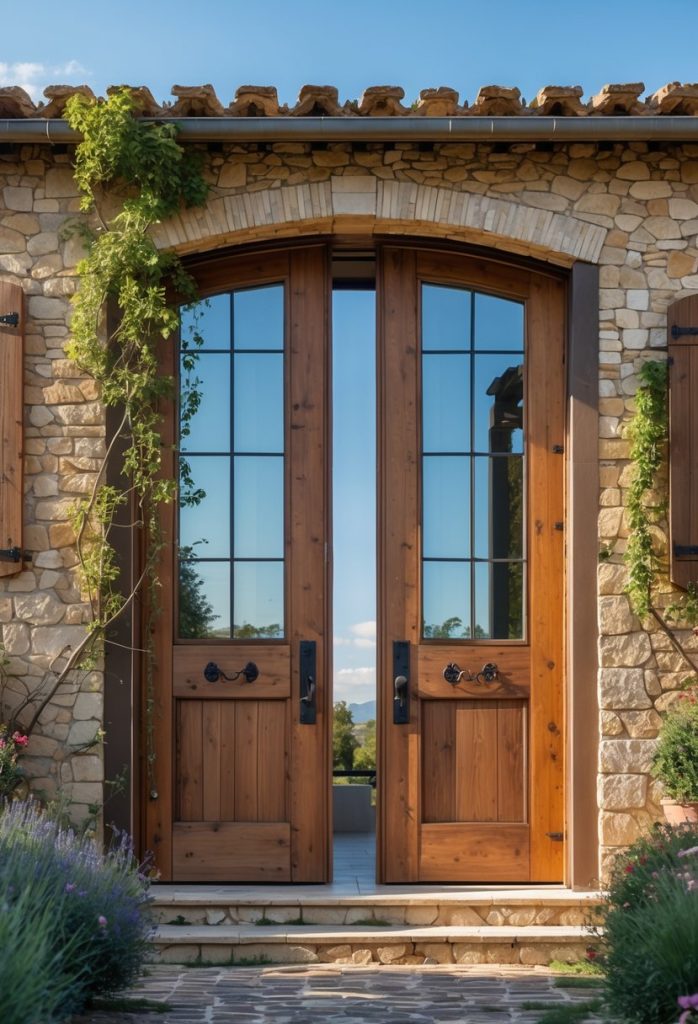
You’ll often find tall wooden doors and windows on Italian farmhouses. They add height and a sense of welcome without feeling formal.
Wood brings warm color and texture that suits stone or plaster walls. Simple panels, arched tops, or wrought-iron grilles keep the look traditional and durable.
Tall openings also let in more light and air, which helps rooms feel connected to the outdoors. Choose seasoned hardwood and good hardware to resist weather and stay secure.
6) Manicured greenery in terracotta pots
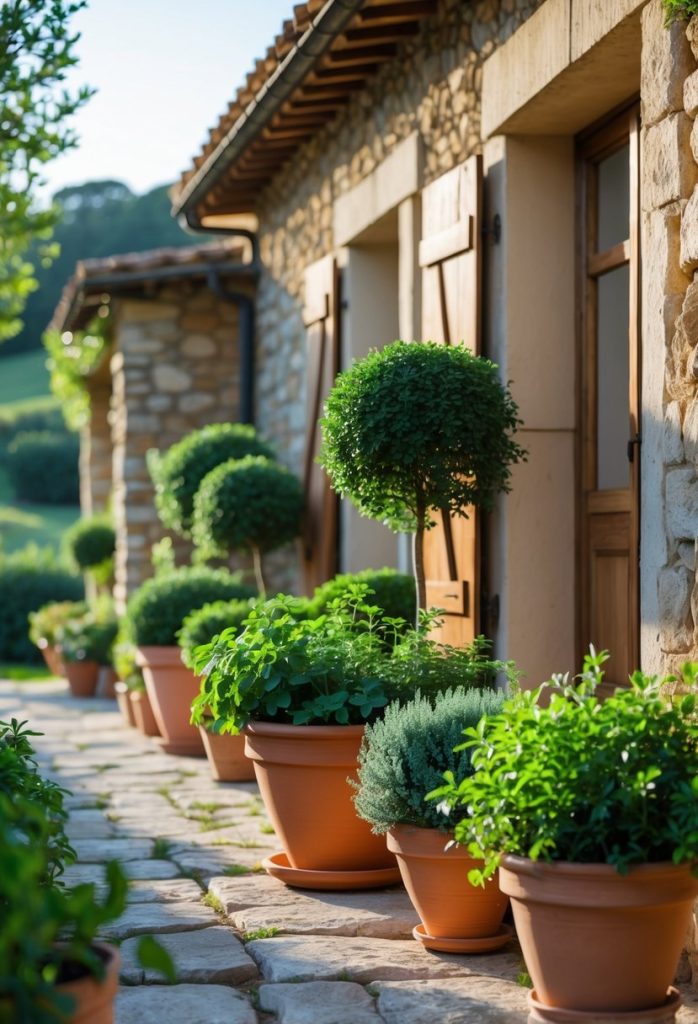
You can frame your entryway with terracotta pots filled with trimmed boxwood or small topiary. The warm clay tones match stone walls and wooden doors, adding a classic Italian touch.
Place pots in pairs or clusters on steps and along a pathway to create rhythm and balance. Keep shapes neat; regular clipping preserves the formal look without much effort.
Choose frostproof, high-quality terracotta if you live in colder climates to protect plants and pots. Group different heights for depth, and rotate pots seasonally to refresh blooms or foliage.
7) Sun-kissed stucco walls
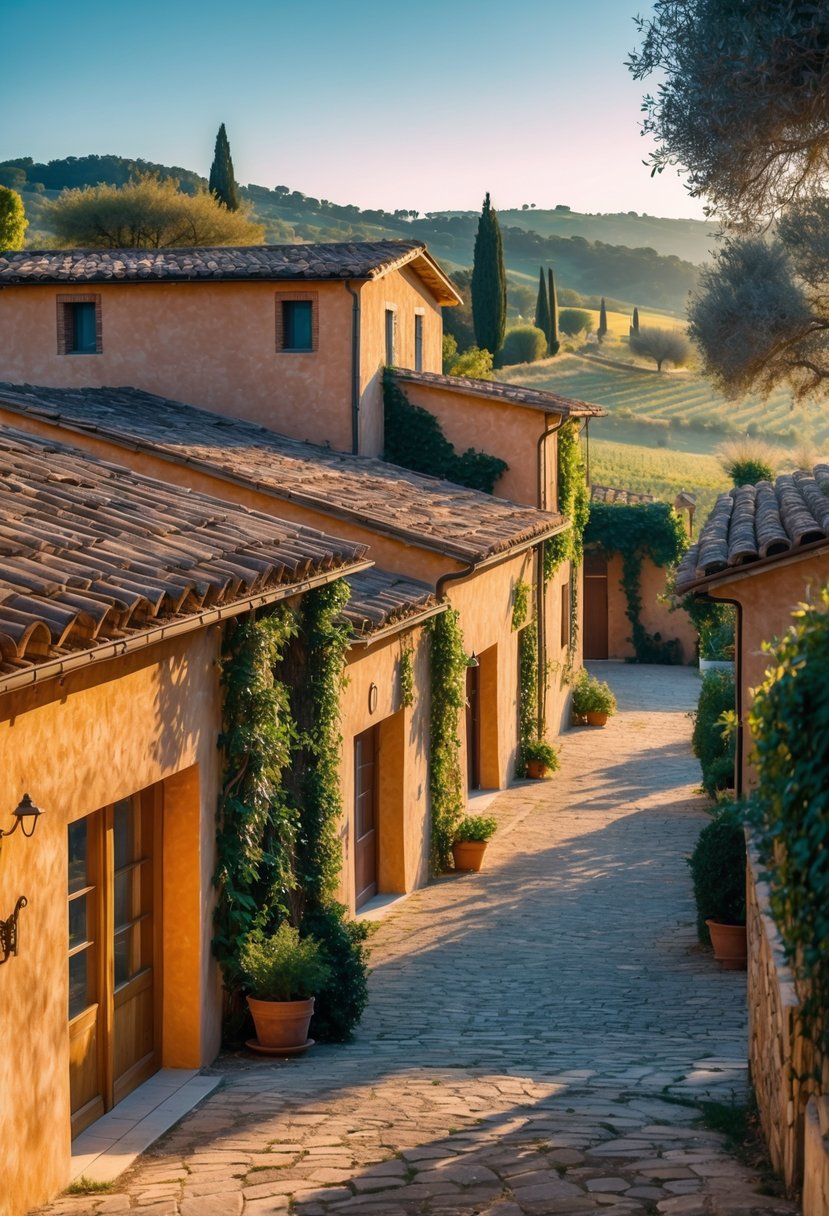
You’ll find stucco on many Italian farmhouses because it reflects light and keeps walls cool. The warm, earthy tones—from honey to soft ochre—give your home a calm, timeless look.
Apply stucco carefully to get a slightly textured finish, not a flat coat. Small imperfections add character and make the facade read as authentic rather than factory-made.
Pair stucco with terracotta roof tiles, wooden shutters, or climbing ivy to complete the look. Those elements balance the smoothness of the walls and create a cozy, Mediterranean feel for your exterior.
8) Rustic terracotta tile roofing
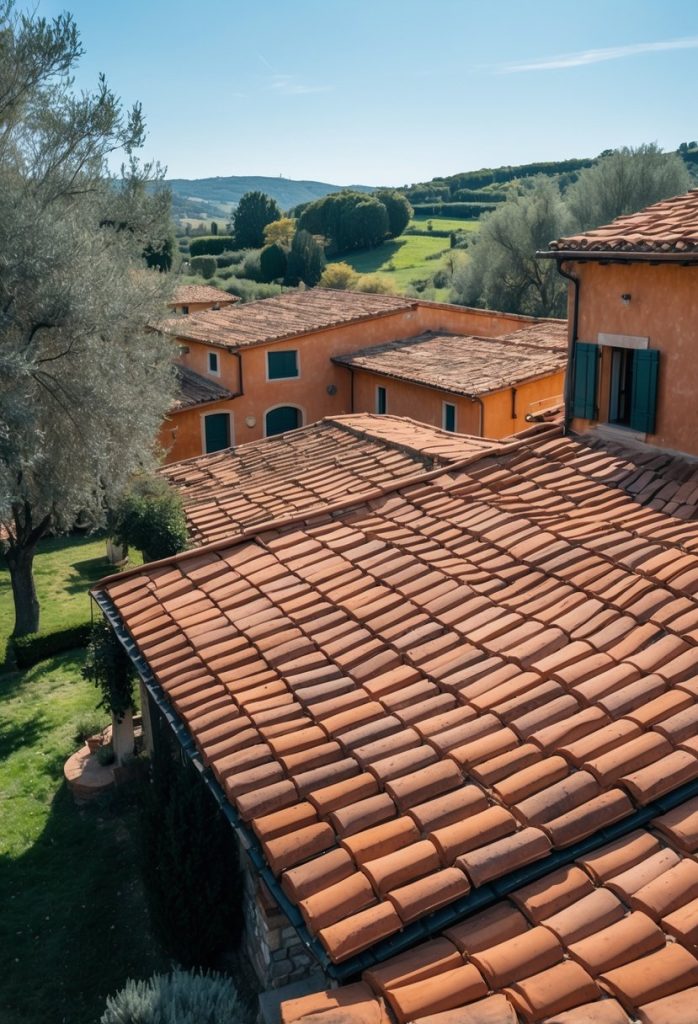
You’ll get a classic Italian look with terracotta roof tiles that show warm reds, ochres, and soft creams. The color and texture add instant character to a farmhouse exterior.
Terracotta is durable and works well in dry, mild climates. It handles sun and heat; it may need extra care in very wet or freeze-thaw environments.
You can choose reclaimed antique tiles for an aged patina or new handmade tiles for a uniform appearance. Both options match stone walls, wooden shutters, and simple eaves common to Italian farmhouse style.
Installers often pair terracotta with raised-edge or flat profiles to create either traditional barrel lines or a sleeker Mediterranean roof. Proper underlayment and flashing keep the roof watertight.
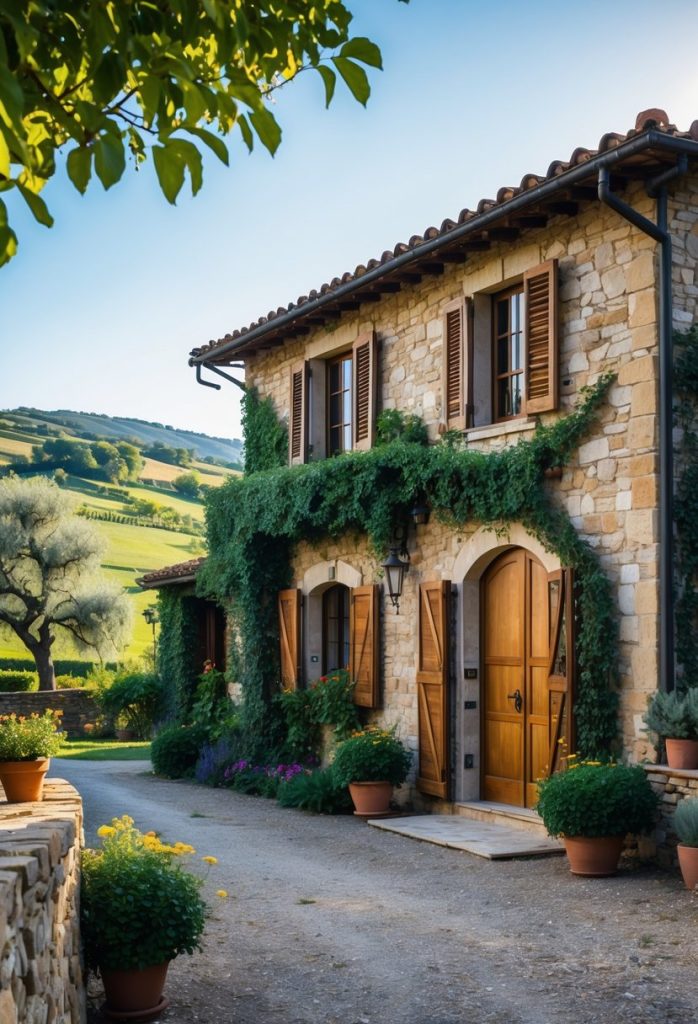
9) Natural stone walls with climbing vines
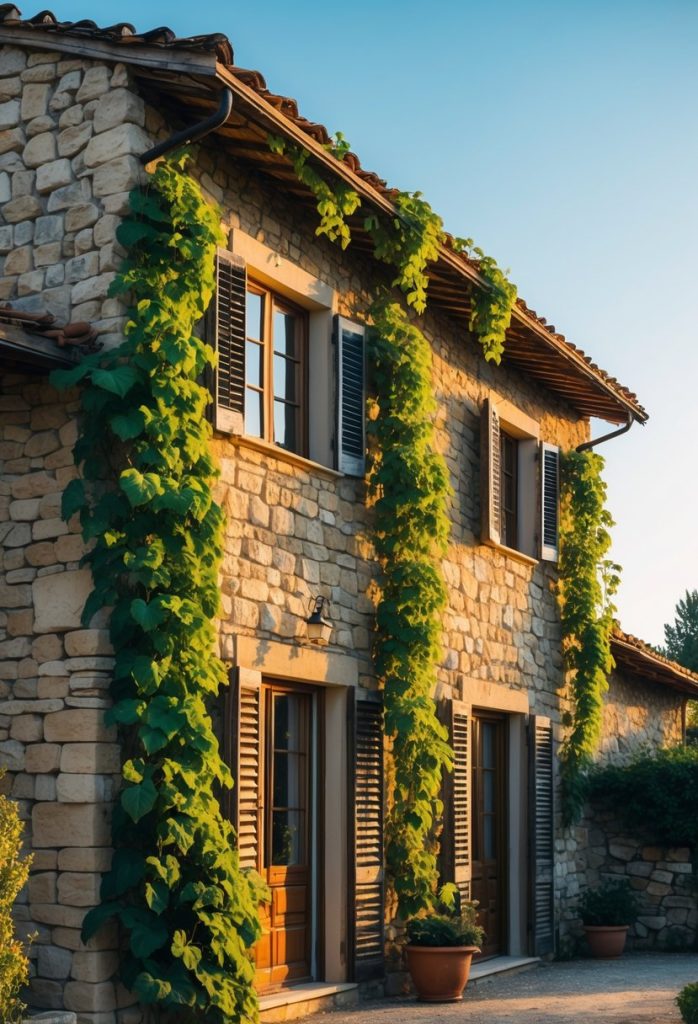
You’ll find natural stone gives an Italian farmhouse a grounded, authentic look. The textured surface ages well and hides small wear so the exterior stays charming over time.
Climbing vines soften the stone and add green contrast. Vines like ivy or wisteria create depth and seasonal interest without covering the wall completely.
Keep maintenance simple by training vines on trellises and pruning yearly. That prevents damage to mortar and lets you control growth around windows and doors.
Choose stones and vine species that suit your climate. Matching materials and plant choices helps your farmhouse look cohesive and last longer.
10) Faded terracotta roof tiles
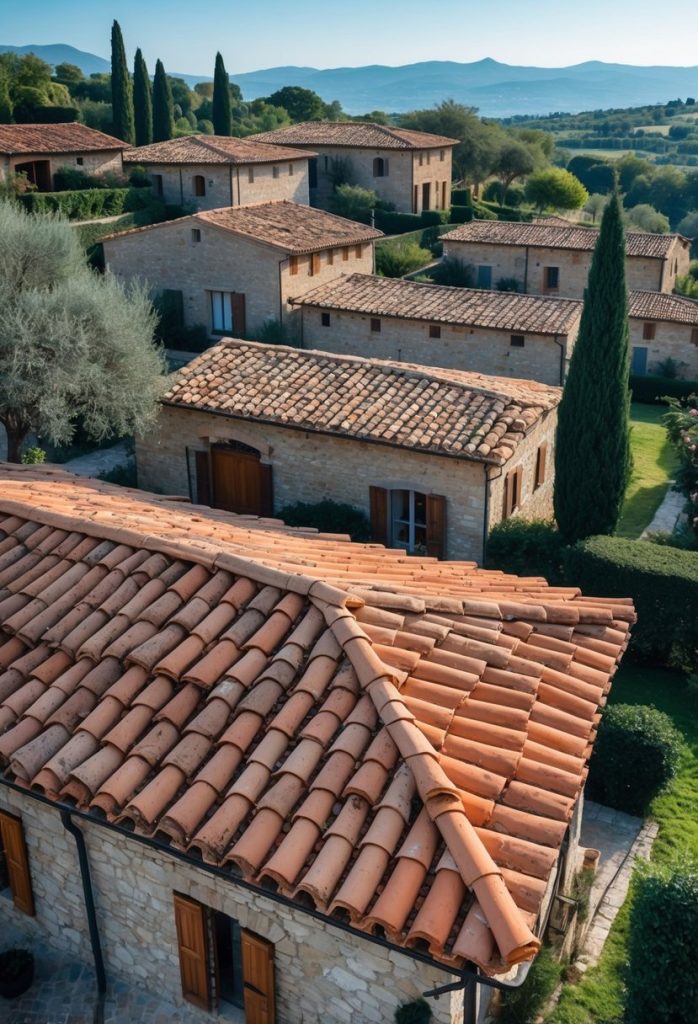
You’ll often see soft, faded terracotta tiles on Italian farmhouses. The worn color adds quiet warmth and a lived-in look without feeling neglected.
Fading comes from sun, rain, and age, which creates a range of reds, pinks, and ochres. That color mix blends with stone walls and wooden shutters for a cohesive exterior.
You can keep original tiles for authenticity or replace some with reclaimed terracotta to match tones. Either way, the subtle palette helps your farmhouse feel timeless and grounded.
11) Chalky plaster walls
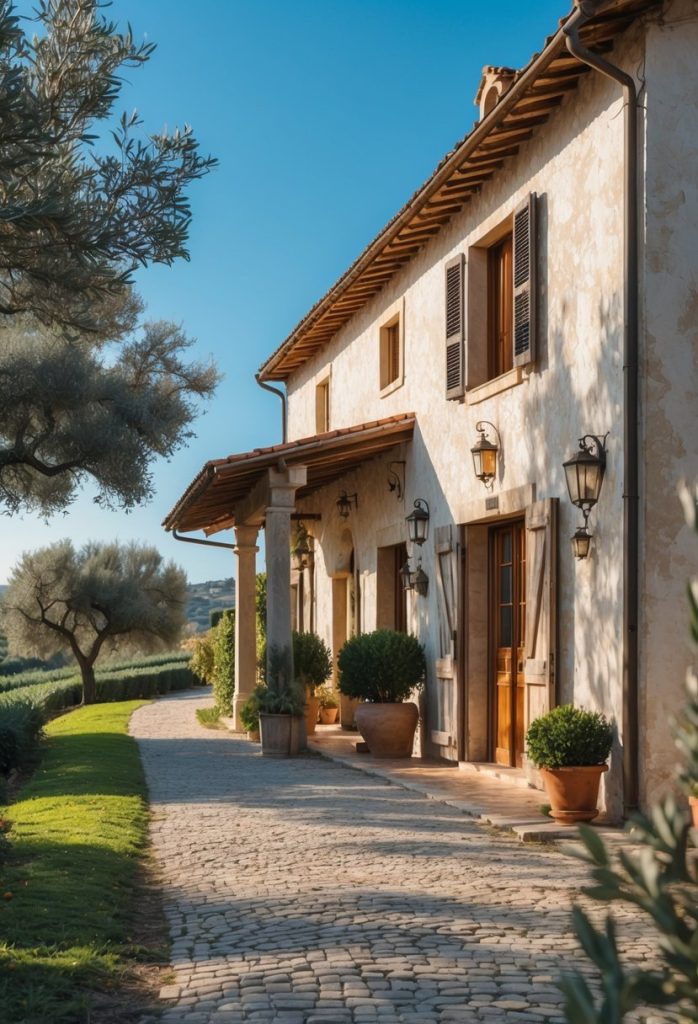
You’ll often see chalky plaster on Italian farmhouse exteriors. The soft, matte finish gives walls a weathered, lived-in look without heavy texture.
This plaster is usually lime-based or a Venetian-style finish applied in thin layers. You can choose pale creams, warm ochres, or muted terracotta to match roof tiles and stone accents.
Chalky plaster also helps walls breathe, which is important in old masonry. It can hide small imperfections while keeping a simple, authentic appearance that fits rural and renovated farmhouses alike.
12) Traditional wooden shutters in deep forest green
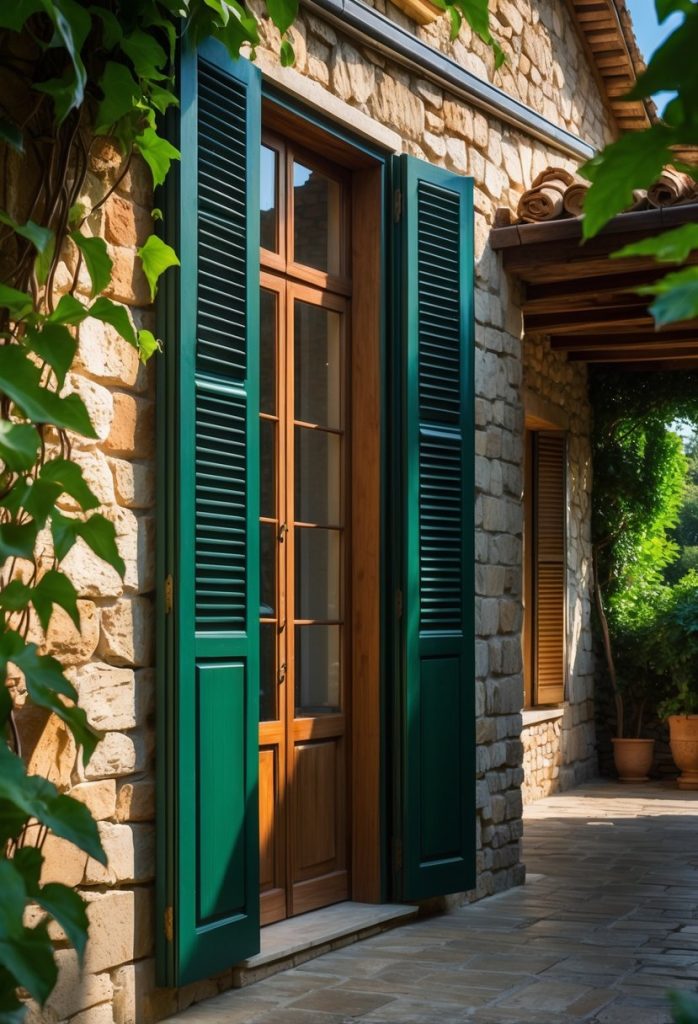
You can add deep forest green wooden shutters to give your farmhouse a classic, grounded look. The color pairs well with warm stucco, pale stone, or cream siding and brings a natural, Italian feel to the exterior.
Choose solid wood like cedar or pine for durability and an authentic texture. Paint or stain with exterior-grade products and seal well to protect against sun and moisture.
Mount shutters on functional hinges for a traditional, usable feature or fit them as fixed panels for a decorative touch. Either option will frame your windows and add depth to your facade without overwhelming the design.
13) Earthy brown painted shutters
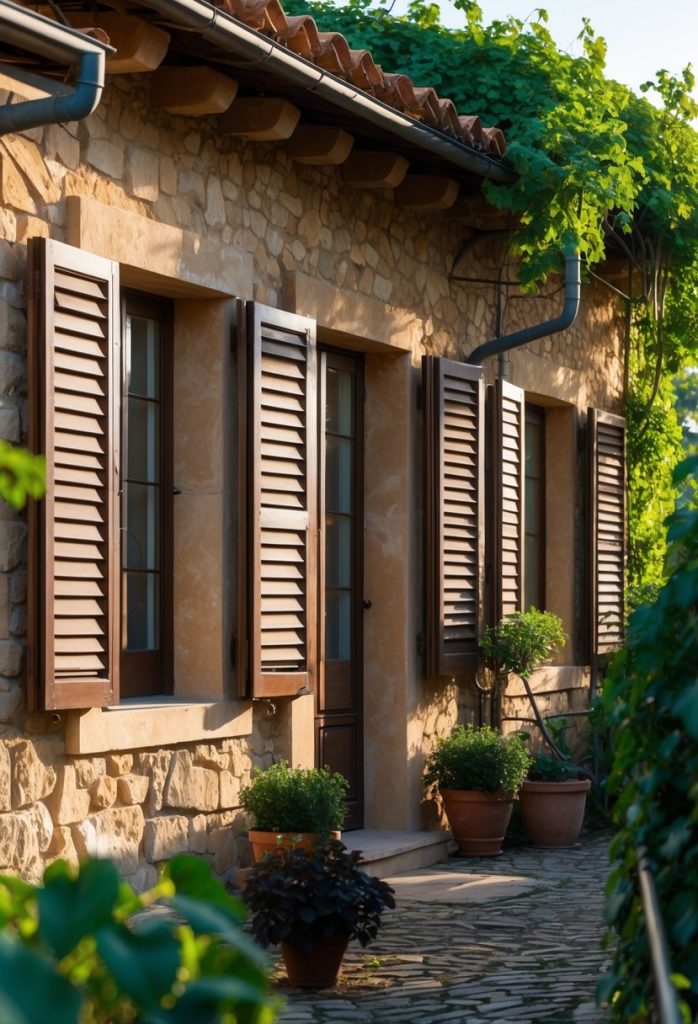
You can use earthy brown shutters to give your Italian farmhouse a warm, grounded look. Brown tones pair well with stone, stucco, and muted roof tiles.
Choose a satin or matte finish to keep the look rustic and low-glare. Paint that resists UV and moisture will hold up better over time.
Brown shutters work with both dark and light trim. They create a subtle contrast that highlights windows without overpowering the facade.
Keep hardware simple and aged in appearance to match the farmhouse style. Small details like hinges and latches help the shutters feel authentic.
14) Mediterranean blue shutters
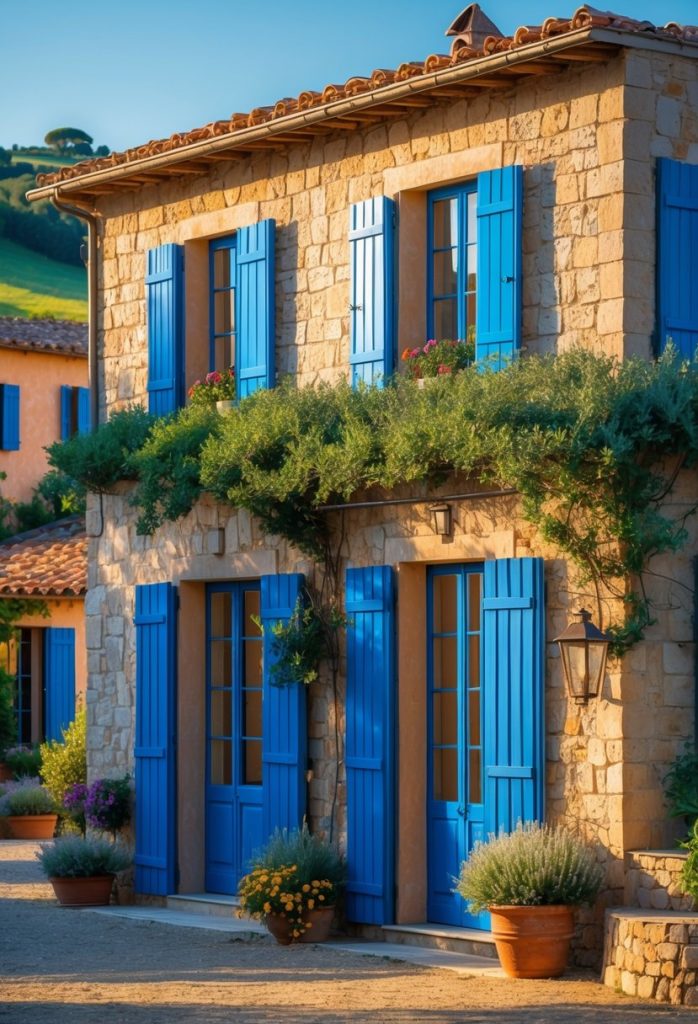
You can use Mediterranean blue shutters to add calm color and classic charm to your farmhouse exterior. The blue pairs well with warm stucco, light stone, or cream siding.
Choose louvered or board-and-batten styles to match the farmhouse look. Louvered shutters feel airy and coastal; board-and-batten feels more rustic and sturdy.
Paint in a muted, slightly gray-blue for a timeless effect. Brighter turquoise works too if you want a bolder, coastal vibe.
Install shutters proportionate to your windows so they look intentional. Proper scale and simple hardware keep the look authentic and balanced.
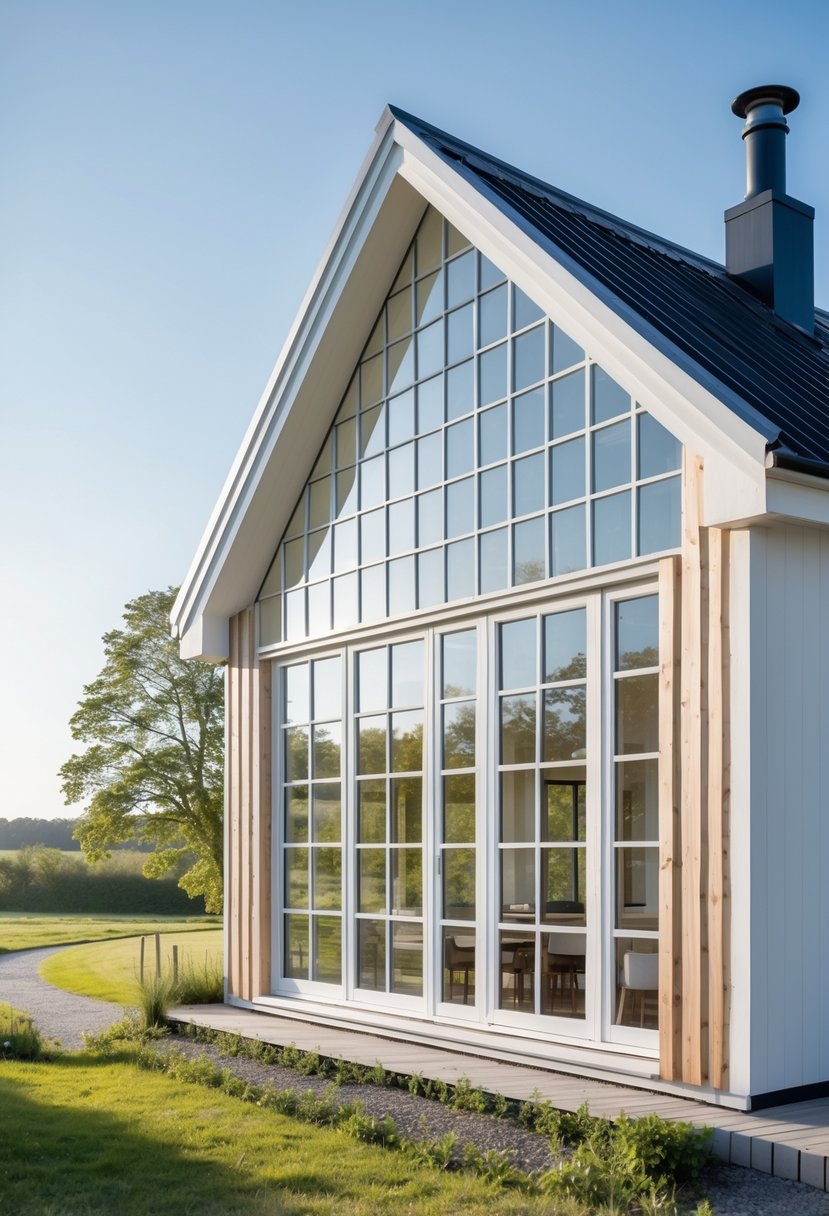
15) Large windows for natural light
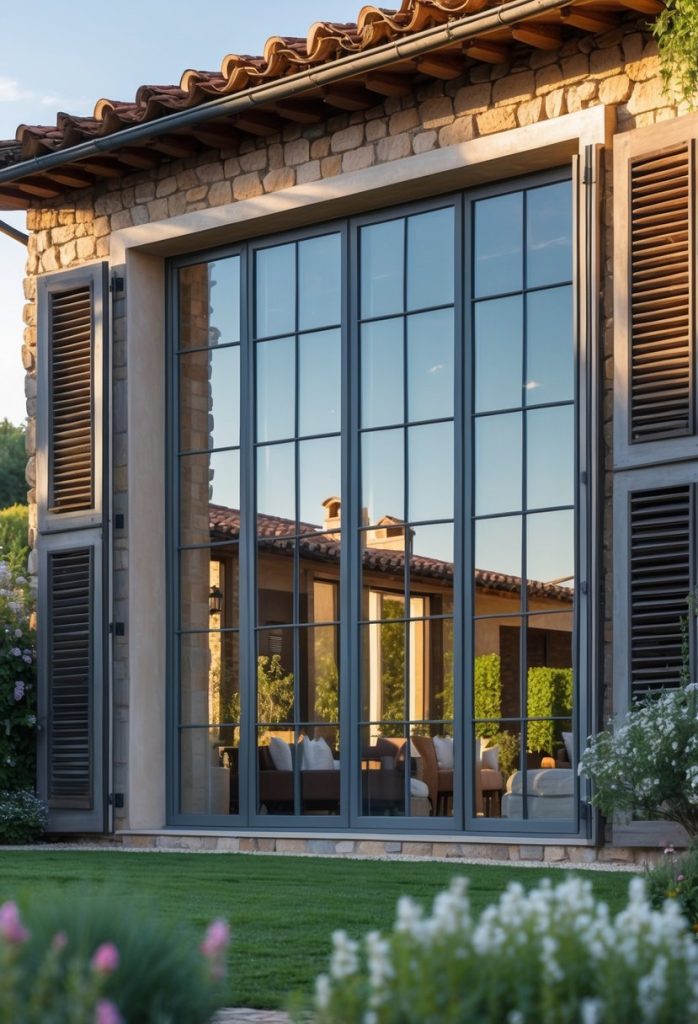
You can use large windows to bring sunlight deep into your rooms and make spaces feel open. In an Italian farmhouse, tall panes and wide openings connect the interior to the landscape and highlight texture like stone or stucco.
Choose window frames and proportions that match your facade. Dark frames add contrast to light walls, while wood or warm-toned frames keep the look rustic and inviting.
Place windows to capture views and seasonal sun. Combine fixed panes with operable sections so you get light, fresh air, and practical ventilation without breaking the style.
FAQs
What are the authentic color palettes for an Italian farmhouse exterior?
Use soft, earthy tones like warm beige, light gray, and muted ochre for walls.
Combine plaster or stone walls with a dark gabled roof to add clear contrast.
Add warm wood stains for doors and trim. Keep colors natural and low-gloss to show texture.
How can one achieve the Italian farmhouse aesthetic for a home’s exterior?
Choose a sleek plaster finish or soft stonework for the walls to get that Italian look.
Use a clay-tiled or dark gabled roof and tall wooden doors and windows to match traditional proportions.
Include warm wooden trim and rustic iron details. Keep ornamentation simple and materials honest.
What architectural elements define an Italian farmhouse style?
Look for arched or tall narrow windows and heavy wooden doors.
Gabled or low-pitched clay-tiled roofs and visible stone or plaster walls are common.
Porches, loggias, and small balconies with wrought iron railings reinforce the style. Proportions stay grounded and practical.
Which materials are commonly used in Italian farmhouse construction?
Natural stone, smooth or textured plaster, and terracotta roof tiles are typical.
Solid wood is used for large doors, window frames, and trim.
Wrought iron appears in railings and light fixtures. Choose materials that age gracefully.
How does the interior design complement an Italian farmhouse exterior?
Use exposed beams, stone or wide-plank wood floors, and neutral plaster walls inside.
Match tall wooden doors and windows to interior finishes for visual flow.
Keep furnishings simple and durable, with natural textiles and muted colors to echo the exterior.
What landscaping ideas best suit the surroundings of an Italian farmhouse?
Plant rows of lavender, olive trees, and low box hedges for structured, low-water gardens.
Use gravel paths, stone steps, and terracotta pots to link the house to the land.
Keep lawns small and favor native, drought-tolerant plants to highlight the rustic materials of the home.